Panther National is setting a new benchmark for private club living
There is a script that golf communities tend to follow. Each promises a private enclave with exclusive tee times, quiet streets, and enviable amenities. And no state is more saturated with such places to live and play than Florida. So how does a new club—the first private golf community to open in Palm Beach County in nearly two decades—stand out?
Flip the script. What just might be the next step in the evolution of the private club is lurking behind the limestone gates at Panther National, a 400-acre, ultramodern golf and lifestyle community. It’s built on the county’s last parcel of premium, developable land, nestled in a secluded pocket around 20 miles from Palm Beach Airport and bordering a 2,400-acre conservation area.
The vision behind Panther National is a new kind of community—one that blends not just world-class, but Tour-class, golf with a modern design aesthetic and an effortlessly relaxed lifestyle.
The decision was made to build a very special golf course first, an announcement to the world that Panther National will be one-of-a-kind. It opened in late 2023: a truly championship-level, 18-hole co-design by golf’s greatest player turned architect, Jack Nicklaus—with more than 425 courses to his credit worldwide—and current American star Justin Thomas, who now has one. Nicklaus recruited Thomas for his intimate knowledge of how the modern professional approaches the game. His cachet as one of golf’s biggest names helped, too.
“I’ve always been fascinated with the architecture side,” says Thomas, who grew up drawing golf holes on napkins. “But I couldn’t have imagined or dreamt of doing something like this.”
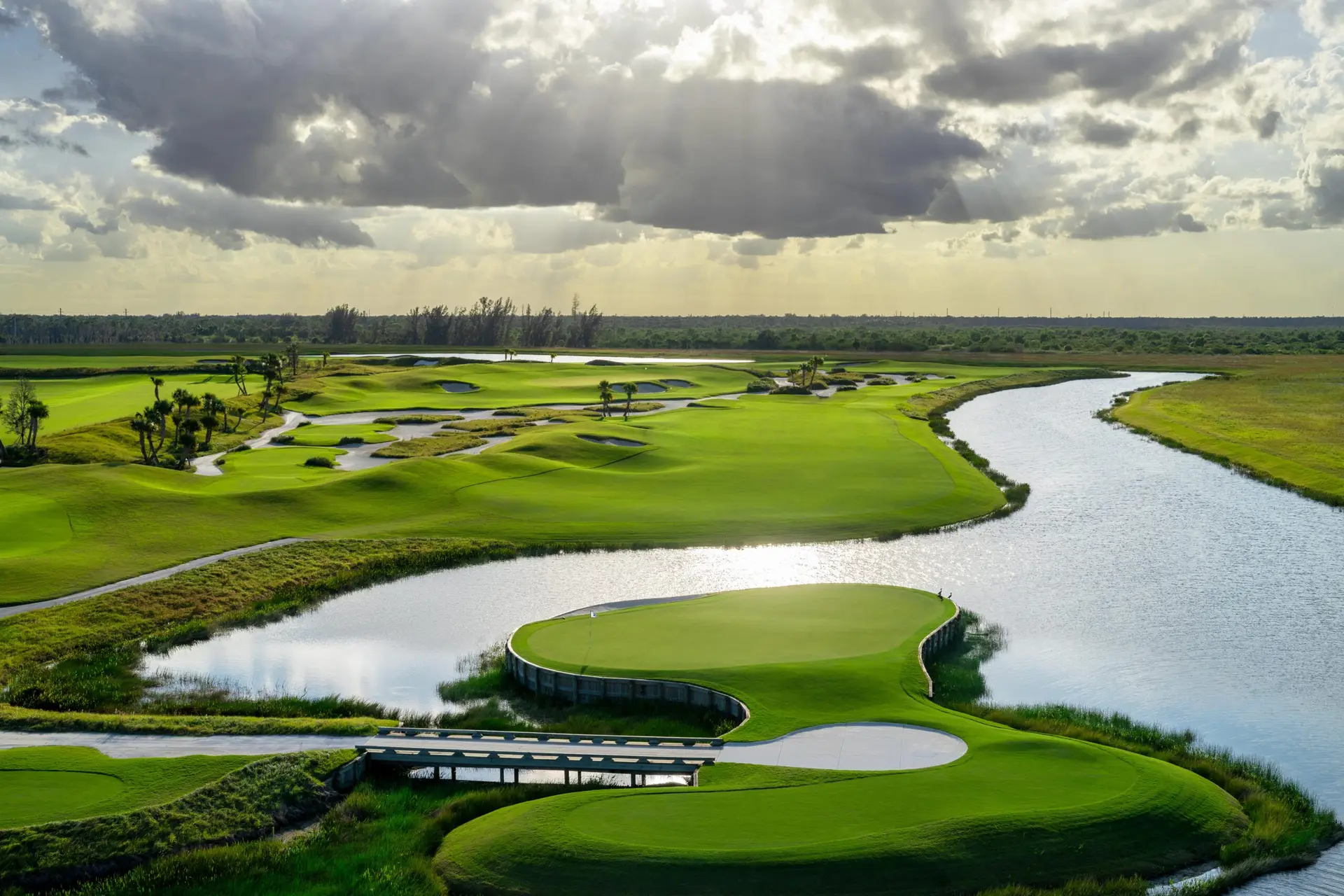
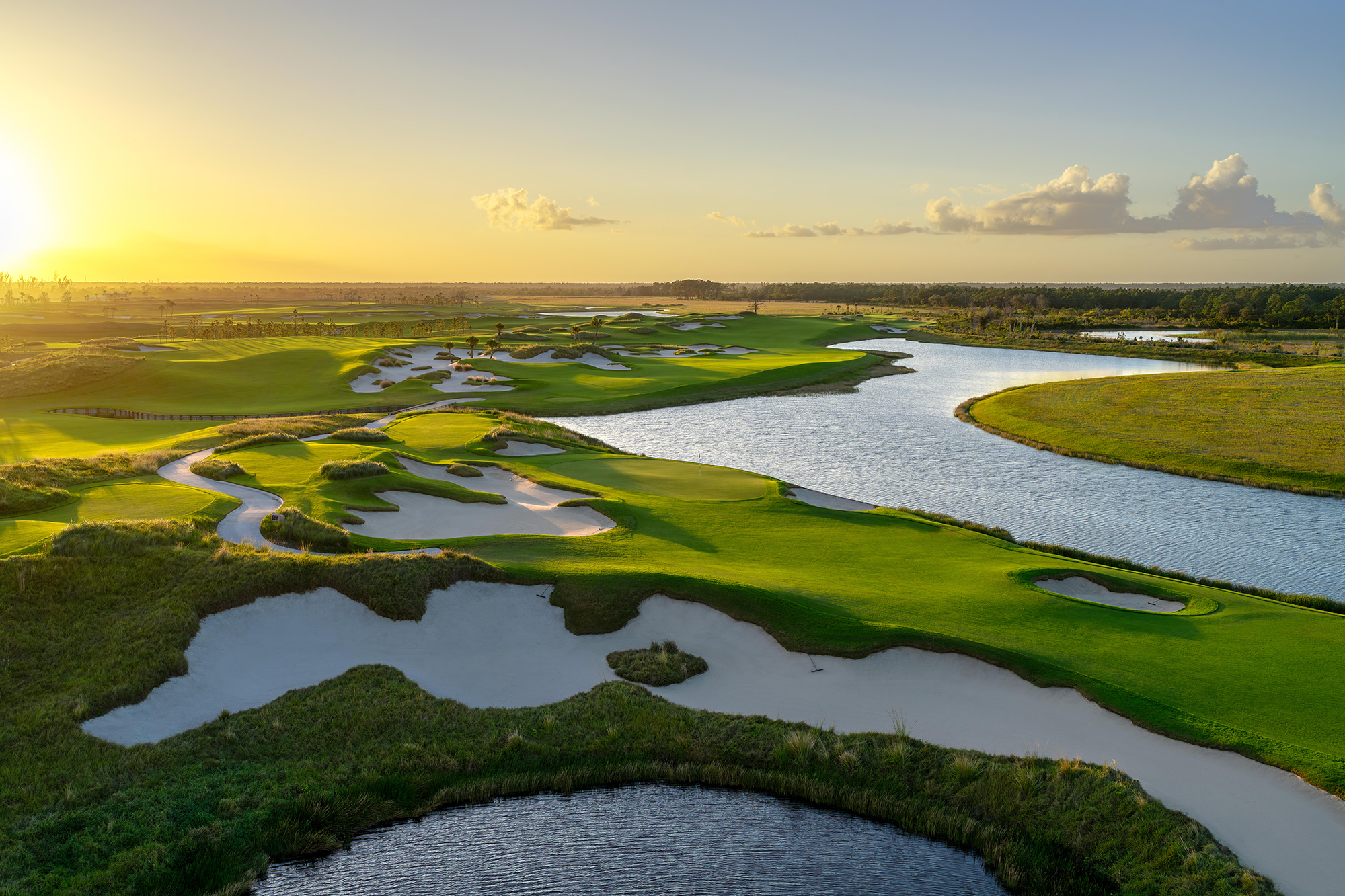
“The Big Cat,” as their collaboration is called, is light years away from the flat landscape typical of most Florida golf courses. The heaving, 7,864-yard behemoth stands up against the game’s best from the back “JT” tees and remains enjoyable for daily member play with six other teeing options on the scorecard. It also feels more like golf on the Emerald Isle than in the Sunshine State.
“The direction was clear—they wanted elevation, movement, something bold. So, we started moving dirt,” says Chris Cochran, senior designer for Nicklaus Design. When they were finished, some 2.5 million cubic yards of earth changed places.
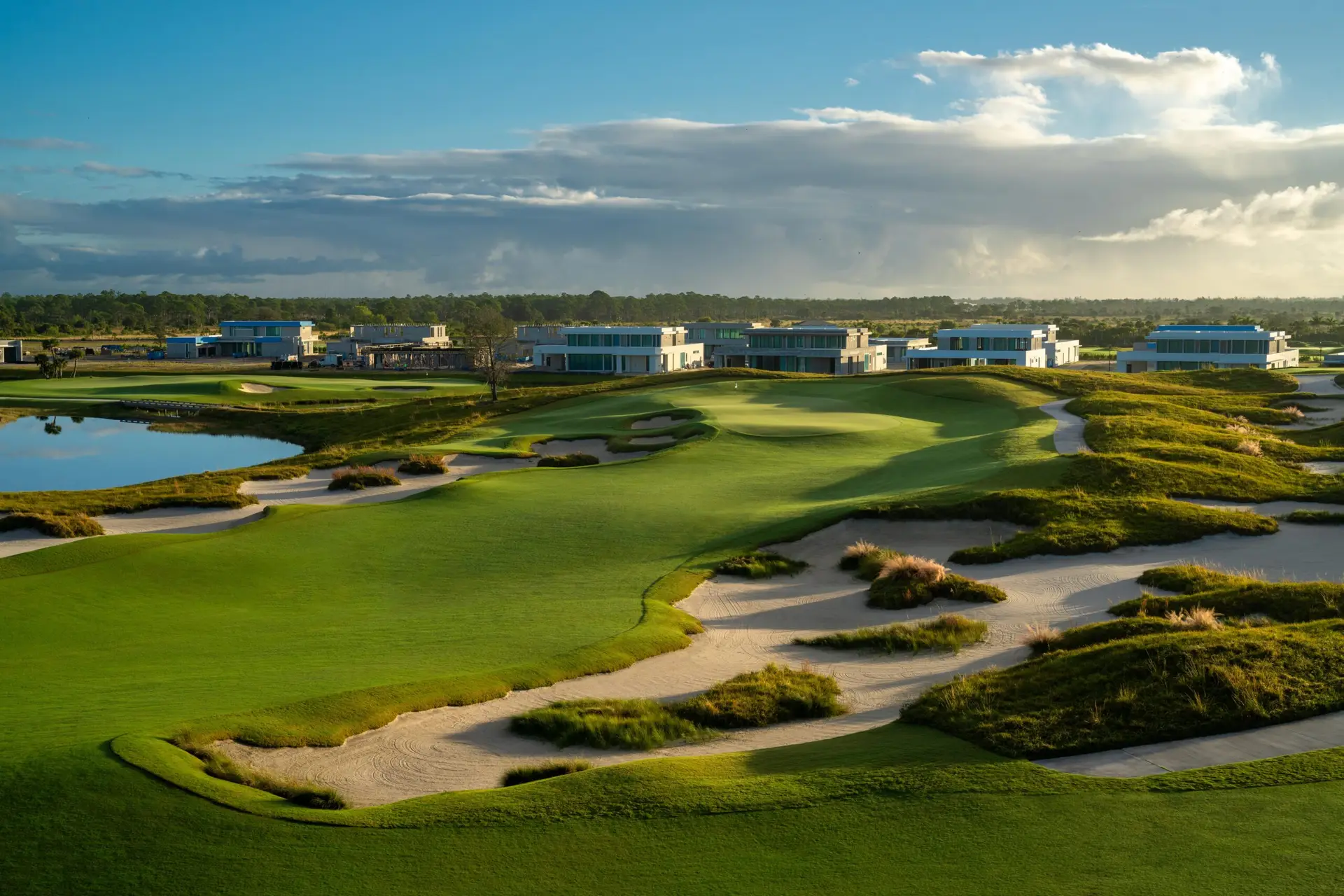
Nicklaus, who calls the site a “unicorn of land,” was given no restrictions on what could been done with the “featureless” former cattle pasture. The duo responsible for a combined 20 major championship victories (Jack-18, JT-2) created a dynamic topography with rolling hills, tall dunes, expansive manmade lakes, and a memorably diverse routing that is made for walking the way Tour courses are, for those who choose to hoof it rather than zip around in top-of-the-line golf cars. Wide fairways are framed by wispy, shin-high Bahia grass and 91,000 square feet of bunkers featuring Pro/Angle sand—used by elite clubs across the country, it’s known for playability and weather resistance—that are meticulously raked by the 35-person grounds crew that maintains tournament-level conditioning day after day after day.
“We had to create our own character here; you didn’t have anything to work off of,” says Nicklaus, whose home in nearby Jupiter made it an easy commute and for frequent visits during construction. “I think if you drive out here and look at the property, you’ll say, ‘Where did you find a piece of property like this in South Florida?’ Obviously, we didn’t find it; we created it.”
Though nearly 15 miles inland from the Atlantic’s coastal breezes, the property’s exposed nature and few trees means persistent and ever-changing winds. As a result, The Big Cat plays significantly different day to day, even morning to afternoon. Nowhere is that more in play than on the four par threes, each of which faces a different direction.
Thomas didn’t simply chauffeur Nicklaus around the construction site. His influence may be subtle, but it’s there, helping give the course something all the principals wanted: Tour-level challenge. A notable example is the 654-yard par-five 11th, where the Kentuckian keenly suggested the initial design wasn’t inspiring enough. “Jack had it shaped to play like Baltusrol’s 17th, with a burn across the fairway about 300 yards out,” recalls Cochran. “JT thought it was too boring—everyone would just lay up, wedge in, and walk away with par. He wanted something more dynamic.” Nicklaus listened and the burn was moved back 75 yards, a fairway kicker slope was built to add a risk/reward aspect to the tee shot, and the hole now offers the probability of both more eagles and double bogeys.
Jack pulled a few tricks out of his hat, too. The downhill 15th can play as the course’s longest par three—from around 110 to 270 yards depending on the tee and pin location—though finding the putting surface shouldn’t be a problem: At 75 yards from front to back, it’s the largest green Nicklaus has ever built. The course’s last one-shotter also begins a dramatic run of finishing holes: the “drive-it-if-you-dare” par-four 16th (under 300 yards from most tees); the sometimes-reachable par-five 17th, which plays to a double green shared by the 8th; and a long par-four finisher shaped like the 18th at TPC Sawgrass with a bulk-head-lined lake looming on the left.
While The Big Cat has piqued the curiosity of many of Thomas’s professional colleagues, it’s the other golf amenities that make Panther National perhaps the world’s most pro-oriented community and convinced a who’s who of Tour stars to sign on as official ambassadors. Among those you’re likely to see on campus are Cameron Young, Viktor Hovland, Lexi Thompson, and Xander Schauffele, who, along with 2025 U.S. Ryder Cup captain Keegan Bradley and European Ryder Cuppers Tommy Fleetwood and Shane Lowry, brought eyeballs to Panther National in November’s revival of The Skins Game.
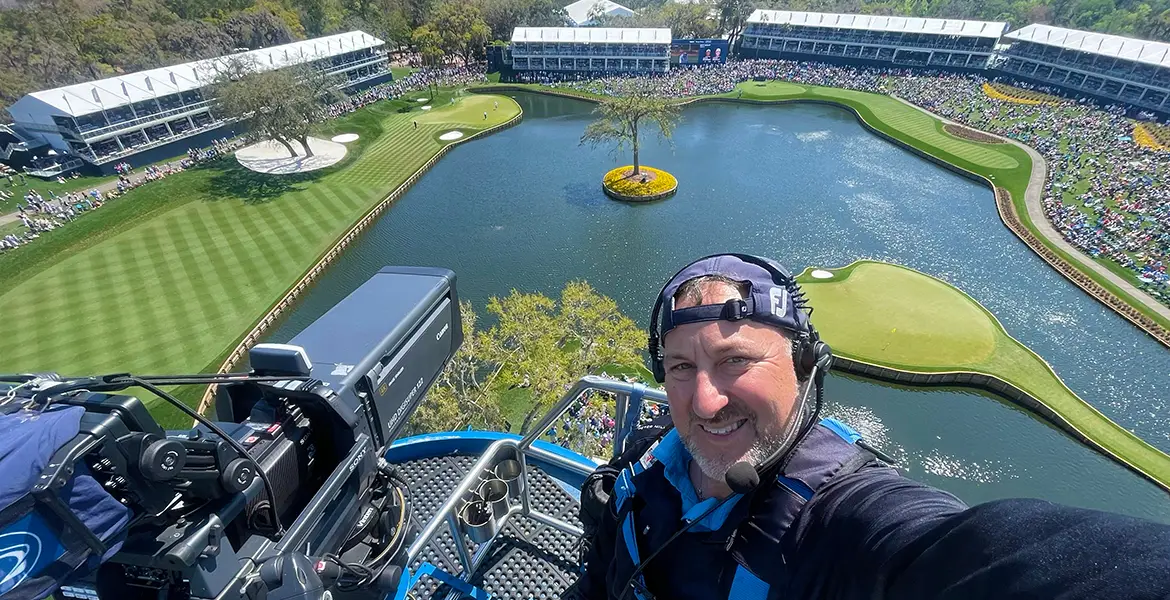
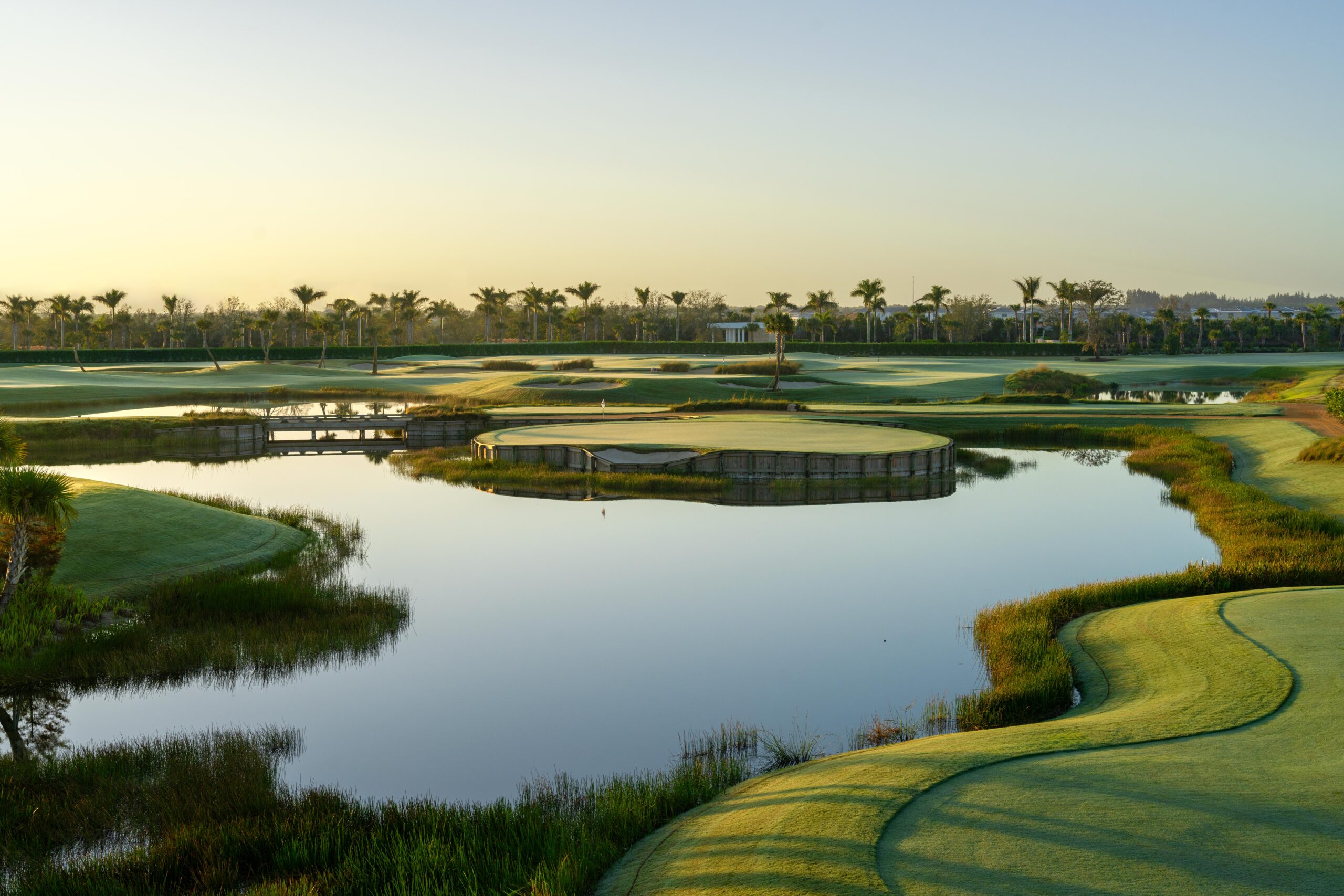
The 9-hole par-3 course, called Panther9, was built with them in mind. Its holes, ranging from 60–200 yards, were inspired by iconic approach shots on the PGA Tour, including a replica of Sawgrass’s island-green 17th (a nod to Thomas’s 2021 Players Championship victory). The play-it-like-you-want nature of Panther9—there are no formal tees and nearly the whole layout is visible from any point—has led the club to hold events where it’s played backwards or as part of a 27-hole loop with The Big Cat. A 30,000-square-foot putting course, “The Cub,” borders the short course and has become a popular sunset meetup spot.
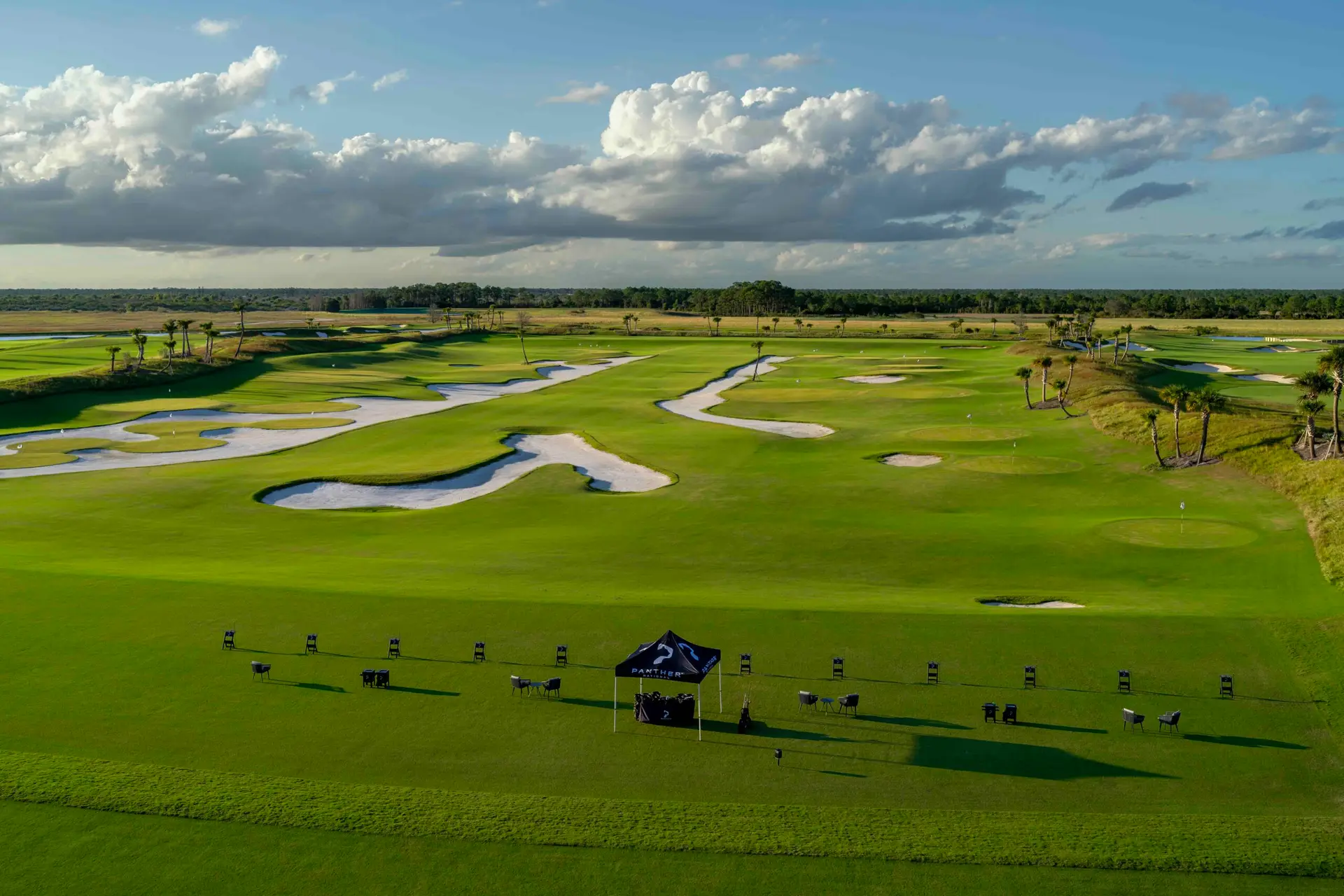
But what’s really grabbed the attention of the game’s elite is the practice area. The range features Trinity Zoysia target greens so the pros (and Joes) can see how their shots react on a real putting surface. Each green is the size of the PGA Tour approach shot average for its distance, allowing players to recognize when their game is better than most. There’s even a 27-yard-wide U.S. Open-inspired landing strip, to practice driving into a narrow fairway, and a two-acre short game complex that allows any wedge shot imaginable. An all-weather performance center will open soon, ensuring there are no days off.
“I was pretty vocal about the range setup, especially from a touring professional standpoint,” says Thomas. “We wanted it to reflect what pros face on Tour. The short game area was designed to mimic real course conditions. Tight lies, deep bunkers, and undulating greens. And we made sure the range had a ton of different shot windows with varying wind angles. Practice is not just about hitting balls; it’s about preparing to compete at the highest level and working to improve your game overall.”
While the golf options are definitely drawing eyeballs, pay a visit now and you’ll see the same attention to detail and high standards being applied to a long list of coming amenities.
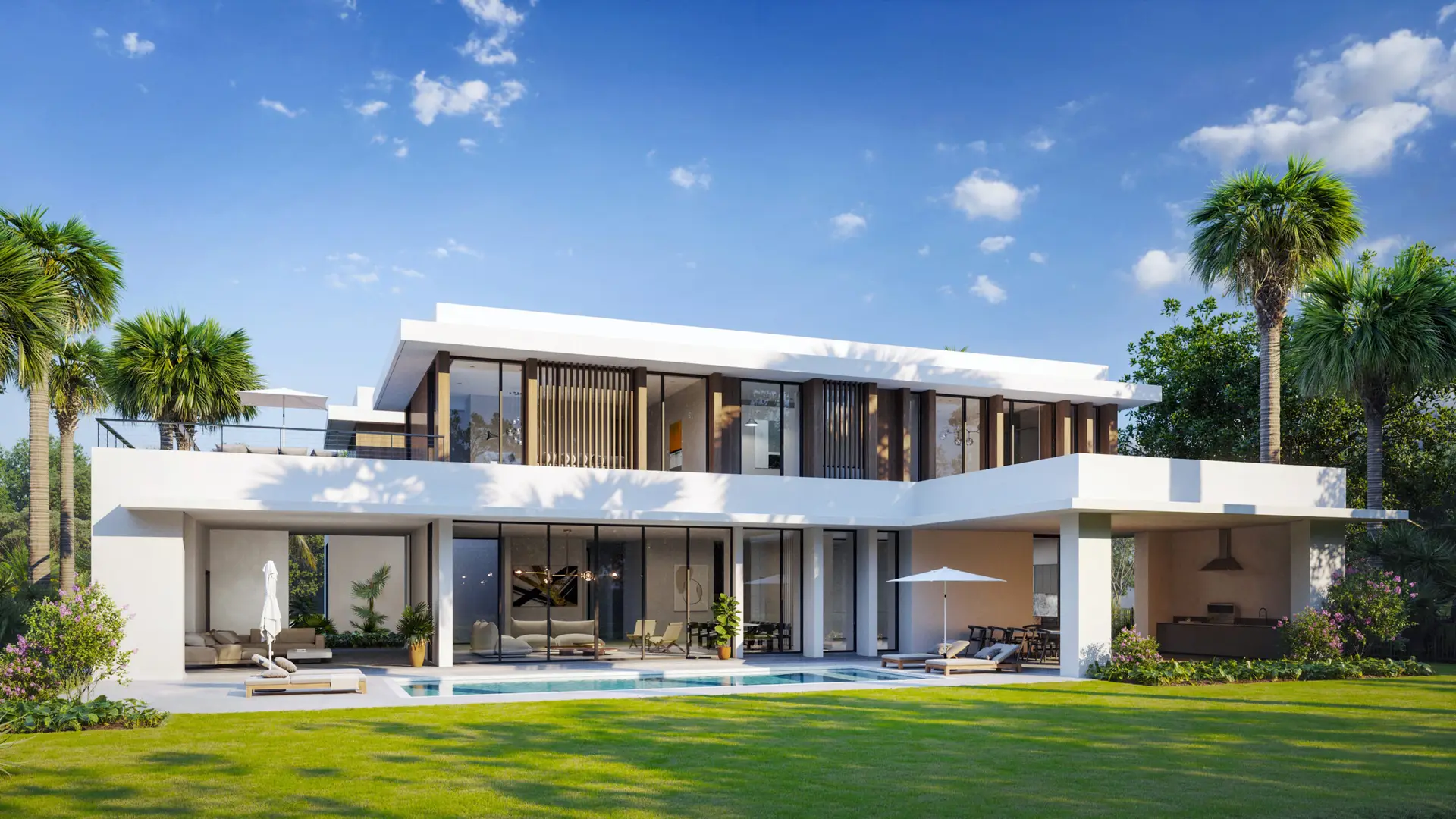
A few homes are built and occupied. The full plan calls for 218 modern estate sites that border, but don’t intrude on, the golf course or nature preserve. These include Panther National’s Signature Estates, crafted by noted architect Max Strang. Celebrated for his pioneering concept of environmental modernism, Strang fashioned the three- to five-bedroom residences—priced from $4.5 million to $8 million on third- or half-acre lots—to feel curated, not constructed, with sleek modern architecture, rooms awash in natural light, and landscaping that reflects the community’s indoor-outdoor lifestyle. Along with a selection of existing floorplans, the club’s on-site Design Gallery & Showroom provides interior and exterior inspiration for making each home distinctive.
There’s also the opportunity to go totally custom. A limited number of half- and one-acre parcels are available with a choice of Custom Estate Models or the opportunity to design your own architectural statement in collaboration with Panther National’s Preferred Builder Program, with pricing from $9 million to $20 million.
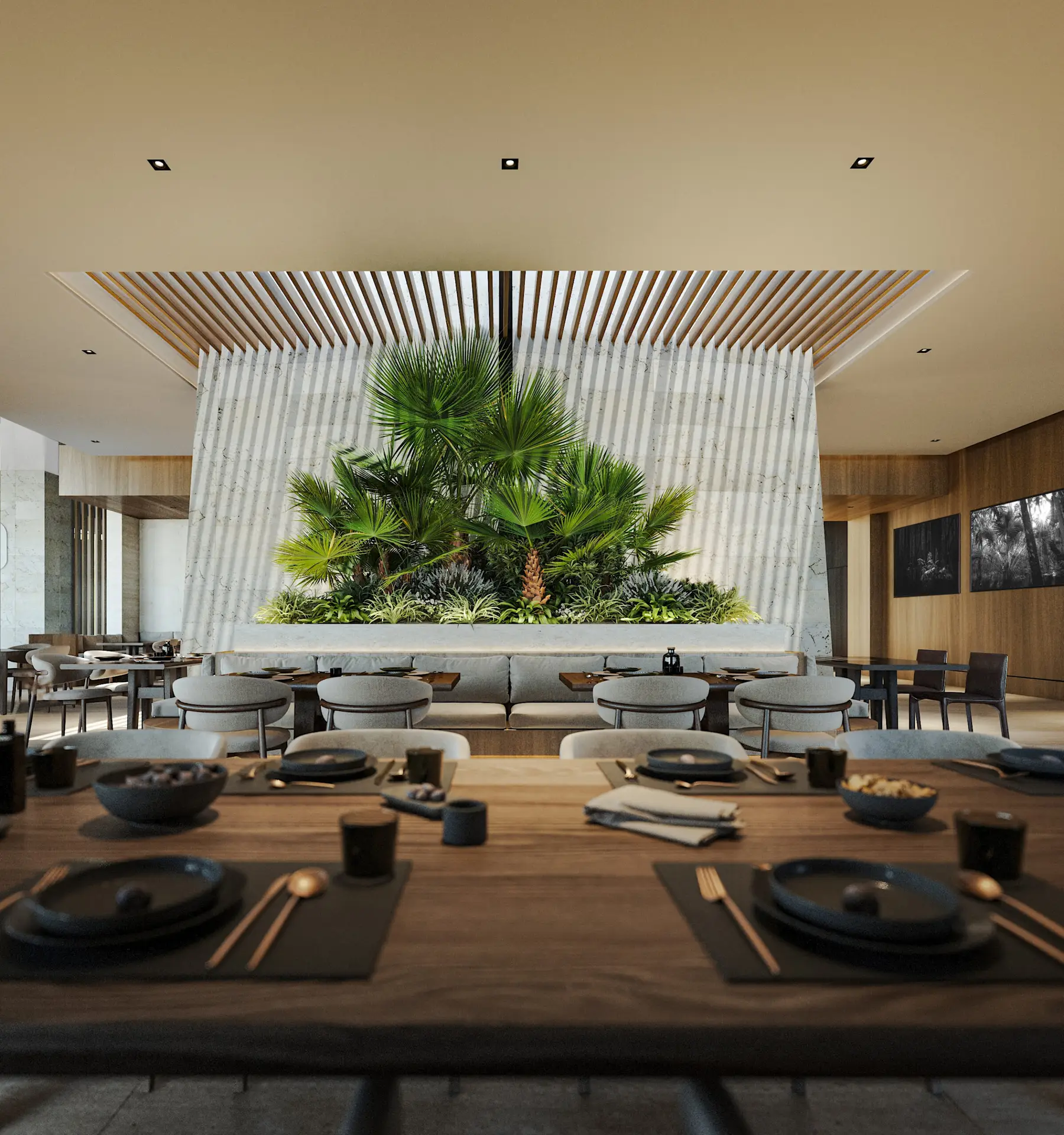
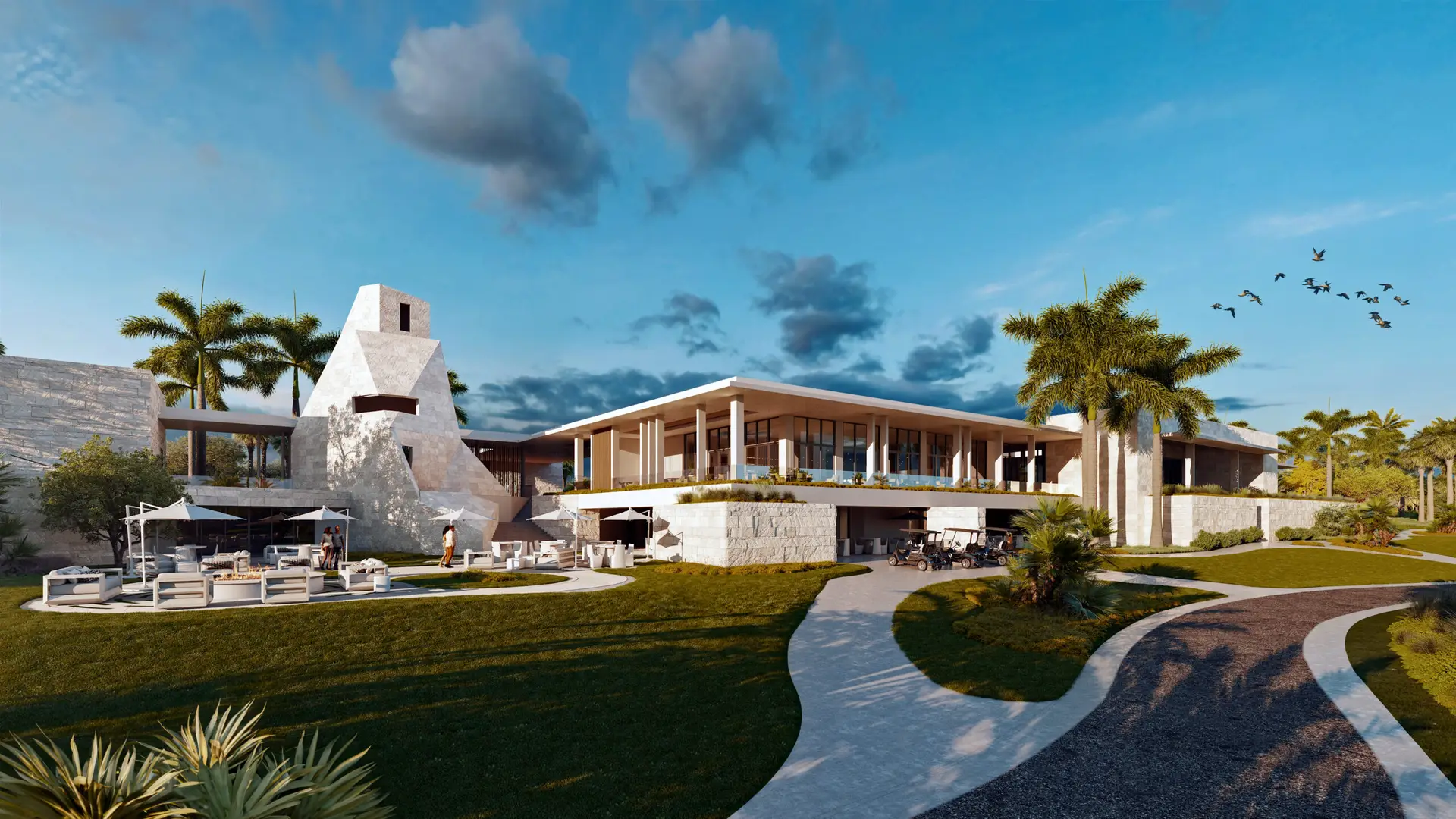
Strang also designed the nearly 60,000-square-foot Panther National Clubhouse, under construction and projected to open by early 2027. The contemporary multi-level structure will encourage residents to socialize and linger, offering culinary options that include a fine dining restaurant with a stylish European influence, show kitchen, and Michelin-inspired cuisine; a casual dining and bar setting; a wine bar and cellar; and Panther Bistro—a coffee shop/juice bar. Other gathering spots include indoor/outdoor lounges adjoining the men’s and women’s locker rooms, a state-of-the-art fitness center, an expansive event lawn, and a courtyard behind The Big Cat’s 18th green with plush seating and fire pits.
The Panther Lifestyle Club & Fitness Center is due to debut in early 2028. All age groups were considered in the planning for a series of family, adult, and lap pools, with private cabanas. Fitness aficionados will have access to personalized programming in training rooms with advanced strength and cardio equipment; wellness studios for yoga, Pilates, and guided movement; sauna and steam rooms for relaxation and recovery; and more luxury-spa amenities.
A Racquet Center, opening late 2026, will add another premier sporting venue, with pickleball, tennis, and padel courts paired with a pavilion for courtside hospitality.
The nature preserve, which will remain undeveloped, isn’t just for looks—residents can access over 10 miles of trails and restored natural areas where more than 100 native plant and animal species can be found. And the property’s lakes aren’t just for swallowing golf balls; in spring 2025, 600 bass fingerlings were stocked and will be prime for angling in the years to come.
While thinking big, it’s in the little things that Panther National is truly distinguishing itself. Your cart is stocked with favorite snacks and drinks before you get out of your car; the pro shop knows your size and style; waiters greet you at breakfast with your usual coffee order; and the golf staff has your preferred brand of balls ready on the range. (Yes, you get a choice, rather than a bag of striped rocks; just like on Tour.)
The atmosphere is refined, but relaxed: Want to play in a tee-shirt and flip-flops? Go ahead. Kids aren’t just welcomed, they’re embraced, encouraged to enjoy club activities instead of tiptoeing around the grownups’ playground. The membership is an eclectic blend of like-minded, amicable characters who are proudly among the first to enjoy elite golf, dining, and wellness offerings without the pretense of old-world clubs.
“There are places you can go where you just want to be left alone. This is sort of the opposite,” says Eric Glasband, one of Panther National’s earliest members. “Nobody’s anyone; they’re all members. Everyone here is all together. You want to be a part of it.”

The Club’s innovative Member App allows members to browse and register for club events, book lessons, access event photo galleries, and more. Especially useful is the directory, where each member is listed with their photo and contact information, and a chat feature that allows connecting directly with fellow residents through the app. A high-quality, monthly newsletter keeps members in the know with course knowledge, interviews with club personnel and ambassadors, and community updates.
As Panther National gets up on its feet and ready to run, the word on the hottest new club in golf is spreading.
“You wear that logo anywhere you go—not just around town, all around the country—and people stop you,” says Glasband. “They know about it and want to know how good it is. I’ve had Tour pros reach out and ask us to take them here as our guests. I belong to a lot of clubs; I’ve never had that happen in my life.”