

What’s the next big thing in driver technology for 2026? A lot of things, actually. As in the past, many of them revolve around the careful redistribution of weight to a) give driver heads a higher moment of inertia (MOI), which helps them resist twisting and helps you produce straighter shots, and b) produce more advantageous launch characteristics. New materials and advanced engineering are allowing club designers to move weight all over the place to help achieve this optimum MOI.
But what’s going on with clubfaces is equally if not more important. Clubface design has become a science all its own, only here, it’s not about moving weight so much as it is about designing faces with advanced properties that provide more speed, distance, and control.
At the 2026 PGA Merchandise Show Demo Day, it was amazing how often I heard pros testing new drivers say: “Wow, and I didn’t even catch that one square!” The launch monitor metrics don’t lie. Today’s players will generally get way more distance and much straighter shots with their drivers than was ever thought possible in days gone by.
Most of the new drivers launched for 2026 are part of a series, too, as manufacturers recognize that the days of one size-fits-all are also long-gone. Here’s a list of the top new drivers for 2026, listed in alphabetical order by manufacturer.
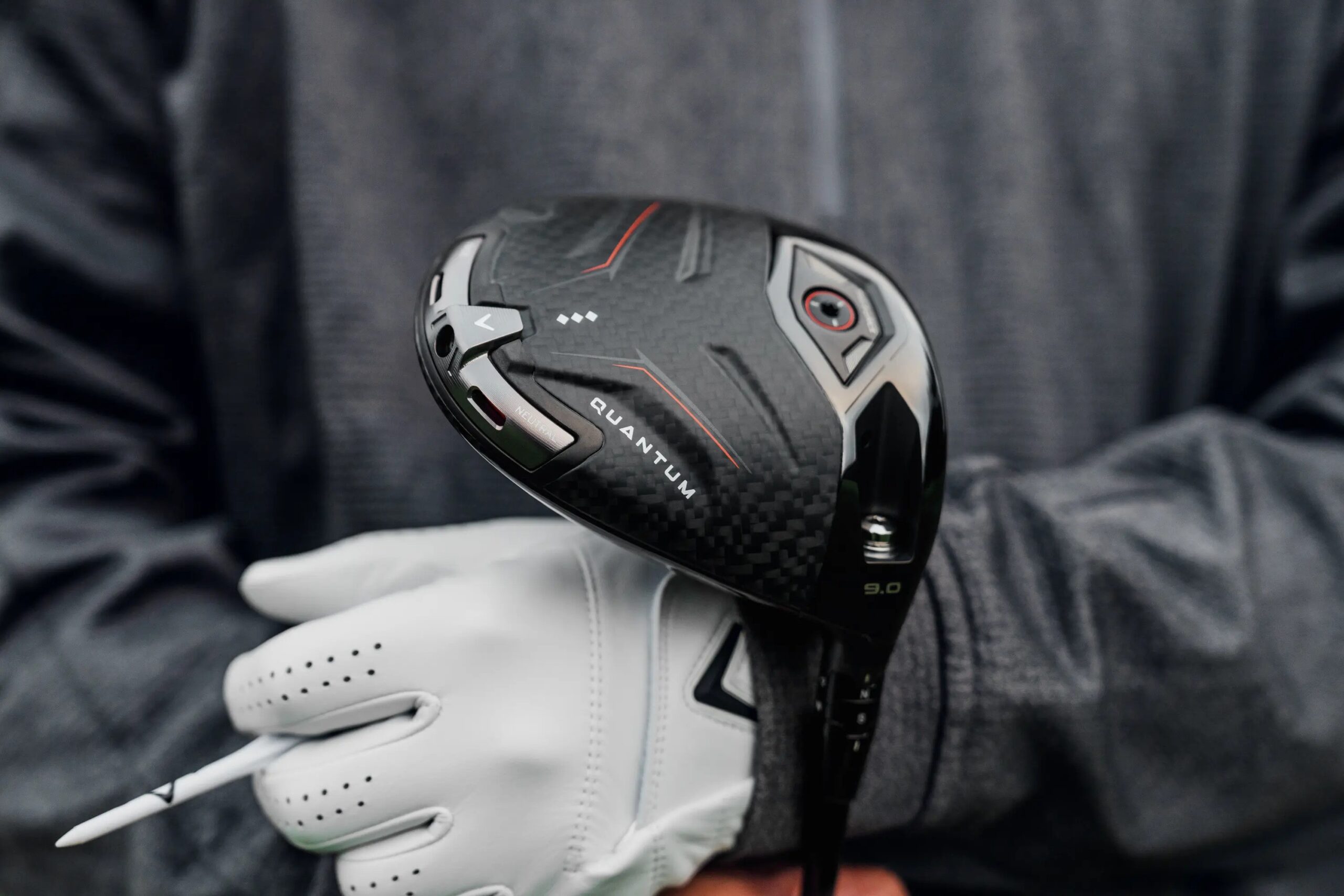
Callaway Quantum
Callaway’s new Quantum driver line represents a materials-driven rethink of how energy is created, transferred, and preserved at impact. The headline innovation is Tri-Force Face technology, a multi-layer construction that fuses ultra-thin titanium with a proprietary Poly Mesh core and a carbon composite backplate. The result is a face that flexes more efficiently at impact while maintaining structural stability, increasing ball speed not just on center strikes but across a wider impact area.
Quantum Max balances launch and spin with adjustable weighting, while Max D introduces heel-side bias to assist face closure and reduce right-side miss tendencies. The Triple Diamond model strips spin to the minimum for elite swing speeds, using a more compact profile and forward CG placement, while Triple Diamond Max adds stability for players seeking forgiveness without ballooning launch. The Max Fast option, built lighter overall, targets speed generation through reduced total mass and shaft pairing. Validated through extensive AI modeling and robot testing, the Callaway Quantum line isn’t just faster—it’s measurably more efficient, translating raw physics into repeatable performance off the tee.
Cobra OPTM
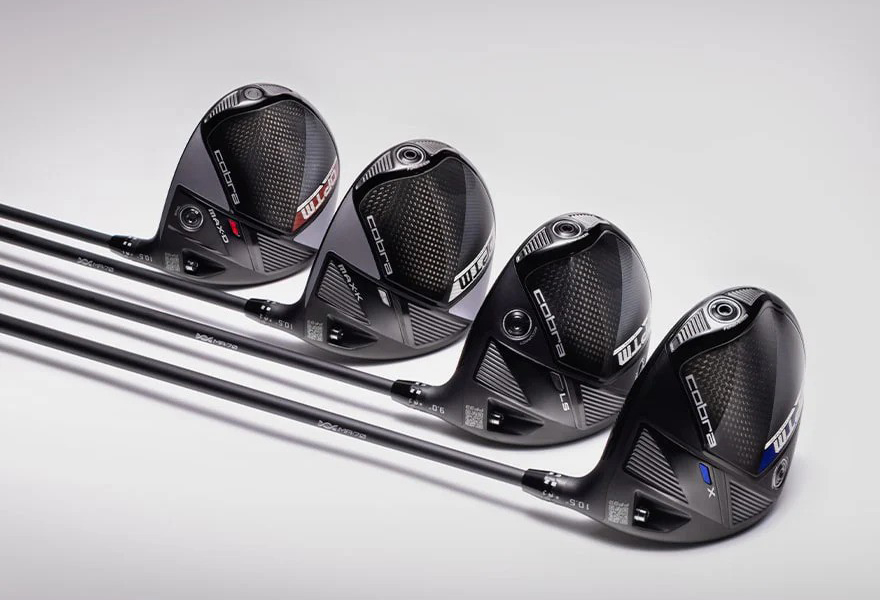
While conventional designs have relentlessly pursued high MOI to resist twisting on off-center strikes, Cobra’s new OPTM driver series introduces Product of Inertia (POI) optimization—a three-axis measure of rotational stability that targets diagonal twist as well as traditional horizontal and vertical rotation. By leveraging AI-optimized head shaping and adaptive weighting, Cobra has pushed POI lower without sacrificing high MOI, resulting in remarkable directional precision and tighter dispersion patterns across all models. Each driver in the series blends advanced materials with refined geometry: lightweight carbon crowns married to robust titanium frames create efficient mass distribution, while strategic weight placements—fixed or moveable depending on the model—fine-tune center of gravity (CG) for specific flight objectives. The FutureFit33 adjustable hosel gives golfers 33 loft/lie combinations. From the low-spin, precision-oriented OPTM LS Driver to the ultra-stable, high-forgiveness OPTM MAX‑K Driver and the draw-biased OPTM MAX‑D Driver, OPTM tech caters to a wide spectrum of swing profiles.
Cobra has also introduced a new mini driver for 2026, the King Tec. Engineered with a compact profile and optimized weighting, it produces high launch and reduced spin for penetrating ball flight. Ideal for tight tee shots and long approaches, its tech‑driven design blends forgiveness with workability into a sleek, performance‑oriented package.
PING G440
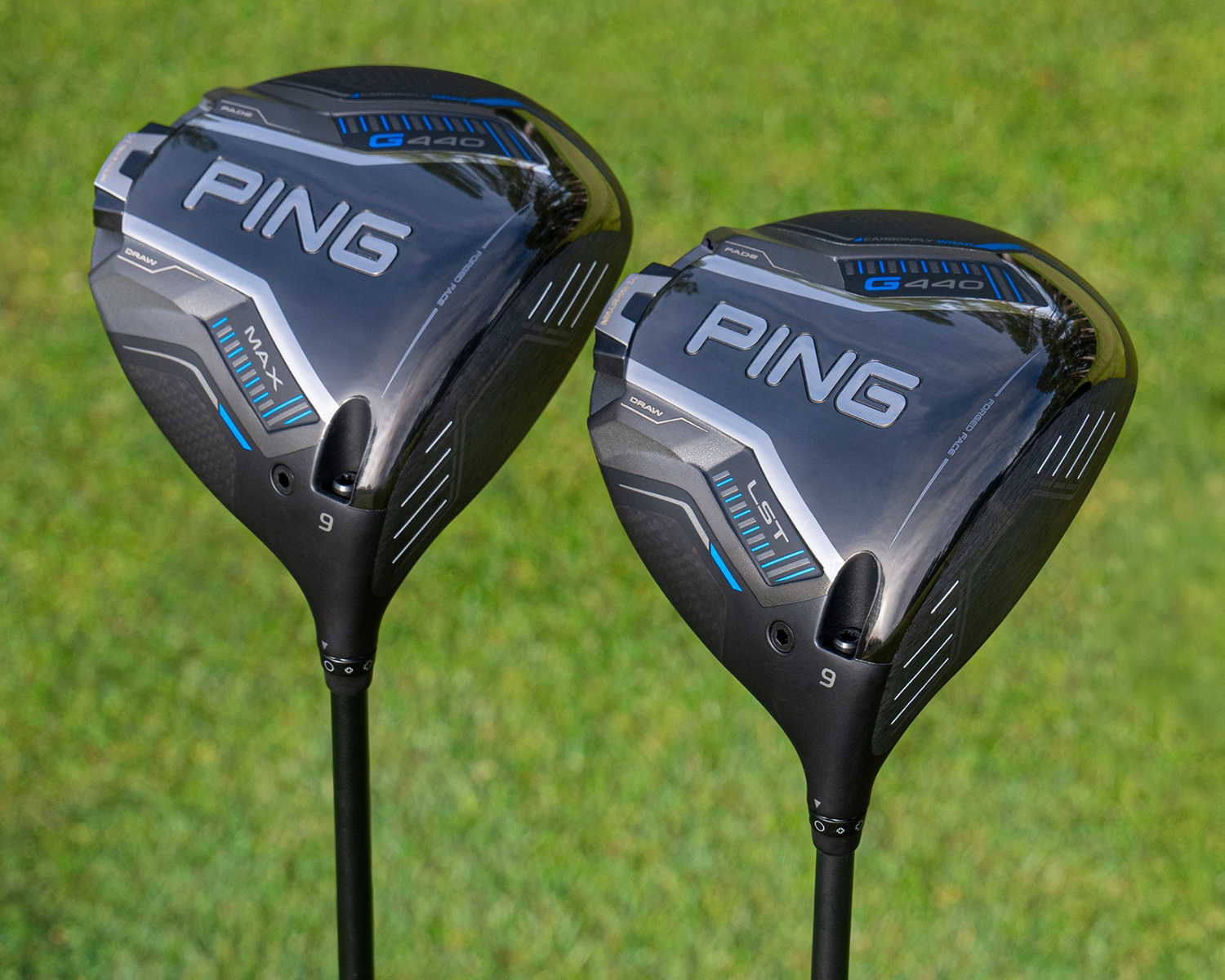
The PING G440 MAX Driver family is engineered to extract higher ball speeds, tighter dispersions, and optimized launch through a suite of advanced structural innovations. At the core of the G440’s performance is PING’s deepest CG placement to date, achieved through strategic mass reduction and redistribution via a Carbonfly Wrap crown and novel Free Hosel design. By shaving grams from the crown and hosel, engineers pushed weight lower and closer to the force line, promoting higher launch and favorable spin while retaining stability across the face. The drivers’ thinner, shallower face architecture increases flex and energy transfer—especially in the high-heel region, a frequent mis-hit zone—yielding more consistent ball speed across more areas.
Model-specific tuning completes the performance picture. The G440 LST trades spin for penetrating trajectory suited to faster swings, while the G440 SFT and G440 HL SFT incorporate adjustable back weights for draw bias and slice correction. Finally, the G440 K pushes forgiveness further with a heavier adjustable back weighting and high MOI design.
PXG Lightning
Built around a refined high-speed face architecture, PXG’s new Lightning driver series is engineered to convert more clubhead velocity into ball speed across a wider impact zone. The face structure uses variable-thickness mapping informed by thousands of impact simulations, optimizing energy transfer not just on center-face hits, but where real golfers actually miss. At the core is an ultra-lightweight composite crown that allows discretionary mass to be repositioned with precision. That mass savings is redeployed low and deep, pushing MOI to the upper edge of the USGA limit while maintaining a forward CG option for players looking for lower spin and tighter dispersion. The result is a driver that can be tuned like software—launch, spin, and shot shape are adjustable through an expanded weighting system.
Aerodynamically, Lightning’s reshaped perimeter and trailing-edge geometry reduce drag during the critical last third of the downswing, where speed gains matter most. The performance payoff isn’t just theoretical: PXG’s internal testing shows faster ball speeds, tighter spin windows, and more consistent launch conditions. Choose from Tour, Tour Mid, Max 10K+, and Max Lite models.
Mizuno JPX ONE and ONE SELECT
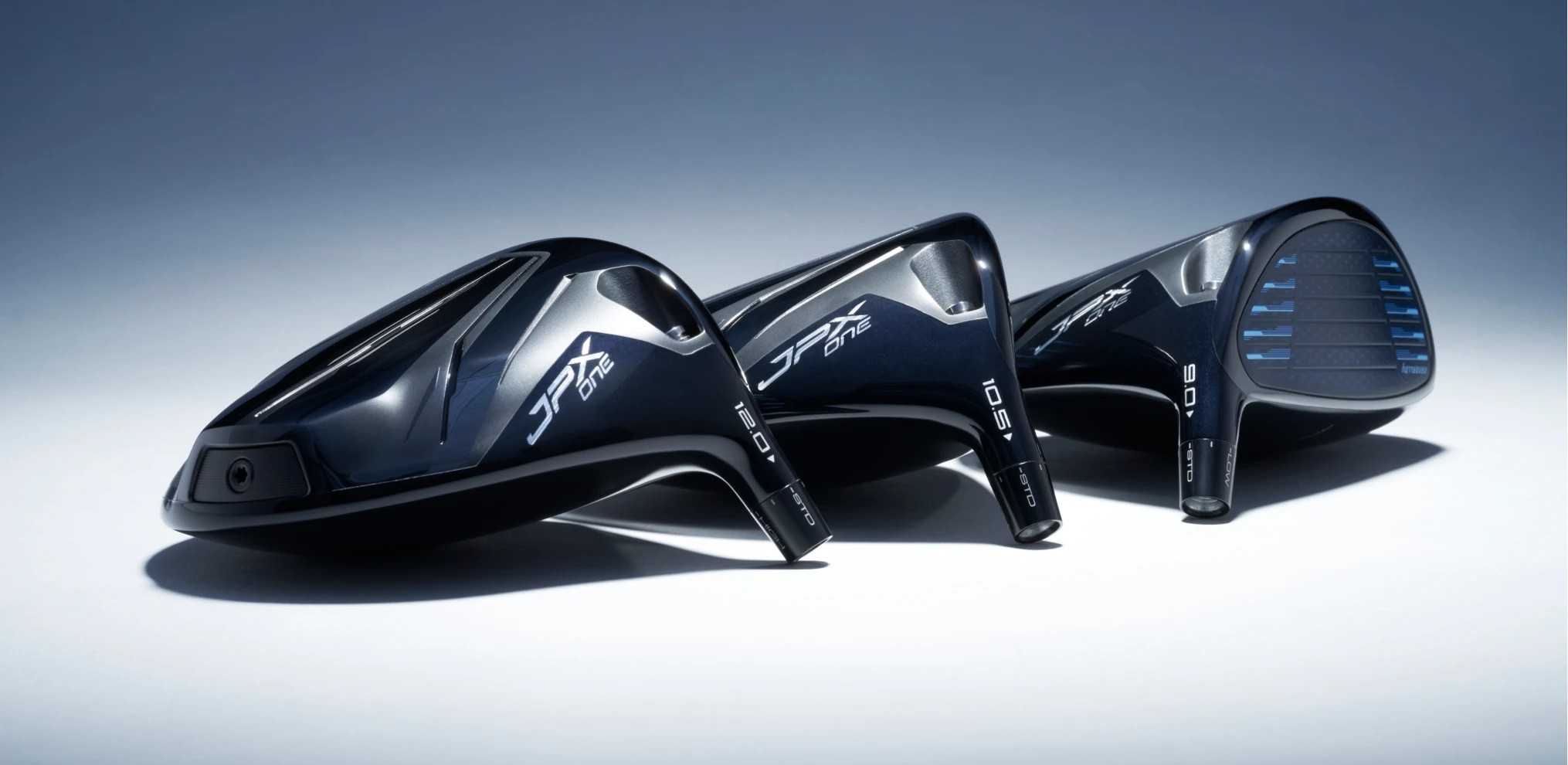
Mizuno JPX ONE and JPX ONE Select drivers represent Mizuno’s bold entry into advanced face material science with their world-first NanoAlloy face technology. This high-performance material disperses microscopic polymers throughout the face’s microstructure so that it dynamically changes elasticity during impact—stiff at rest for stability, then elastic at impact to store and release significantly more energy than conventional titanium or composite faces. This dynamic elasticity increases initial ball speed and expands the effective high-speed rebound area across a wider portion of the face. Paired with a new CORTECH face design that is up to 0.35 mm thinner than previous generations, the result is an expanded sweet spot (about 15 percent larger), higher ball speeds on off-center hits, and more consistent launch conditions.
Adjustable features—including movable weights and Mizuno’s Quick Switch hosel—allow precise tuning of launch and spin profiles for different swing types and playing conditions. The standard ONE model emphasizes higher forgiveness and stability, while its Select sibling offers a more compact, Tour-preferred shape with a neutral-to-fade bias and enhanced workability.
Srixon ZXi
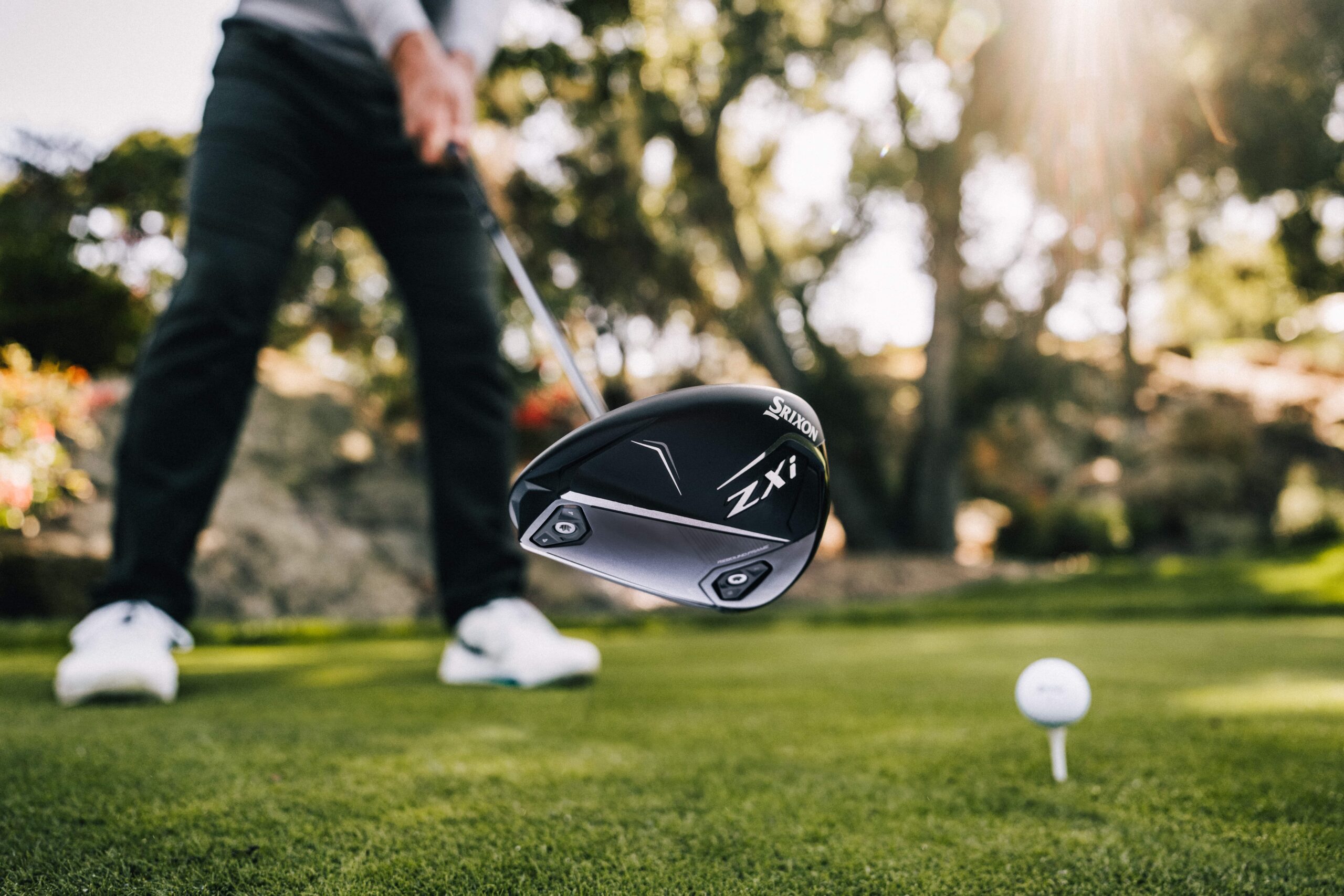
At the heart of the ZXi Driver lineup is Srixon’s proprietary i-FLEX face technology, a redesigned variable-thickness face pattern that boosts energy transfer at impact. By reinforcing support zones while allowing the center to be ultrathin, i-FLEX increases trampoline effect and ball speed without compromising durability—essentially optimizing COR (Coefficient of Restitution, a.k.a. “spring-like effect”) across a broader strike area. The face isn’t working alone: STAR FRAME crown latticework supports a feather-thin titanium roof, dramatically reducing mass up high so that engineers can reposition discretionary weight to fine-tune launch, spin, and MOI.
Their Rebound Frame system with dual flex zones further amplify face deflection where it matters most, increasing distance potential on both center and off-center strikes. Advanced laser face-milling patterns improve spin stability—especially in wet conditions—and the adjustable hosel and removable sole weights give players precise control over trajectory, spin, and bias parameters. The ZXi LS and ZXi Max offer tailored low-spin or high-MOI platforms, respectively, making this series appealing across many different swing profiles with performance tunability built in.
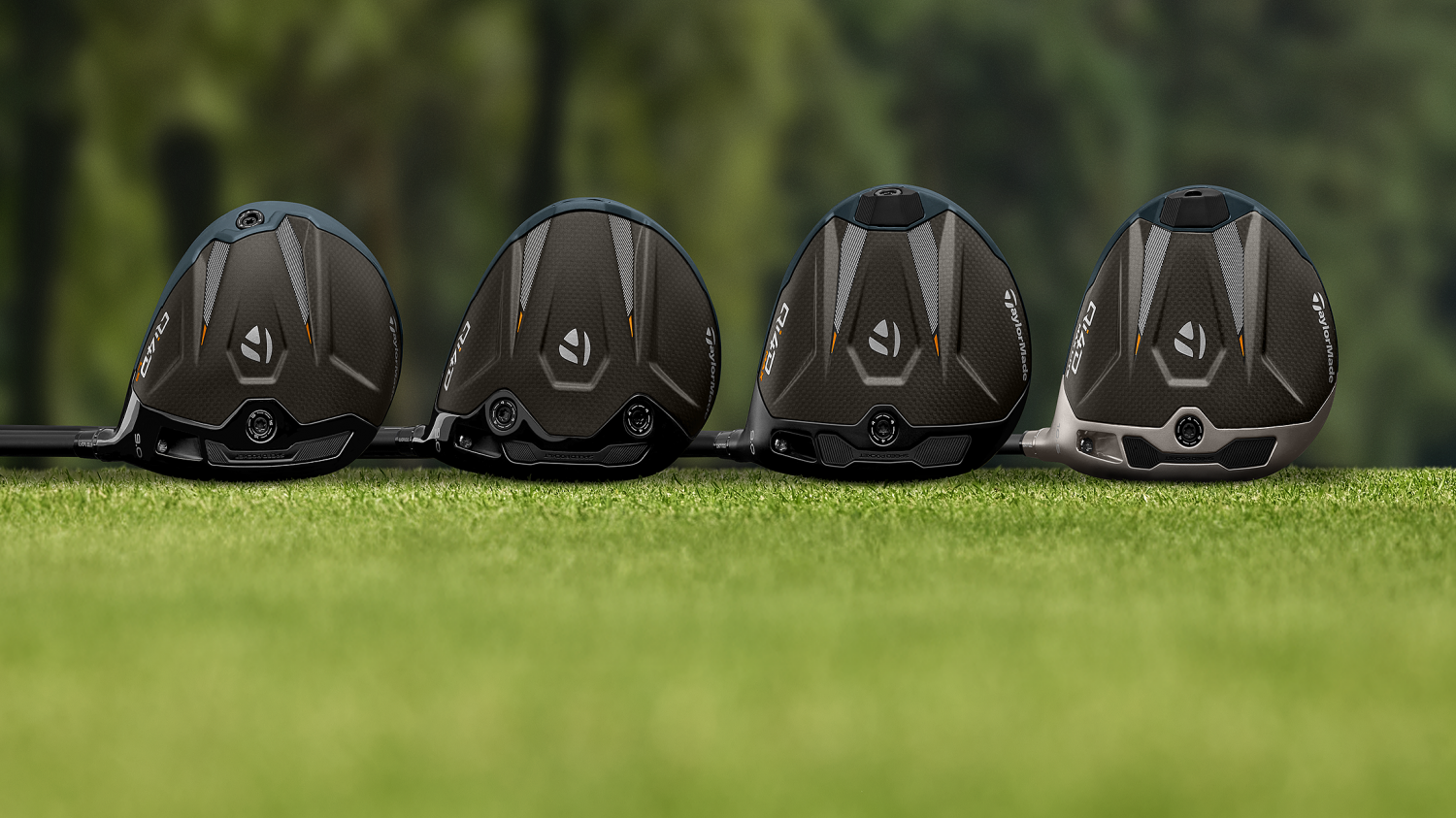
TaylorMade Qi4D
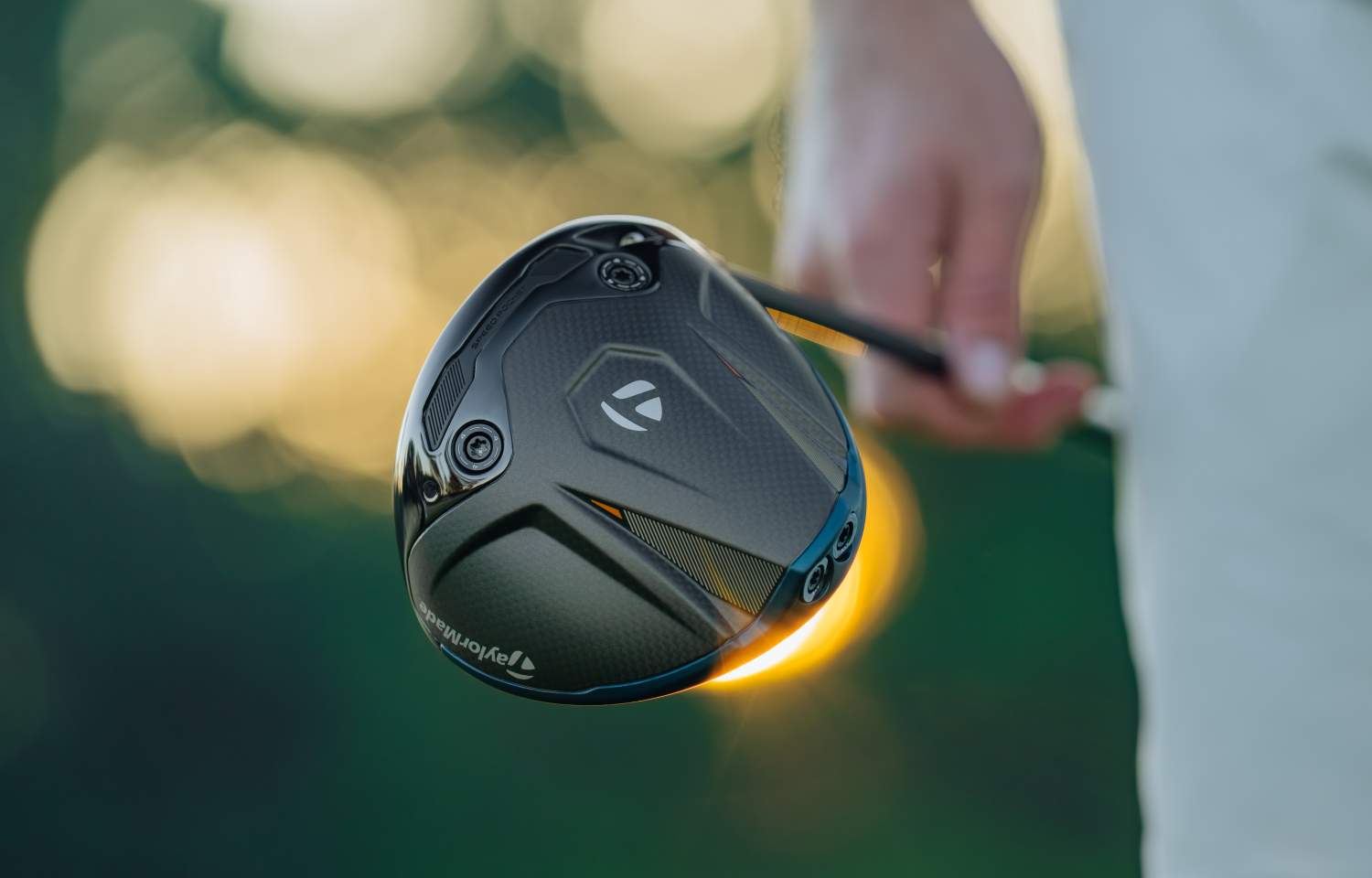
At the heart of TaylorMade’s Qi4D Driver series is a new 60X Carbon Twist Face—a lighter, high-strength carbon face engineered to improve energy transfer at impact and expand the high-performance COR envelope. This material shift reduces overall head mass and lets TaylorMade engineers fine-tune launch and spin characteristics while boosting ball speed across the face. The Qi4D heads also feature a reengineered roll radius, designed through advanced simulation to tighten spin consistency across vertical impact points, reducing the typical variance between high and low strikes.
Aerodynamically optimized shaping cuts drag through the downswing, helping preserve clubhead speed into impact. Their Trajectory Adjustment System weights deliver unprecedented mass-efficient adjustability: the core model uses four moveable weights to dial CG for preferred launch, spin, and bias, while other models look to provide the ideal balance of forgiveness and distance. A four-degree adjustable loft sleeve lets fitters further fine-tune loft, lie, and face angle to a player’s profile. Other models in the series include the Qi4D LS for low-spin precision, the Qi4D Max for players who want more forgiveness, and the Qi4D Max Lite, which is optimized for players with slower swing speeds.
Tour Edge Exotics
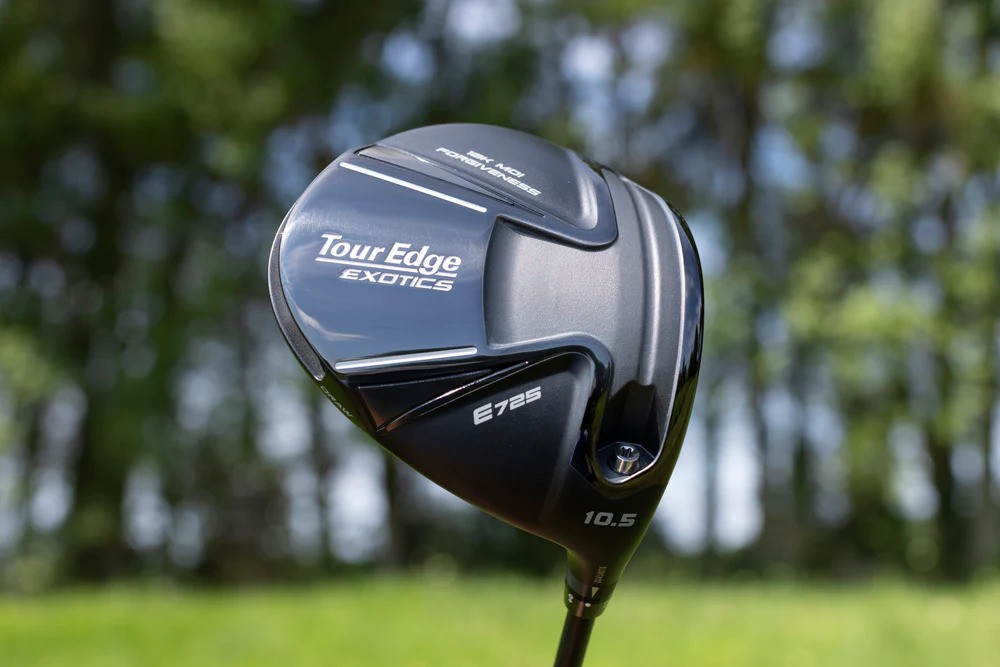
Built around a carbon-heavy construction strategy, Tour Edge’s new Exotics driver lineup uses lightweight carbon in both the crown and sole to strip excess mass from the shell. That discretionary weight is then repositioned with intent, pushing CG lower and deeper to raise MOI while preserving fast launch conditions and controlled spin. At impact, Pyramid Face Technology does its thing. This 3D variable-thickness face structure removes unnecessary material from low-stress zones, allowing the face to flex more efficiently where ball contact actually occurs. The result is a broader high-COR area that maintains ball speed on off-center strikes, leading to a measurable gain in dispersion patterns.
Supporting the face is Tour Edge’s 360-degree Ridgeback Technology, a rigid titanium frame that stabilizes the head perimeter and amplifies face deflection without increasing overall mass. Across the Exotics family, tungsten weighting and adjustable flight tuning systems allow precise CG tuning to favor forgiveness, low-spin performance, or maximum stability depending on the model. The engineering philosophy is clear: optimize structure first, then fine-tune mass.

Hi, appreciate the driver review but it is all press release material from the manufacturers. How about a legitimate test to the new drivers by a group of avid golfers from a cross section of age, handicap, etc.
Best,
Jim