

Many course connoisseurs assert that golf course architecture is experiencing a new Golden Age. Proof is the anticipation building for courses that will formally open in 2026—including Georgia entries The Patch and The Loop at The Patch in Augusta and Fenmoor at Reynolds Lake Oconee; 21 Golf Club (MacKenzie) in South Carolina; and three new projects from the Keiser family: The Commons at Sand Valley in Wisconsin, Wild Springs Dunes in Texas, and Rodeo Dunes in Colorado.
When thoughts turn to the actual Golden Age of golf architecture, 1926 jumps out. Donald Ross, A.W. Tillinghast, George Thomas, and Seth Raynor were in prime form in the U.S. And Alister MacKenzie made his first visits to Australia and the U.S. that same year.
Here are the top 10 American courses that opened in 1926.
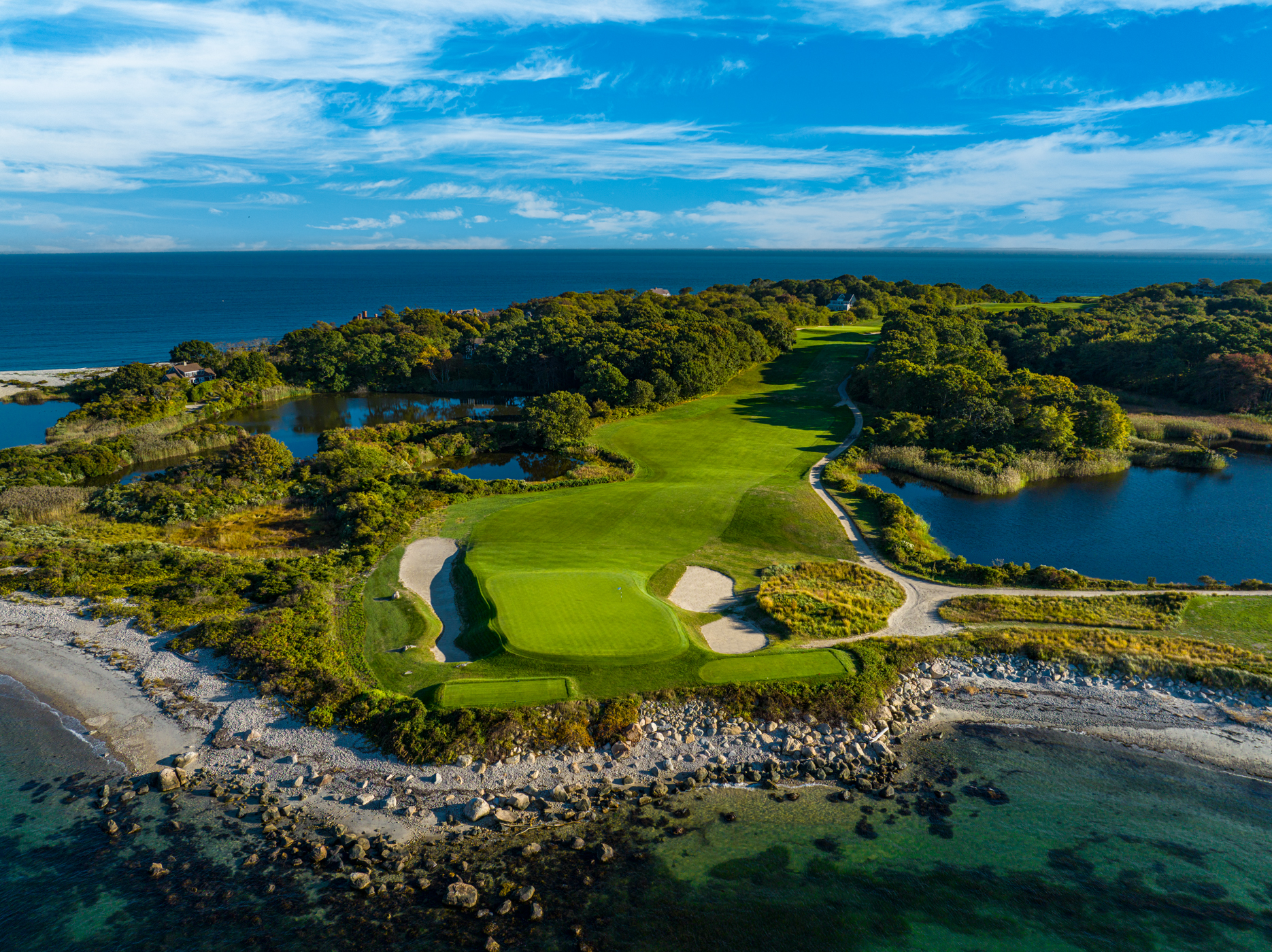
Fishers Island Club—Fishers Island, N.Y.
The architects of the world ranked this extremely private northeast enclave a gaudy No. 32 in The LINKS 100. Accessible only by air or ferry, Fishers Island off the Connecticut coast is a low-key Seth Raynor design with classic template holes and eye-popping vistas throughout. “The first time you play it, you can’t appreciate it architecturally,” said architect Gil Hanse in 2019. “There’s too much beauty to take in, too many water views—the Atlantic Ocean, Fishers Island Sound, and tidal marsh all frame what you see.”
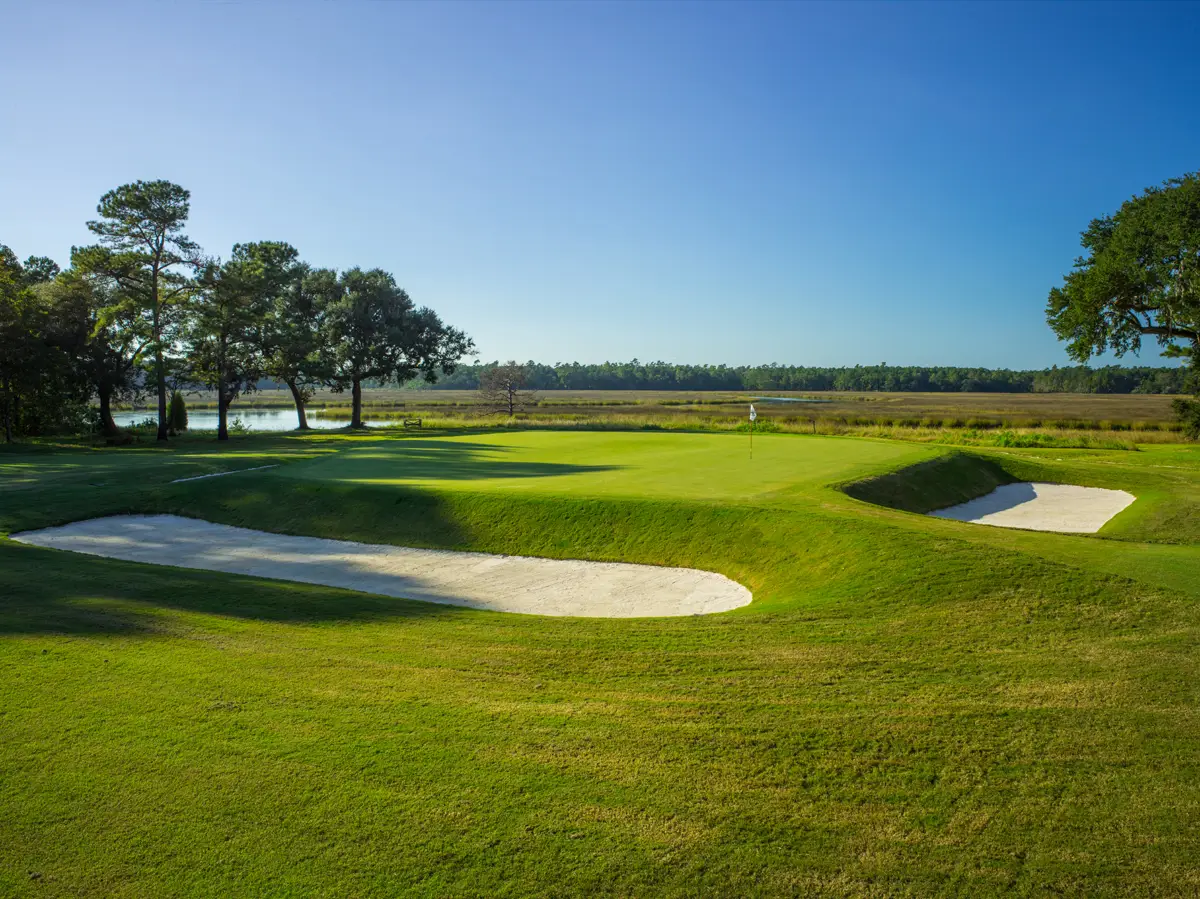
Yeamans Hall Club—Hanahan, S.C.
Yet another quiet classic from Seth Raynor, this Charleston-area spread sprawls over a huge acreage, allowing for plenty of strategic options via width, angles, and bunker placement. It also is another example of a course—one of many—with a murky opening date. Raynor completed his design in June 1925, and informal golf was played in November of that year, but the course officially opened for play in February 1926. For the past 30 years, Tom Doak and then Jim Urbina have sensitively restored the massive, often squared-off greens, many that feature ingeniously crafted contours. The tranquility of the property is emphasized by the Lowcountry setting, complete with vast marshes and live oaks drenched in Spanish moss.
Camargo Club—Indian Hill, Ohio
Pete Dye was heavily influenced by this low-profile, 1926 Seth Raynor creation in suburban Cincinnati that dishes out exceedingly deep, rectangular bunkers and huge, squared-off greens on a property laced with valleys and ravines. The usual Macdonald/Raynor template holes are in place, from a Biarritz to a Redan, yet the two strongest par threes might be the 5th and the 11th, modeled after the two one-shotters at the Old Course at St. Andrews.
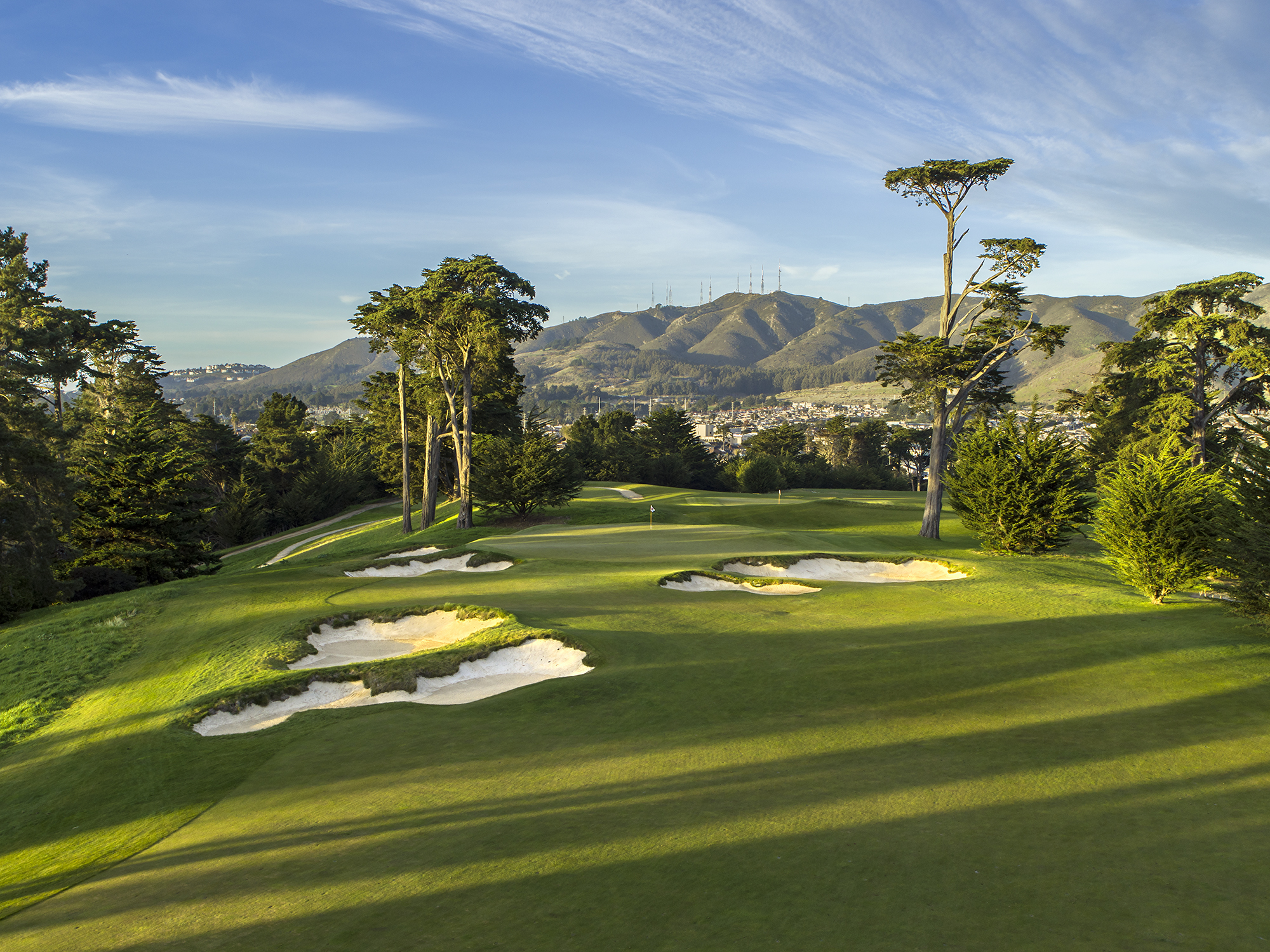
California Golf Club of San Francisco—So. San Francisco, Calif.
For most of its 100-year history, the Cal Club, as locals call it, served up a well-regarded Bay Area course, but one that clearly played third fiddle to Olympic and San Francisco. Not anymore. Following a Kyle Phillips re-do that was part restoration and part re-design, many feel this private A. Vernon Macan/Alister MacKenzie layout is now near equal to its more venerated neighbors. Yanking out trees to restore city skyline and mountain views and reinstalling the sprawling, multi-lobed MacKenzie bunkers have elevated the Cal Club to rarefied air. Macan deserves to be better known, and his routing—with which he may have had help from Willie Locke—remains mostly intact. MacKenzie arrived in 1928, but primarily just enhanced the bunkering.
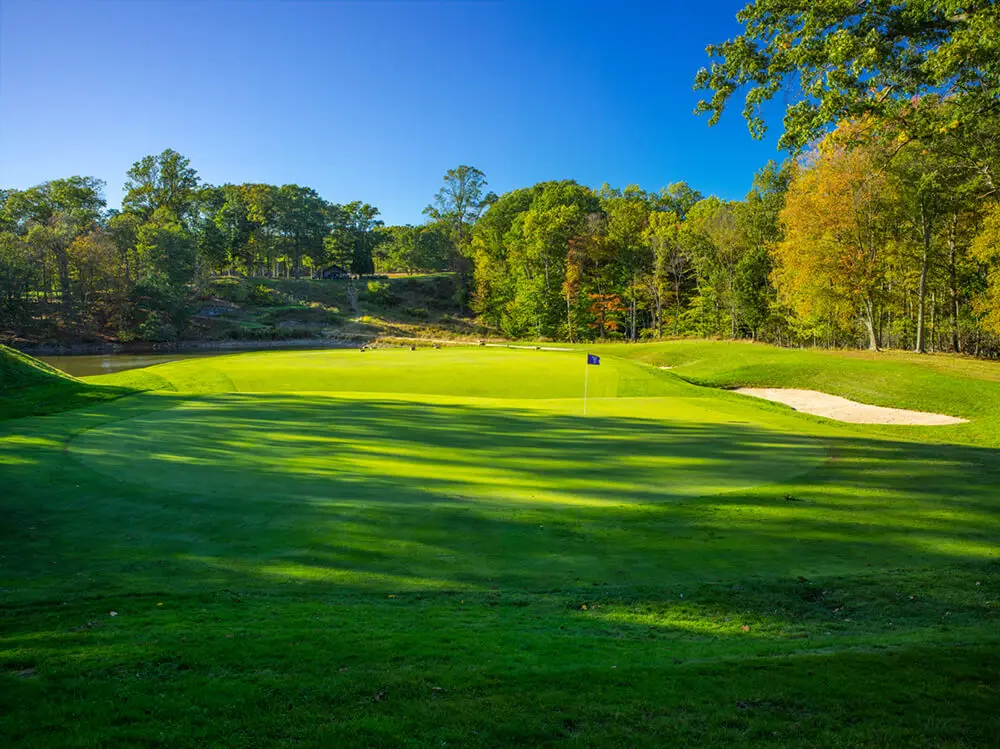
Yale Golf Course—New Haven, Conn.
Students pursuing a Ph.D. in golf course design appreciation could do no better than Yale. Designed by C.B. Macdonald with Seth Raynor, Yale dishes out classic template holes that mimic the greatest examples of British links tests—that were somehow successfully transplanted to the hilly, rocky, wooded terrain of southern Connecticut. The Biarritz-style 9th and the Redan 13th, measuring 213 yards and 230 yards, respectively, are standouts. The golf course is expected to reopen later in 2026 after a Gil Hanse restoration.
Baltimore Country Club (East)—Lutherville, Md.
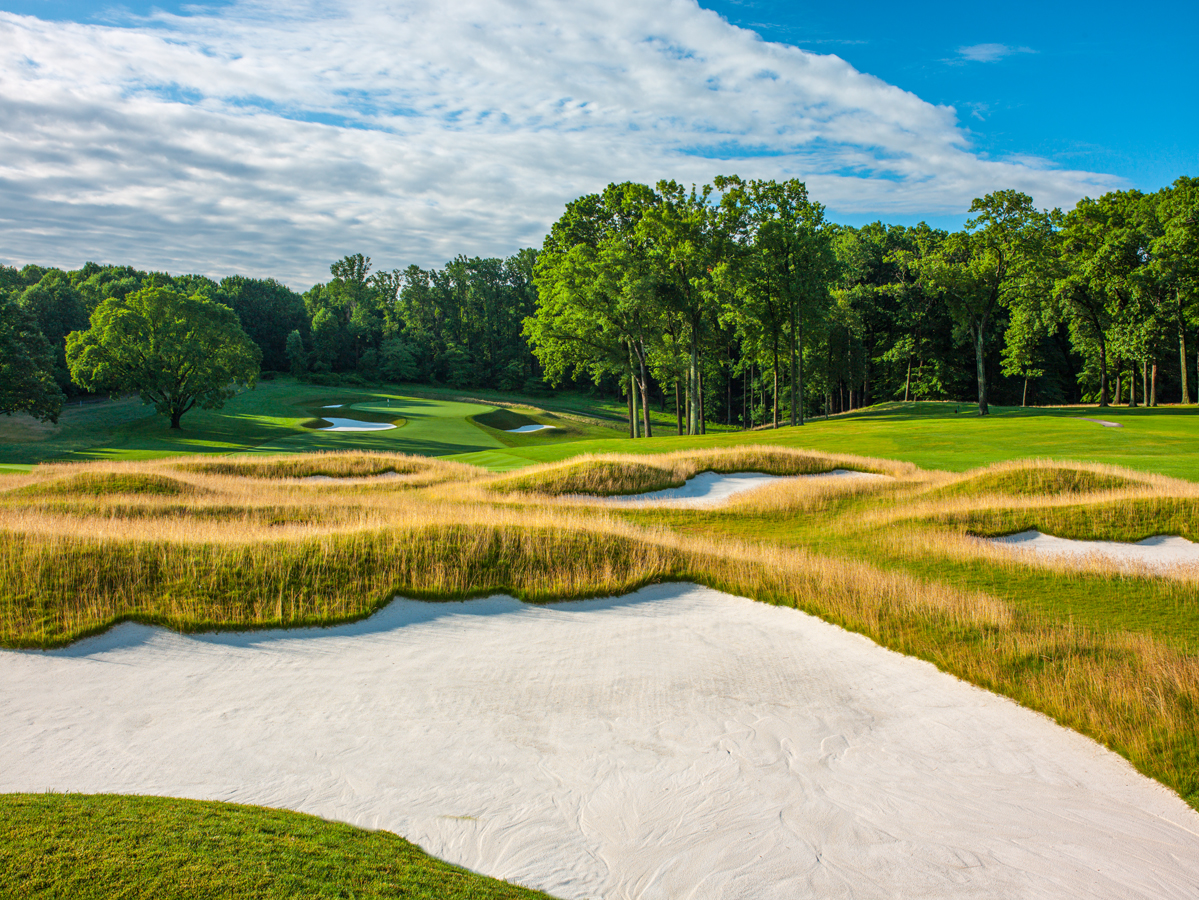
Leo Diegel snapped Walter Hagen’s PGA Championship winning streak at four when he triumphed at Baltimore’s two-year-old course at its new Five Farms campus in 1928. The 1965 Walker Cup and 1988 U.S. Women’s Open also took place here. More recently, the course hosted three Senior Players Championships (2007–09). Players coped with the severely breaking greens and the memorable A.W. Tillinghast-designed par fives such as the “Barn Hole” 6th and the endless 607-yard 14th, with its “Hell’s Half Acre” bunker complex. The U.S. Senior Amateur arrives here in late August 2026.
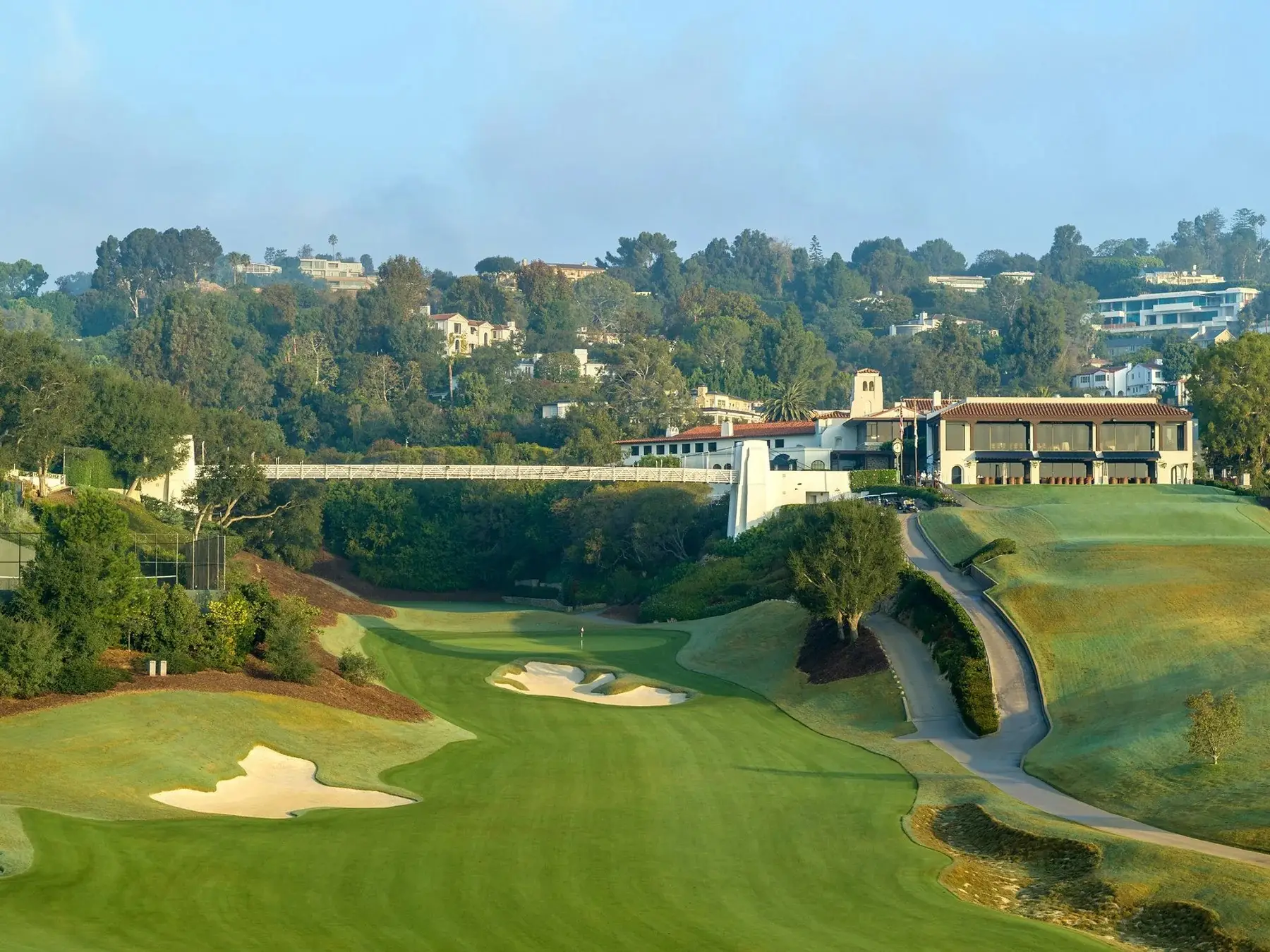
Bel-Air Country Club—Los Angeles, Calif.
Draped across the hills above Sunset Boulevard, overlooking Westwood and Century City, Bel-Air features a brilliant routing by George Thomas that weaves in and out of canyons. The back nine bows with the fabulous 205-yard par-three 10th that demands a 150-yard carry across a steep canyon. The uphill par-four 18th plays beneath one of golf’s iconic symbols, the Swinging Bridge, rededicated in 2015 for longtime pro Eddie Merrins. A 2017–18 Tom Doak restoration put back much of Thomas’s magic, as exemplified by the play at the 2023 U.S. Women’s Amateur. The course will host the Curtis Cup in June 2026.
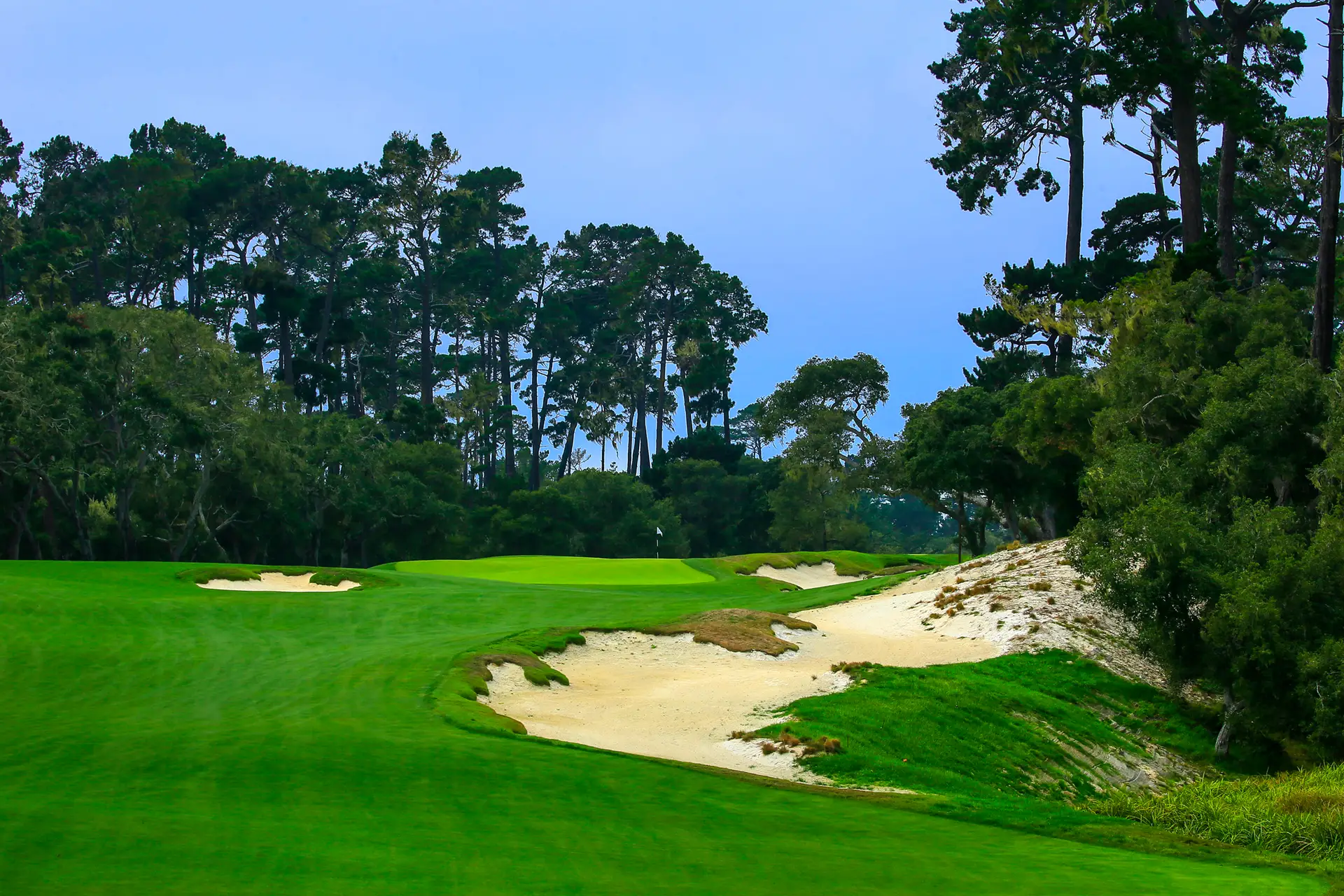
Monterey Peninsula Country Club (Dunes)—Pebble Beach, Calif.
Blessed with excellent bones and a remarkable architectural pedigree, MPCC’s Dunes co-hosted the PGA Tour’s Bing Crosby Pro-Am (now AT&T Pebble Beach National Pro-Am) from 1947 until 1964. Seth Raynor designed the Dunes, but he died early in its construction, and it was finished by the capable men working next door at Cypress Point, Alister MacKenzie and Robert Hunter. However, even with its dunes, ocean holes, handsome trees, and deer prancing everywhere, it never quite realized its early potential, even after some well-received Rees Jones alterations in 1998. Enter Tom Fazio, with son Logan, who teamed with former associates Tim Jackson and David Kahn for an extreme makeover, similar to what Mike Strantz accomplished with MPCC’s Shore course in 2004. Re-opened in 2016, the Dunes saw the size, contouring, and configuration of the greens change and witnessed the enhancement of existing dunescapes and the establishment of others. The course played host to the U.S. Women’s Mid-Amateur in October 2025.
Country Club of Buffalo—Williamsville, N.Y.
Donald Ross enjoyed another stellar year in 1926. Among his designs that opened were Sedgefield Country Club, past and current home to the PGA Tour’s Greensboro event, plus two other stellar layouts in the Tar Heel state, Roaring Gap and Cape Fear. One of his hidden gems in the northeast is the Country Club of Buffalo. The club dates to 1889 and it hosted the 1912 U.S. Open on an early course after a move in 1902. Feeling the need for more space, the club relocated again in 1923 and three years later, Ross delivered a course of exceptional quality, draped atop the Onondaga Escarpment and incorporating a limestone quarry into six holes. After a visit a decade ago, Tom Doak remarked, “The set of short holes is outstanding from top to bottom,” singling out the 6th, “with its tees along the rim of a quarry and a long narrow green set on a bluff with steep drops to all sides.” A past host to the 1931 U.S. Women’s Amateur, the 1950 Curtis Cup, and the 1962 U.S. Girls Junior, the Country Club of Buffalo will host the 2027 U.S. Women’s Mid-Amateur and the 2032 U.S. Senior Amateur.
View this post on Instagram
Rolling Green Golf Club—Springfield, Pa.
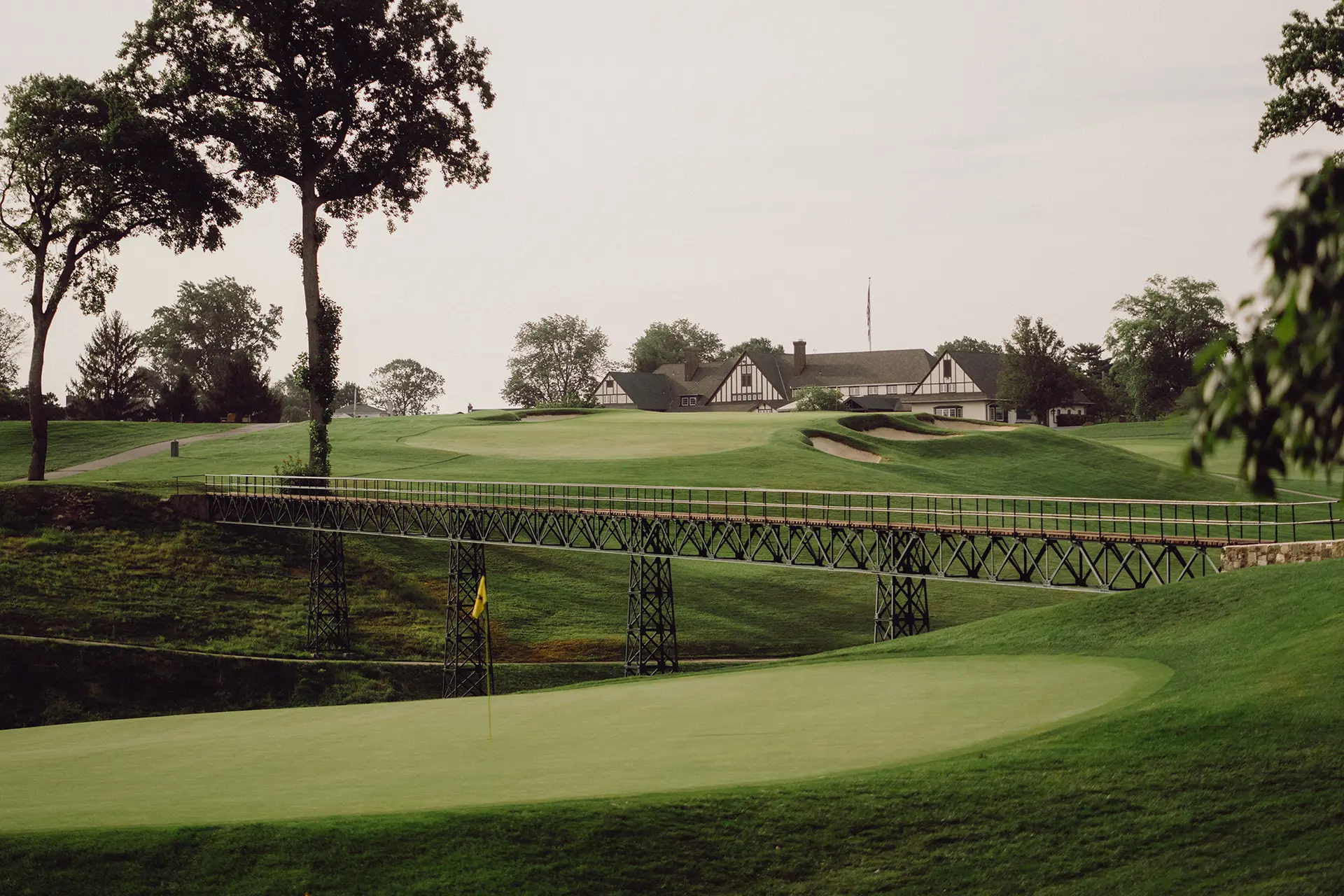
William Flynn hailed from Massachusetts, and his greatest accomplishments occurred in New York (Shinnecock Hills), Virginia (Omni Homestead Cascades), and Colorado (Cherry Hills), yet the largest concentration of outstanding Flynn creations sits in suburban Philadelphia. Among the superb layouts he crafted in the City of Brotherly Love are Huntingdon Valley, Manufacturers, and Philadelphia Country Club. Equal to any of them is Rolling Green. A demanding test on undulating parkland, Rolling Green played host to the 1976 U.S. Women’s Open won by Joanne Carner and to the 2016 U.S. Women’s Amateur. Among its standout holes are the 476-yard par-four 13th, which features an approach over a vast ravine, followed by the 229-yard par-three 14th which plays to a well-bunkered, angled putting surface, its green accessed by a long, handsome bridge that spans the ravine.

Riviera???
Riviera was founded in 1926, but the course opened in 1927.
Wilmington Municipal could be on a public only list. Great Donald Ross track