The most unsung of George Thomas’s incomparable L.A. triumvirate wows with one of history’s most ingenious routings
Forget about all the Hollywood A-listers who belong to Bel-Air Country Club, including Jack Nicholson, Tom Cruise, Jason Bateman, and Dennis Quaid. The real star at this Los Angeles shrine is the unique layout from Golden Age great George Thomas. Best known for crafting L.A. North and Riviera, Thomas conjured up every bit of design magic he possessed in creating a truly unconventional course in a most improbable location. No other classic course on the planet features tees and greens accessed by elevator, tunnels, and a suspension bridge. When century-old Bel-Air hosts the Curtis Cup in June, competitors and architecture fans will get a good glimpse of Thomas’s genius.
Draped across the hills above Sunset Boulevard, overlooking Westwood and Century City, Bel-Air was the brainchild of oil baron Alphonzo Bell. Equipped with cash and ambition, Bell master-planned an exclusive community and club 12 miles west of downtown Los Angeles. In the mid-1920s, he enlisted Thomas to create the golf course from the slopes and valleys of a network of canyons.
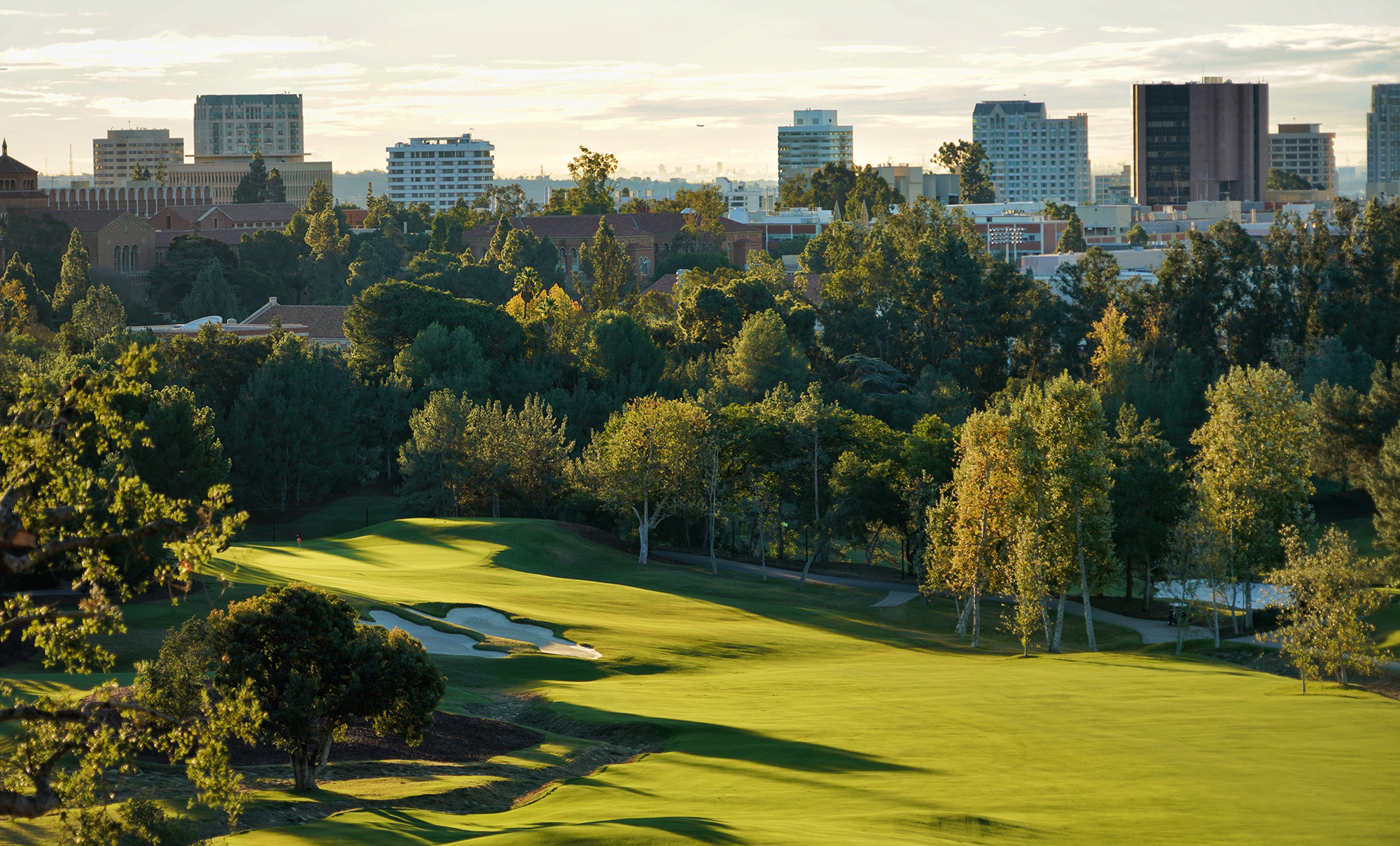
After routing the first nine holes, Thomas was stymied. Seventy-five acres that were intended to house the second nine had been relinquished in 1925 for use by the new UCLA campus. Now where to go?
Thomas, his design and construction collaborator William P. “Billy” Bell, and amateur stalwart Jack Neville, who designed Pebble Beach, hit on a solution. Looking westward from the precipice where the clubhouse was to be sited, they calculated that if a wide ravine could be carried, they could build a golf hole there—the 10th—and it would allow for eight other holes to be sewn into adjoining canyons. Neville smacked a putter across the chasm and Thomas followed suit. Mission accomplished.
To emerge from the canyon-wall dead-ends, Thomas devised an innovative system of lighted, concrete tunnels, plus an elevator to take golfers from the 9th green to 10th tee, via a stop at the hilltop clubhouse. “Thomas’s plan for Bel-Air may well be the most spectacular routing ever conceived,” says Tom Doak.
Over the years, the course lost luster owing to ill-advised, if fashionable in the day, alterations. Doak earned the commission to put back as much of Thomas’s exalted work as possible, including green sizes and contours and those huge, fabled Thomas/Bell bunkers. Doak also eliminated non-original bunkers and water features, thinned trees, and restored short grass surrounds.
Prime examples of Doak’s 2017–18 restoration are sprinkled throughout the 6,800-yard, par-70 spread. At the 175-yard par-three 3rd, he swapped out a garish pond for a massive original bunker. He shortened the now 145-yard par-three 5th by 30 yards, moving the green to its 1926 location.
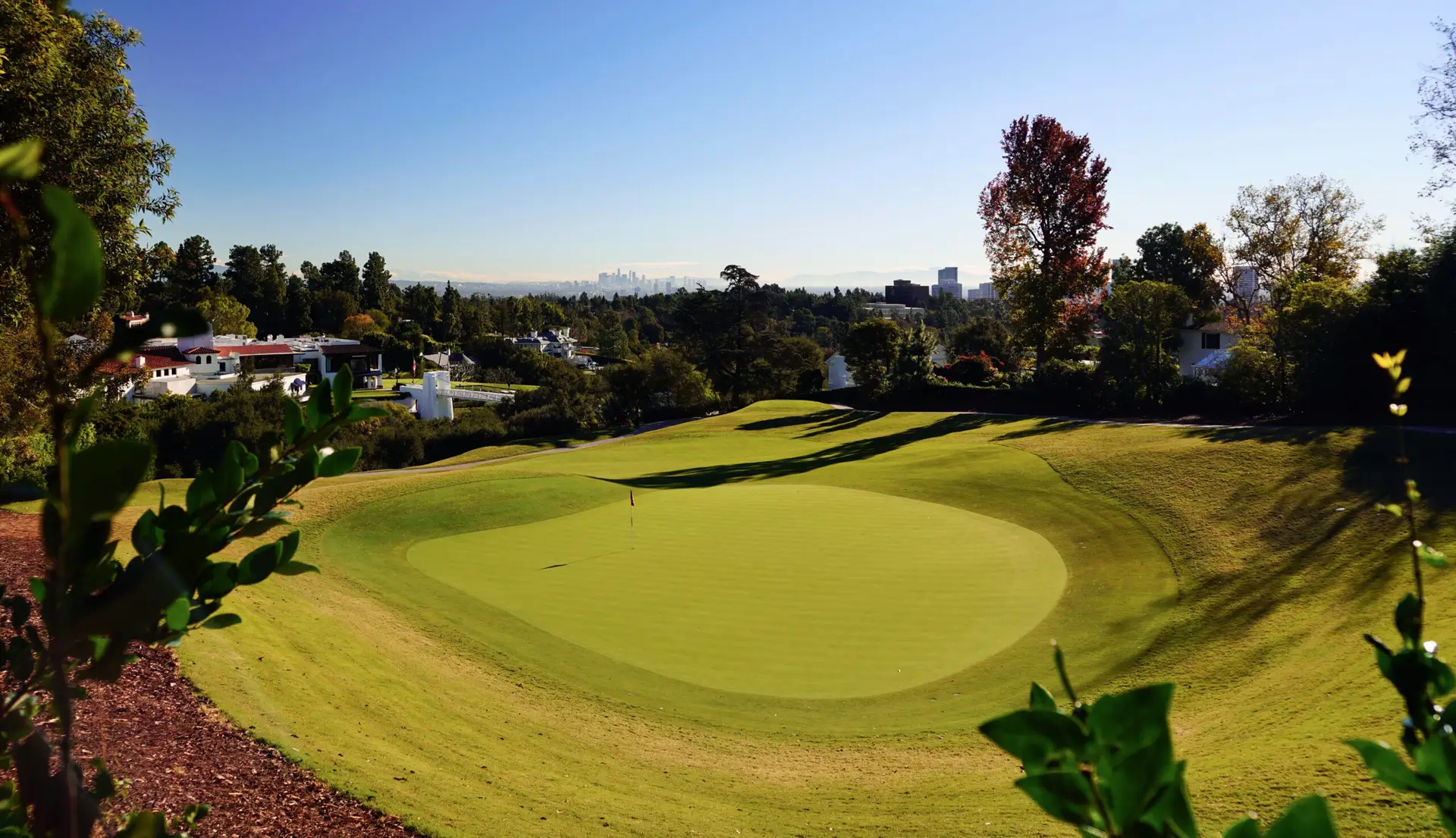
Doak also yanked out the add-on greenside bunkers at Bel-Air’s most famous hole, the stunning 205-yard par-three 10th, which calls for a pulse-quickening carry of 150 yards over that steep ravine. To access the green from the tee, golfers traverse the iconic Swinging Bridge, rededicated in 2015 to honor genial Eddie Merrins, “the Little Pro,” who served as Bel-Air’s head professional from 1962 to 2003.
Bel-Air concludes with a pair of gems. The 475-yard par-four 17th starts from an elevated tee and heads toward downtown Los Angeles and the San Gabriel Mountains before turning to the right along a narrowing ridge to a green that falls away from the line of play. Bobby Jones and Ben Hogan both cited the hole as among the finest they had played. The 420-yard par-four 18th journeys 70 feet uphill over a massive center bunker to a slender green in the shadows of the Swinging Bridge.
“If I had suggested this [routing and hole access] to a client today, they would think I was kidding,” says Doak. It’s no joke. Bel-Air is a one-of-a-kind wonder.