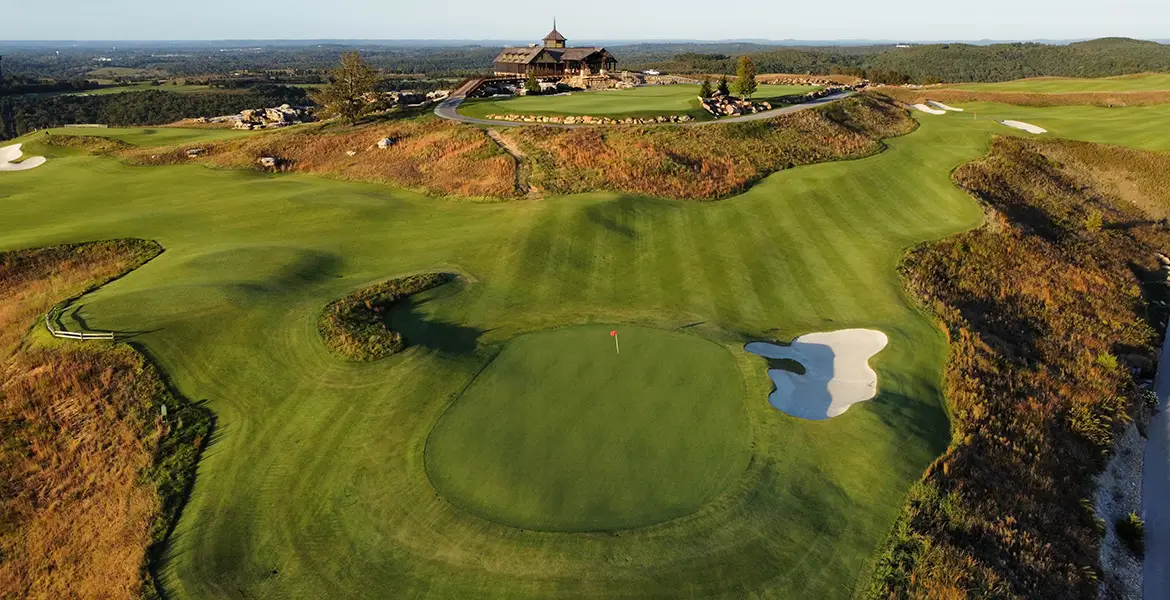
Three months before the 2026 WM Phoenix Open, the Stadium Course at TPC Scottsdale was already flexing its muscle. Sure, the putting surfaces were rolling slower on the stimpmeter and the fairways weren’t playing quite as firm as tournament week. But even in November—with construction of the grandstands in its early stages—the championship venue’s rough was tall, lush, and brutally penal. If you missed the fairway by less than a yard, you might have needed an extra couple of minutes to find your ball and likely faced a punch out versus a chance to go for the green. And this was still three months prior to the start of the tournament!
For years, television coverage has implied that the Stadium’s primary defenses are the arroyos and other desert landscapes that occasionally bisect the fairways; the water hazards that prominently come into play on more than half the back-nine holes; and the raucous crowds that can rattle any player lacking the utmost focus. “I was in the zone,” 2025 tournament winner Thomas Detry says when he reflects on his performance. “You sort of have to be, because you’ve got 250,000 people shouting at you at the same time.”

Those challenges may be present during the four days of the WM Phoenix Open, but my experience playing the Stadium Course provided another insight to the challenges that the best players in the world face each year. The rough was just that; however, the opportunity to play a course renowned for hosting championships was, nevertheless, thrilling. Fortunately, Scottsdale is home to multiple courses that fit that criteria, and we’ve highlighted them here.
TPC Scottsdale (Champions Course)
Talk to some of the locals, and there’s a good chance that many will tell you that they prefer the Randy Heckenkemper-designed Champions Course to the highly publicized Stadium. Built on land that was once home to the club’s Desert Course, the par-71 layout stretches to more than 7,100 yards and annually hosts the Carlisle Arizona Women’s Golf Classic on the Epson Tour, the developmental tour for the LPGA. Although relatively flat, the routing still boasts a bit of movement in the earth and golfers, as they play along and around plenty of cottonwood trees, will definitely know they’re teeing it up in Arizona.

Grayhawk Golf Club (Raptor)
Grayhawk Golf Club is home to two beautiful and challenging layouts, but it’s the Tom Fazio-designed Raptor course that has served as a PGA Tour host (the Frys.com Open from 2007–09) and welcomed the NCAA Division I Championships from 2021–23. Across its 7,151 yards, the par-72 course brings some desertscapes into play, but it also boasts fairways with generous landing areas, provided players know their own limits and can select the proper clubs to target the widest points of each hole. According to Travis McCutchan, the club’s assistant general manager, average amateurs would be wise to attack hole locations only from the fairway. “The previous championships, especially the recent NCAA Championships,” he says, “revealed how hard the Raptor course can play for the best golfers in the world if we want to set it up that way.”
Troon North Golf Club (Monument and Pinnacle)
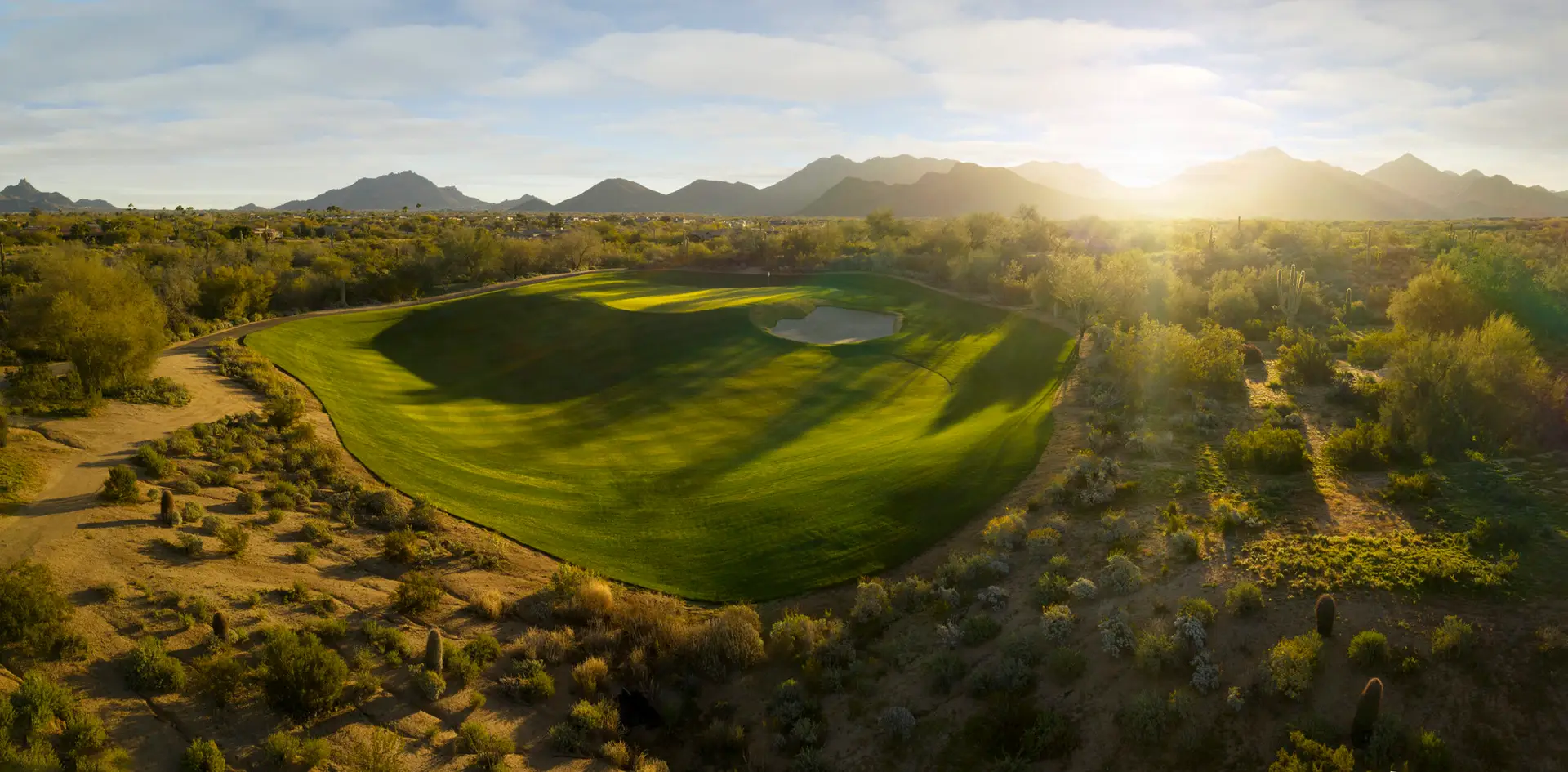
Unlike at Grayhawk, golfers who tee it up at Troon North are certain to play some of the holes that were used in the 2025 U.S. Mid-Amateur Championship, regardless of which course they choose. That’s because the USGA relied on a composite routing of holes taken from both the Monument and the Pinnacle courses. Both routings are Tom Weiskopf designs, which means you’ll be sure to find similarities between them; however, there are distinctions, too. Some will argue that Monument is a bit wider and offers more forgiveness, or that the Pinnacle better embodies the target-golf ethos of playing in the desert. What’s not open for debate is their differences in elevation change. Simply put, the Pinnacle course is infused with drama thanks to mountainous climbs, perched greens, and occasional tee shots hit from lofted vantage points.

Papago Golf Club
The U.S. Amateur Public Links Championship was discontinued more than a decade ago. But long before such a fate was even considered, Scottsdale’s celebrated municipal course, Papago—the home course for Arizona State University’s golf teams—hosted the USGA event in 1971. (More recently, this William Bell design hosted the J Golf Phoenix LPGA International in 2009). Most days, the course’s Blue tees, which stretch to almost 6,900 yards, serve as the tips; but when it needs an even bigger bite, the Black tees, at 7,380 yards, come out to play. With just the right amount of contouring and notable elevation change, this 62-year-old layout meanders through arid landscapes, occasionally offering up striking views of towering buttes nearby. With five par fours playing less than 400 yards, the course serves up its fair share of scoring chances, but those opportunities are offset by four intimidating one-shotters that make par a highly attractive outcome.

Wildfire Golf Club
You really can’t go wrong playing at Wildfire Golf Club, a 36-hole facility affiliated with the JW Marriott Desert Ridge Resort & Spa. The club features the Palmer Signature Course layout that, across its 7,145 yards, flaunts flashed bunkers and greens benefiting from plenty of undulation. Yet it’s the Faldo Championship Course, playing 300 yards shorter, that delivers an even more daunting test, which is why it hosted the LPGA’s Founders Cup from 2011–19. As the club likes to point out, the six-time-major-champion’s routing draws parallels to those found along Australia’s Sandbelt. In particular, the course is defined by expansive fairways, equally large putting surfaces, and 108 bunkers.

The Westin Kierland Golf Club
The host course of the USGA’s 1997 Women’s State Team Championship isn’t like most courses in the area. Yes, the golf resort’s desertscape surroundings offer up the appearance of a traditional Sonoran environment, but many of the holes are contoured in such a way that their perimeters are punchbowl-like. Furthermore, several holes run parallel to one another, allowing the chance for a player to still hit off of green grass, even after a wayward shot. In other words, players can soak up the mountain views and appreciate the dry washes and picturesque desert trees. If they do find themselves in trouble, well… there’s no other way to say it: the shot that put them there was just that bad.