

Great golf courses are inevitably composed of great golf holes—and any course ranked in The LINKS 100, the top 100 courses in the world, is obviously chock full of superb individual holes. Yet, the very best courses possess outstanding variety among its exceptional holes, including par fours that require two long, accurate shots and the occasional par four that can be reached in one shot. The latter group are among the most compelling holes in golf, for their risk/reward excitement.
Here are the top 10 drivable par fours in The LINKS 100.
Cypress Point—Pebble Beach, Calif.
No. 9, 289 yards
As illuminated by the 2025 Walker Cup, top-ranked Cypress Point dazzles with shortish, strategy-laden holes, none more dynamic than the reachable 9th. Alister MacKenzie’s co-designer Robert Hunter described the view from the elevated tee as one of the wonders of the world but cautioned the wide-eyed slugger to focus properly because the fairway bottlenecks, growing narrower as one approaches a green he described as “positively terrifying as it nestles among the dunes and climbs in terraces up the 10th tee.” CBS ace broadcaster (and Cypress Point member) Jim Nantz notes that the front-right portion of the green is accessible from the tee with a long, bold drive, but he and many others aver that if the hole is cut higher up to the left, the more prudent play is a thoughtful lay-up to the right side of the fairway.
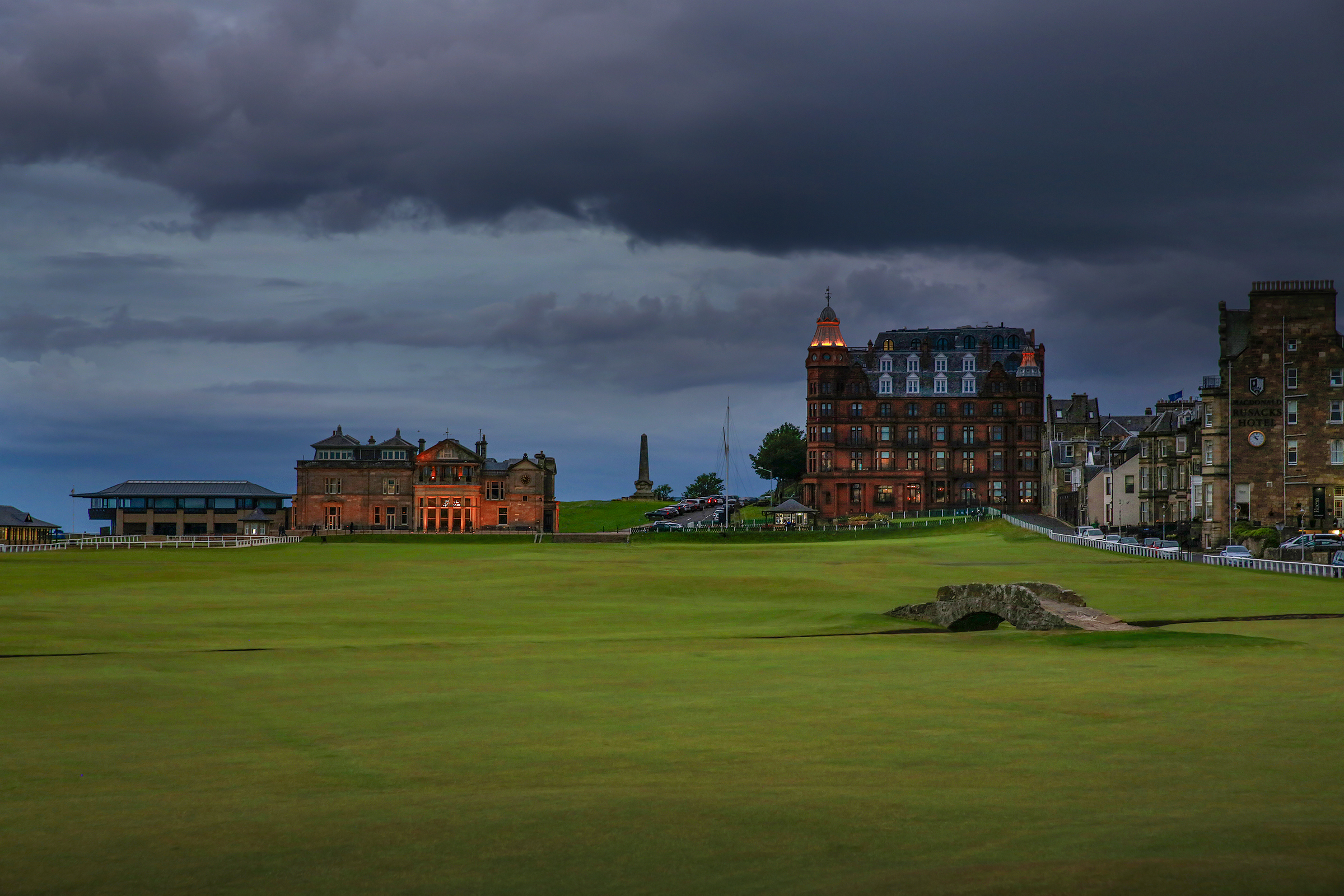
St. Andrews (Old Course)—St. Andrews, Scotland
No. 18, 357 yards
Architecture buffs will counter that the 12th hole, with its minefield of bunkers and narrow green, is the most strategically compelling of the drivable par fours at the Old Course. But is there a better one than the 18th? No. Amid today’s technology and the brick-hard fairways, competitors were driving the home green at the Open Championship in 2022 with irons and fairways woods. No matter. The Swilcan Bridge, the R&A clubhouse, the threat of OB right and long, and the specter of the Valley of Sin to cause an awkward putt or chip still makes this most historic of holes one of the best of its kind in golf.
Sand Hills—Mullen, Neb.
No. 7, 283 yards
No water here on this Coore/Crenshaw/Nature design, but sand, terrain, and prairie winds interlock to form an irresistible, yet frightening go-for-it-or-not prospect. There appears to be ample room to knock one on, but the freakishly intimidating bunker that’s poised short and left of the elevated green has induced many a twitch. George Peper’s book, The 500 World’s Greatest Golf Holes, crystalized the hole’s virtues. “The fairway, bunkers, and green are perfectly shaped to present the dilemma: to go, to get close, or to play short. How much advantage can be squeezed from the drive before disaster rears its head?”
View this post on Instagram
Royal Melbourne (West)—Melbourne, Australia
No. 10, 317 yards
An Alister MacKenzie masterpiece that played as the 8th hole during the 2025 Australian Open, this temptress demands a perfectly controlled draw around a gigantic, gaping hillside trap to a firm, fast, cunningly contoured putting surface—for those seeking to drive the small green set atop the highest point of the hill. Choosing the correct angle into the green is paramount, whether you’re going for it on the first shot or the second. A swale in the front of the green and deep greenside bunkers to the right will snare any approach that’s less than perfect. Architect and former Tour pro Mike Clayton, who co-authored Barnbougle Dunes with Tom Doak, considers this hole to be the finest of its length he has ever seen.
View this post on Instagram
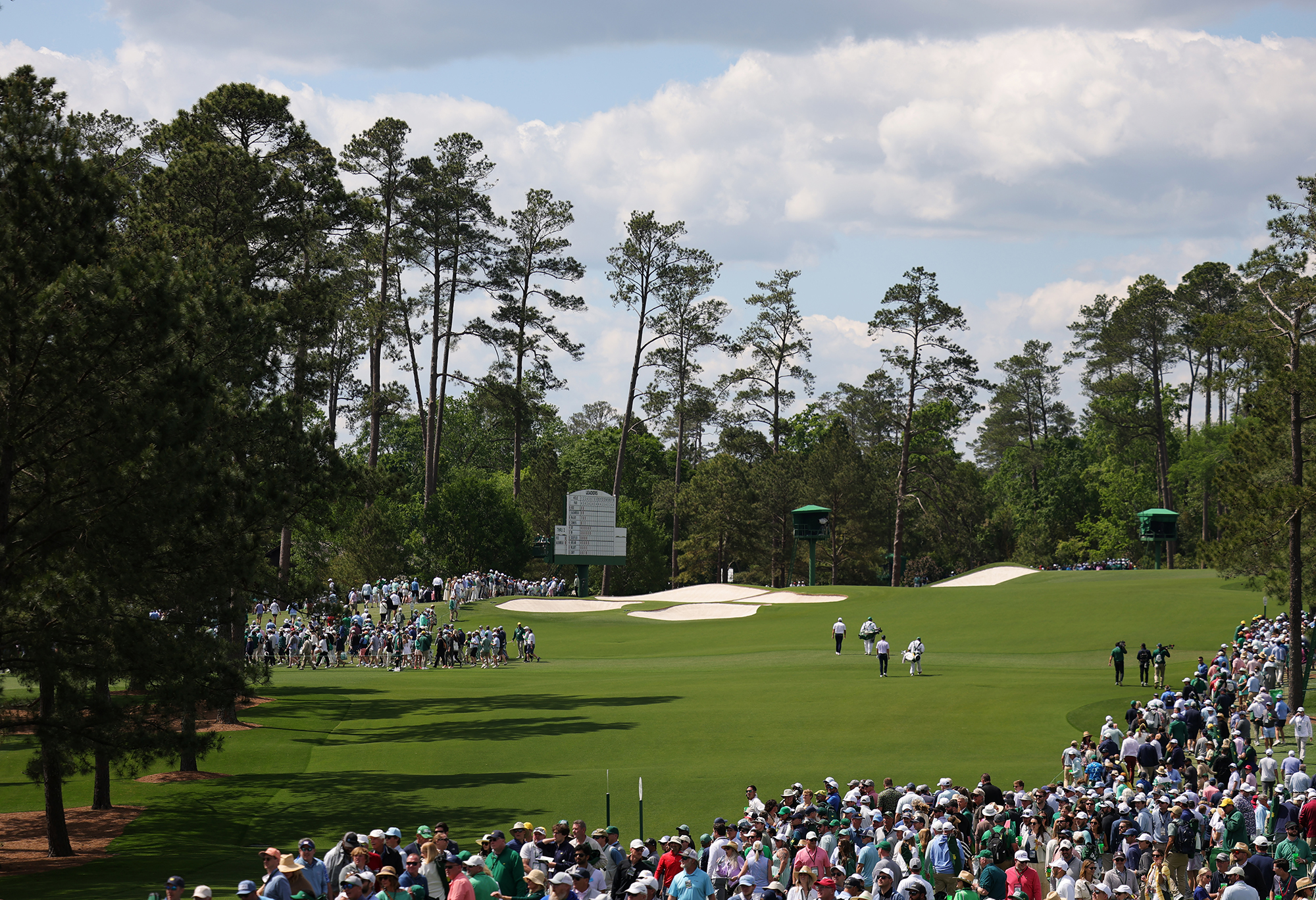
Augusta National—Augusta, Ga.
No. 3, 350 yards
At close to the same distance now as it was when Alister MacKenzie and Bobby Jones designed it in the early 1930s, Augusta National’s 3rd was always intended to be a drive-and-pitch hole, with options. It mostly remains that way today, but with modern driving distances, the green is reachable by most of the Masters field, especially on days when the tee is moved up. The question is, due to the severity of the green and the greenside contours, why would anyone choose to drive the green, given the awkward places the ball invariably finishes if it fails to alight on the putting surface? As Tom Weiskopf put it in 2016, “Just because you might be able to reach it doesn’t mean you can keep it on the green—not that green,” referring to the small, tabletop putting surface, which slopes right to left and falls away to the back, with a steep fall-off short. Augusta National’s 3rd is drivable, but its greatness is due to its intriguing lay-up options.
Oakmont—Oakmont, Pa.
No. 17, 312 yards
A pivotal hole in recent U.S. Open and U.S. Amateur championships, this apparent breather at one of the world’s toughest tests is anything but. The elevated green is ringed with five bunkers. The “Big Mouth” bunker short-right appears to be the scariest of the quintet, but another deep trap short-left is equally nightmarish. Worse is missing it long-left, as Jim Furyk did on the 71st hole in the 2007 U.S. Open. With an awkward stance and an awful lie in dense rough, it took him four to get down. Even with a layup, the hole looks simple enough, but the penalty for missing can intimidate even a U.S. Open champ.
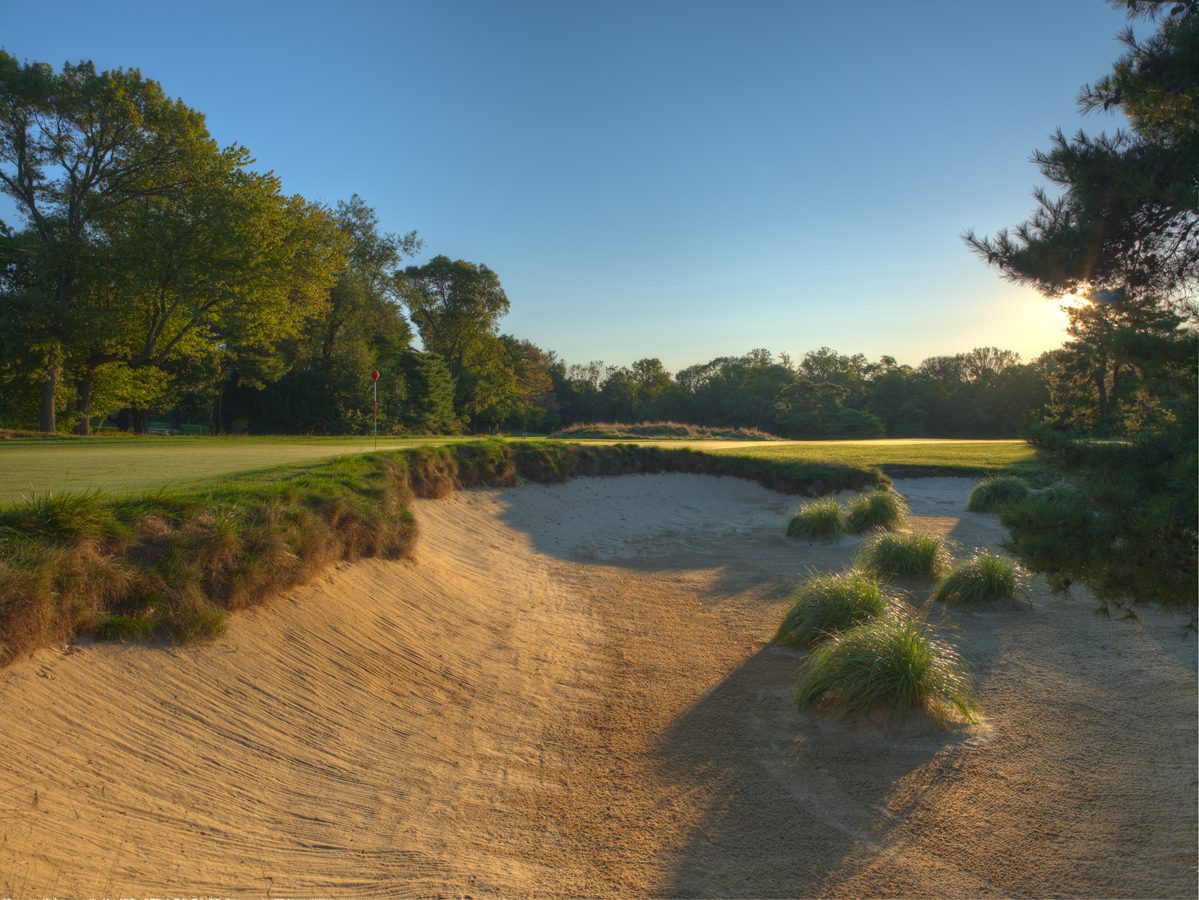
Merion (East)—Ardmore, Pa.
No. 10, 306 yards
In the middle of an enticing stretch of short holes, the wee 10th at Merion appears to be the most gettable. The front right-third of the green is wide and unprotected by sand or rough in front. However, to access that portion of the putting surface from the tee requires a drive from a chute of trees and one that has to bend 30 yards right to left. Shots missing left or right will find massive bunkers dotted or edged with broom, dense rough, or fescues. Smash one too long, on the wrong line and your ball could wind up on Ardmore Avenue. Nonetheless, most of the pros in contention during the final round of the 2013 U.S. Open had a go at the green, or at least in the vicinity, except Phil Mickelson, who laid well back off the tee, then dunked his wedge for an eagle 2. Look for match-play competitors to try every which way to reach this green in the 2026 U.S. Amateur.
Lahinch—Lahinch, Ireland
No. 13, 334 yards
Alister MacKenzie grafted a fistful of holes onto Old Tom Morris’s original design, and among his best is the 13th, one of the greatest examples anywhere of how contour can change the dynamic in an instant. The yardage makes the target well within reach, but bunkers, hollows, and a right-to-left slope squeeze the effective landing area to miniscule proportions. Yet, the hole is so short, how can you not go for it? Miss it right, however, and rough-cloaked broken ground awaits, with par from there hardly a guarantee.
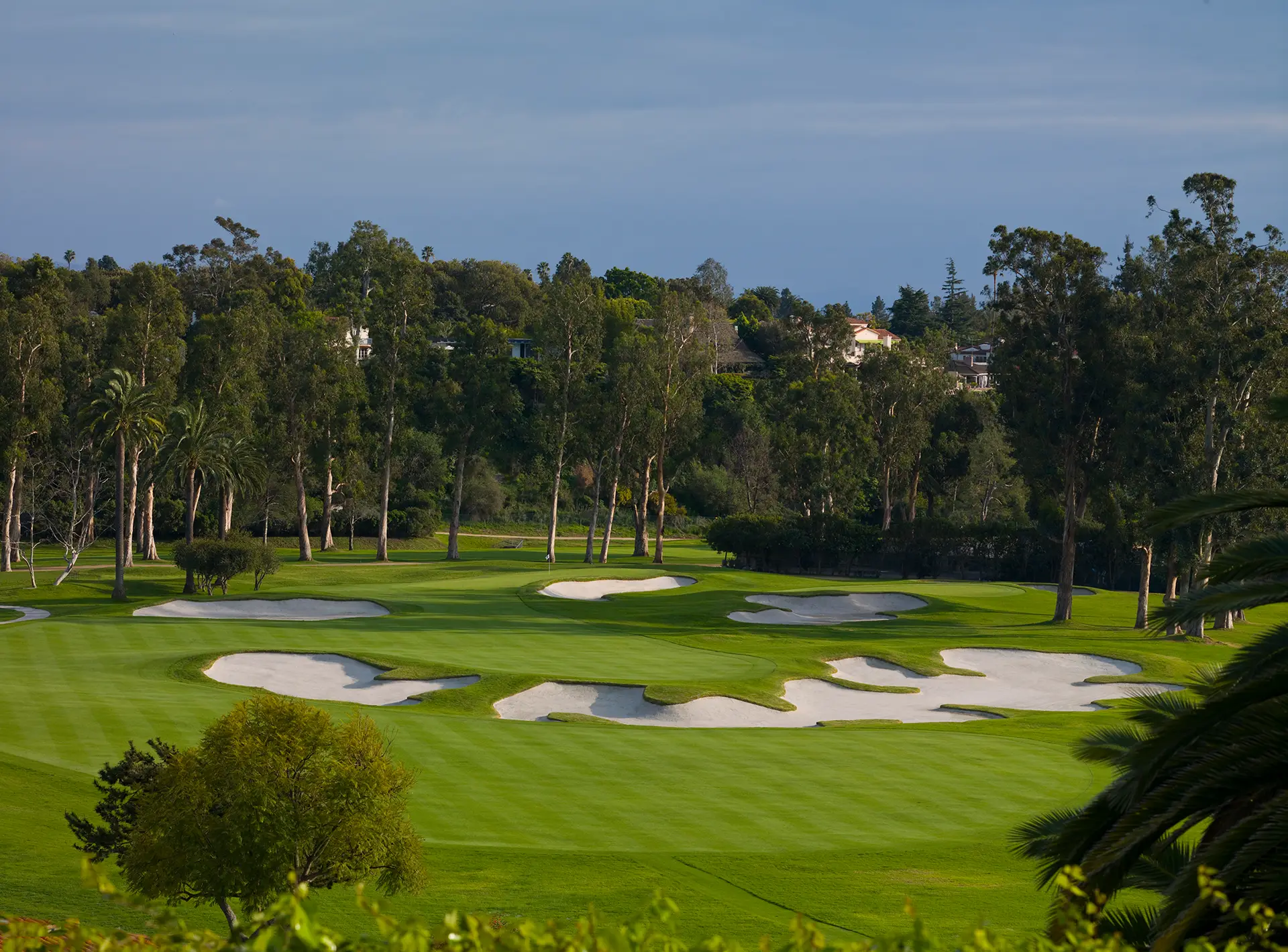
Riviera—Pacific Palisades, Calif.
No. 10, 315 yards
One of the ultimate risk/reward holes in professional golf, the 10th at the Riv is just as tantalizing for the modest-hitting 10-handicapper. Any self-respecting Tour pro can drive the green, but the penalties for missing are so severe, thanks to the ingenious positioning of both bunkers and putting surface, that 5s and 6s are much more common than 2s. Jack Nicklaus has stated that the 10th presents more options than any other short hole in the world. Few have the discipline to approach the green from the proper angle, which calls for a lay-up drive to the far-left side of the fairway—especially when the hole location is back-right on this shallow, diagonal green corseted by bunkers. When the pin is on the left, unprotected by the fronting bunker, the temptation is to go straight at it—even if you fall short. However, that open portion of the green slopes away to the back, making a straight-on approach that much exquisitely tougher. What it adds up to is risk/reward in perfect measure.
Bandon Dunes Golf Resort (Bandon Dunes)—Bandon, Ore.
No. 16, 363 yards
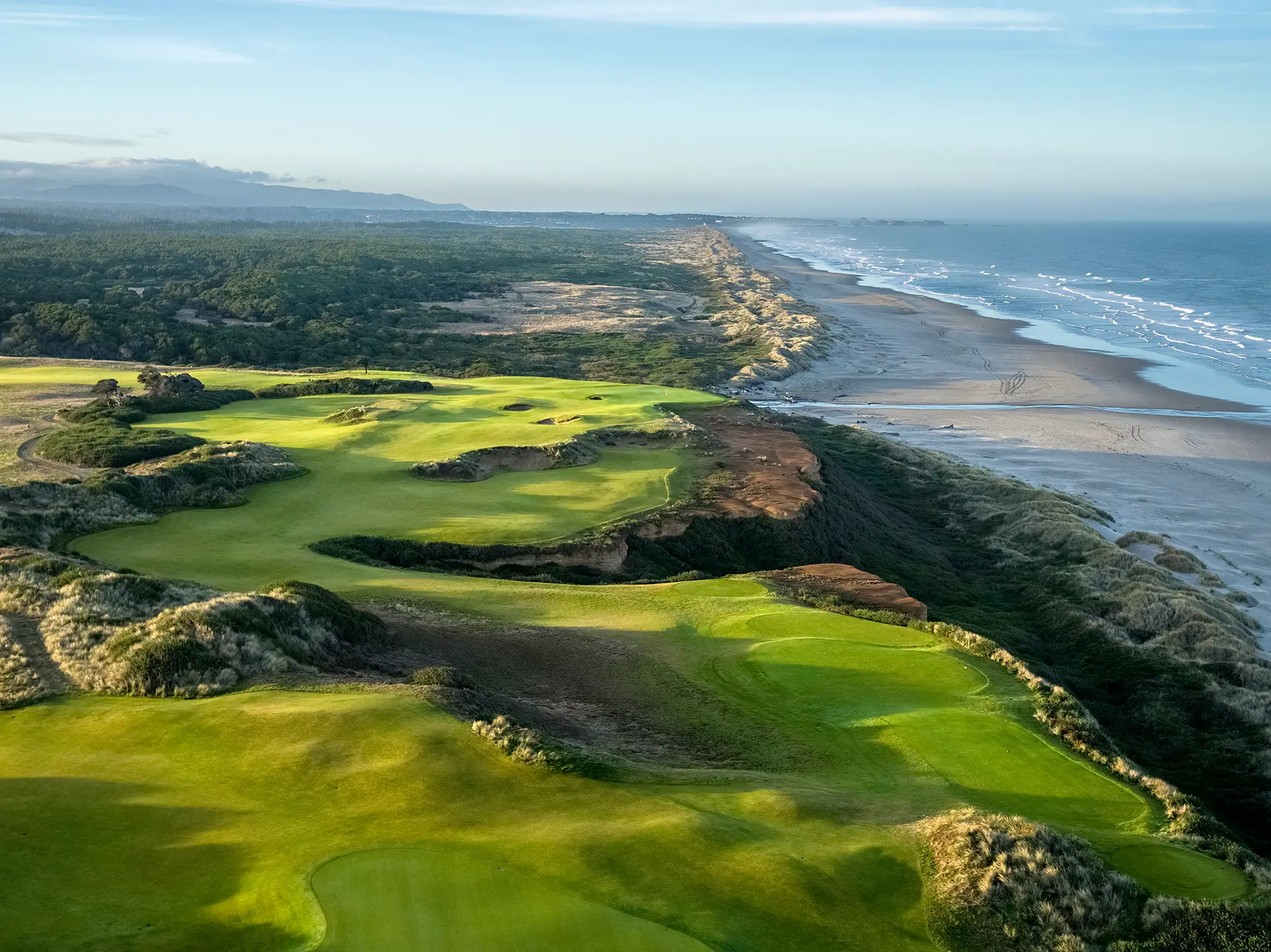
When he fashioned the fairway’s diagonal ridge during the design, David McLay Kidd created a risk/reward masterpiece. Downwind, the hole is drivable, but depending on hole location, it might be wisest to lay well back, or else leave it hole high, left of the green. Into the wind, it’s a challenge just to reach the crest of fairway beyond the ridge. Overly faded shots could splash in the Pacific. As the 2020 U.S. Amateur proved, the 16th is the best hole at Bandon Dunes.

While I’ve never driven the green at #18 on the Old Course at St. Andrews (I’ve been lucky enough to play it 5 times) I’ve made PAR each time I’ve played it 🙂