

The LINKS 100—the 100 best courses in the world as voted on by the architects of the ASGCA, EIGCA, and SAGCA—is chock full of great golf holes, including stellar individual tests that entice with options. These unforgettable holes offer at least one risky option that provides a palpable reward.
Here are the top 10 risk/reward holes in The LINKS 100—presented in order of where the course ranks on the list.
17th Hole, St. Andrews (Old Course)—St. Andrews, Scotland
495 yards, par four
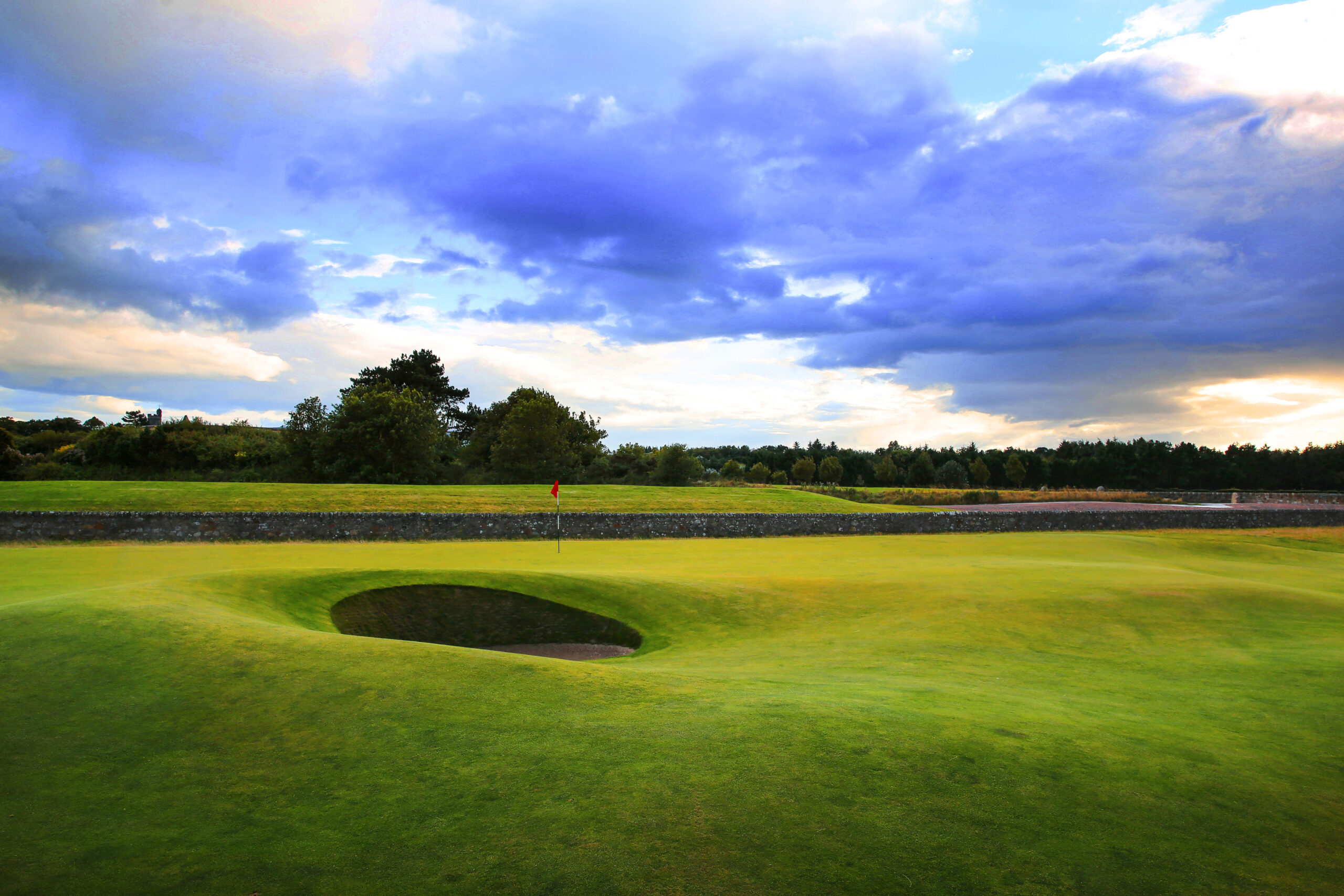
Perhaps the most unconventional hole on the Open rota, the Road Hole at the Old Course (No. 5 in The LINKS 100) calls for a risky blind drive over a corner of the Old Course Hotel, which if successful, will provide the ideal angle to approach a narrow green set on a diagonal. A safe drive to the left means a much tougher second, because guarding the left-front is the frighteningly deep, stacked sod Road bunker. On an approach shot struck slightly long and right, a pebbled road—or a stone wall—will likely come into play. It’s the classic, “pay me now or pay me later” risk/reward scenario.
7th Hole, Sand Hills—Mullen, Neb.
283 yards, par four
No water here on this Coore/Crenshaw/Nature design (No. 7 in The LINKS 100), but sand, terrain, and prairie winds interlock to form an irresistible, yet frightening go-for-it-or-not prospect. There appears to be ample room to knock one on, but the freakishly intimidating bunker that’s poised short and left of the elevated green has induced many a twitch. George Peper’s book, The 500 World’s Greatest Golf Holes, crystalized the hole’s virtues: “The fairway, bunkers, and green are perfectly shaped to present the dilemma: to go, to get close, or to play short. How much advantage can be squeezed from the drive before disaster rears its head?”
The famed 7th at Sand Hills Golf Club is one of the finest short par-4s in the world. Just 285 yards from tee to green, the hole features an enormous blowout protecting the left side of the perched green, which falls away sharply on the right. As perfect as a golf hole can get. pic.twitter.com/ezqbRgbXMK
— LinksGems (@LinksGems) January 25, 2019
10th Hole, Royal Melbourne (West)—Melbourne, Australia
317 yards, par four
A masterpiece on this Alister MacKenzie design (No. 8 in The LINKS 100) that played as the 8th hole during the 2025 Australian Open, this temptress demands a perfectly controlled draw around a gigantic, gaping hillside trap to a firm, fast, cunningly contoured putting surface—for those seeking to drive the small green set atop the highest point of the hill. Choosing the correct angle into the green is paramount, whether you’re going for it on the first shot or the second. A swale in the front of the green and deep greenside bunkers to the right will snare any approach that’s less than perfect. Architect and former pro Mike Clayton, who co-designed Barnbougle Dunes with Tom Doak, considers this hole to be the finest of its length he has ever seen.
View this post on Instagram
13th Hole, Augusta National—Augusta, Ga.
545 yards, par five
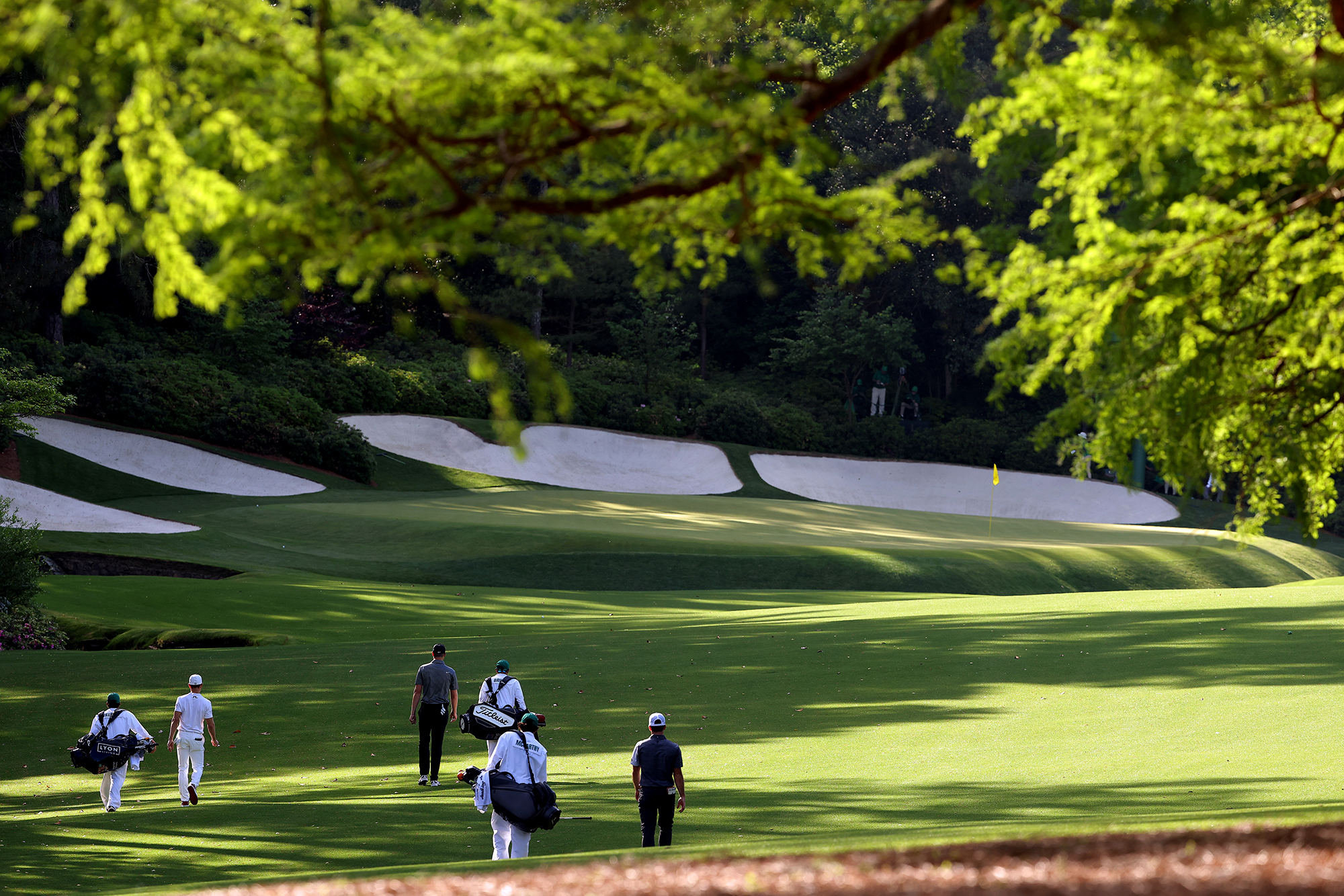
Perhaps the world’s most beautiful landlocked hole, the 13th at Augusta National (No. 12 in The LINKS 100) has long been one of the most strategic as well, illustrating perfectly co-designer Bobby Jones’s fondness for what he liked to call a “par four and a half” hole. The hole is reachable in two shots by many low-handicap golfers—that is, if distance alone were the sole factor. What vexes, though, is a tee shot that must curve hard from right-to-left to avoid running through the fairway into the pine trees. Players who find the fairway face a second shot from a tight, sidehill lie, over a twisting arm of Rae’s Creek, to a wildly contoured green. A drive pulled too far left will find the creek, or else run into the azaleas that color the hole in April. Yet the risky left-side drive can yield a flatter lie and a shorter approach. Even for those who lay up with their second shot, the lie, stance, angle, hole location, and that pesky creek complicate what should be a simple pitch.
18th Hole, Pebble Beach—Pebble Beach, Calif.
543 yards, par five
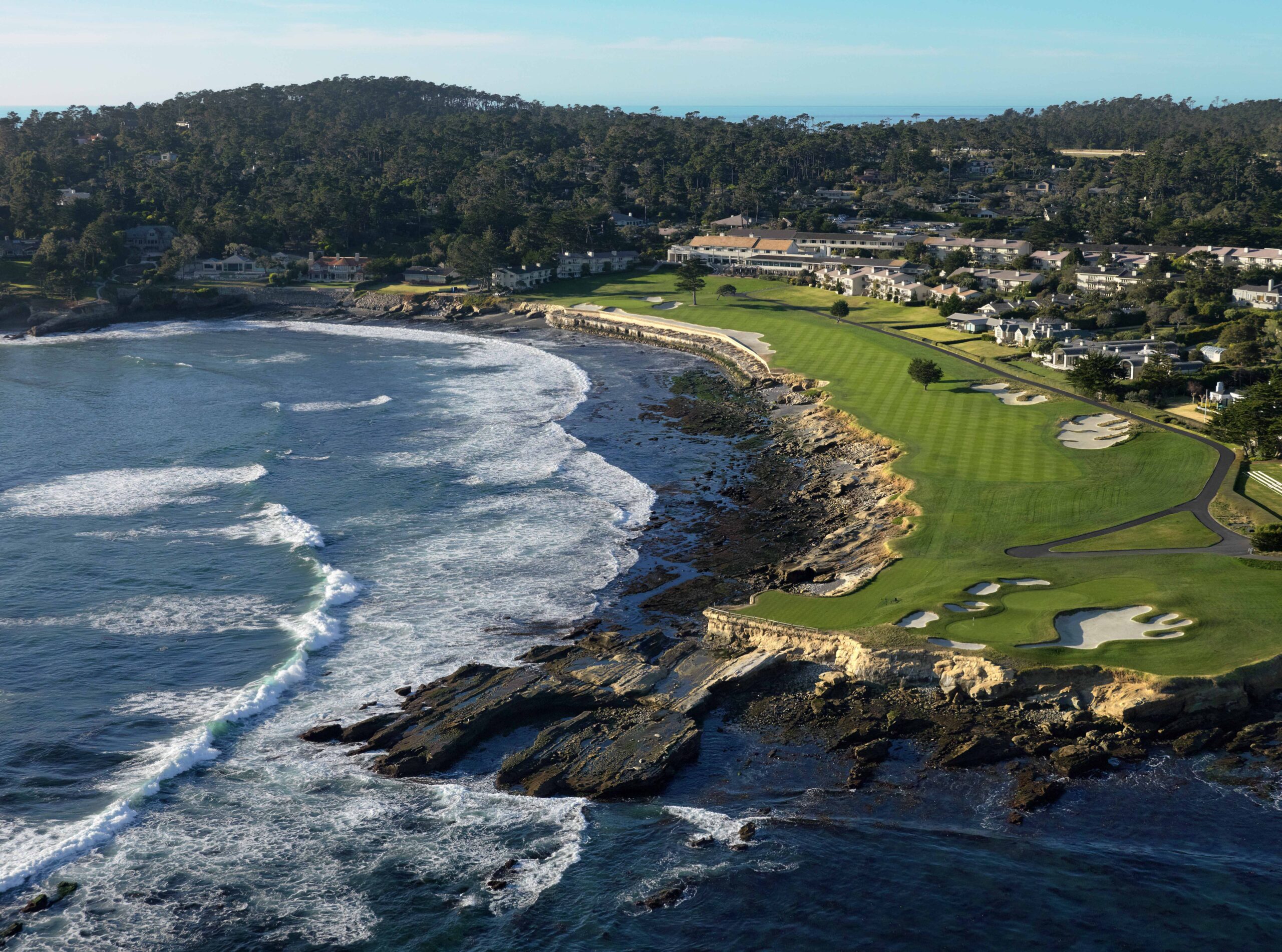
One of the game’s most recognizable holes, the 18th at Pebble Beach (No. 15 in The LINKS 100) arcs to the left around Stillwater Cove. A huge cypress tree 270 yards from the back tee patrols the right-center of the fairway and OB edges the right side of the hole. To reach in two, the golfer must navigate the ocean left and a massive cypress tree and yawning bunker short-right of the green. Australia’s Geoff Ogilvy, the 2006 U.S. Open winner and a respected course designer, nicely summarizes the hole’s risk/reward aspects: “The drive epitomizes perfectly a simple, but highly effective strategic principle: the more you ‘take on’ a hazard, the easier every subsequent shot becomes. But play away from the trouble and the angle for the next shot gets worse, something that is true on Pebble’s 18th both off the tee and for the second shot.”
13th Hole, Lahinch—Lahinch, Ireland
334 yards, par four
Alister MacKenzie grafted a fistful of holes onto Old Tom Morris’s original design (No. 23 in The LINKS 100), and among his best is the 13th, one of the best examples anywhere of how contour can change the dynamic in an instant. The yardage makes the target well within reach, but bunkers, hollows, and a right-to-left slope squeeze the effective landing area to miniscule proportions. Yet, the hole is so short, how can you not go for it? Miss it right, however, and rough-cloaked broken ground awaits, with par from there hardly a guarantee.
10th Hole, Riviera—Pacific Palisades, Calif.
315 yards, par four
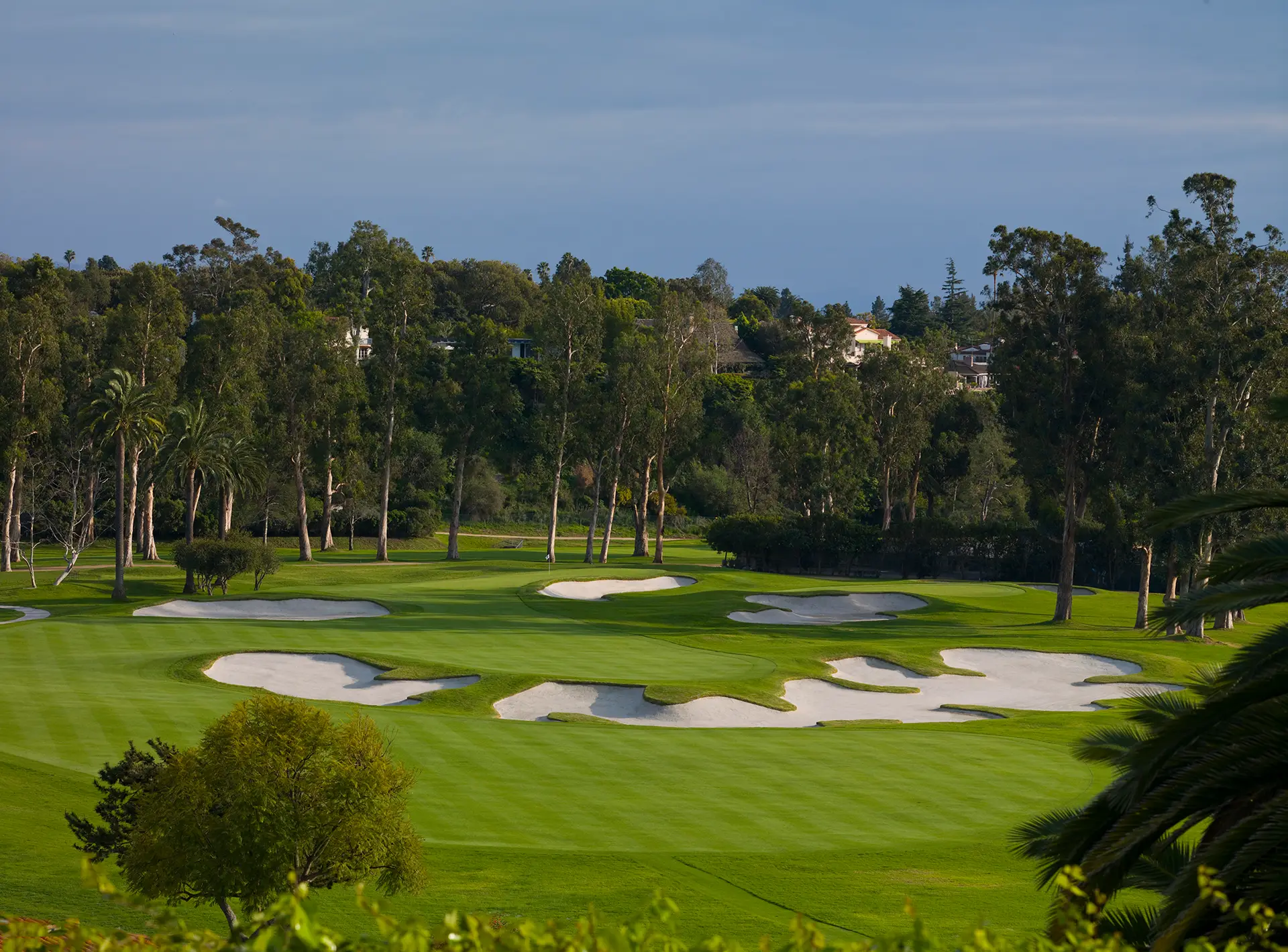
One of the ultimate risk/reward holes in professional golf, the 10th at the Riv (No. 39 in The LINKS 100) is just as tantalizing for the modest-hitting 10-handicapper. Any self-respecting Tour pro can drive the green, but the penalties for missing are so severe, thanks to the ingenious positioning of both bunkers and putting surface, that 5s and 6s are much more common than 2s. Jack Nicklaus has stated that the 10th presents more options than any other short hole in the world. Few have the discipline to approach the green from the proper angle, which calls for a lay-up drive to the far-left side of the fairway—especially when the hole location is back-right on this shallow, diagonal green corseted by bunkers. When the pin is on the left, unprotected by the fronting bunker, the temptation is to go straight at it—even if you fall short. However, that open portion of the green slopes away to the back, making a straight-on approach that much exquisitely tougher. What it adds up to is risk/reward in perfect measure.
18th Hole, TPC Sawgrass (PLAYERS Stadium)—Ponte Vedra Beach, Fla.
462 yards, par four
The banana-shaped 18th looks nearly as intimidating—but plays much harder—as its pint-size, island-green predecessor at TPC Sawgrass (No. 41 in The LINKS 100). The hole favors a drive down the left side to achieve the best angle to approach the green, but the further left you go, the greater the risk of splashing into a huge lake. Adding to the discomfort are the railroad ties that form a sharp edge to the lake which creates an intimidation factor that exceeds the actual danger. The “safe” drive to the right leaves a lengthy approach from a poor angle, or worse, can scamper into the trees. The hole looks mean and plays meaner.

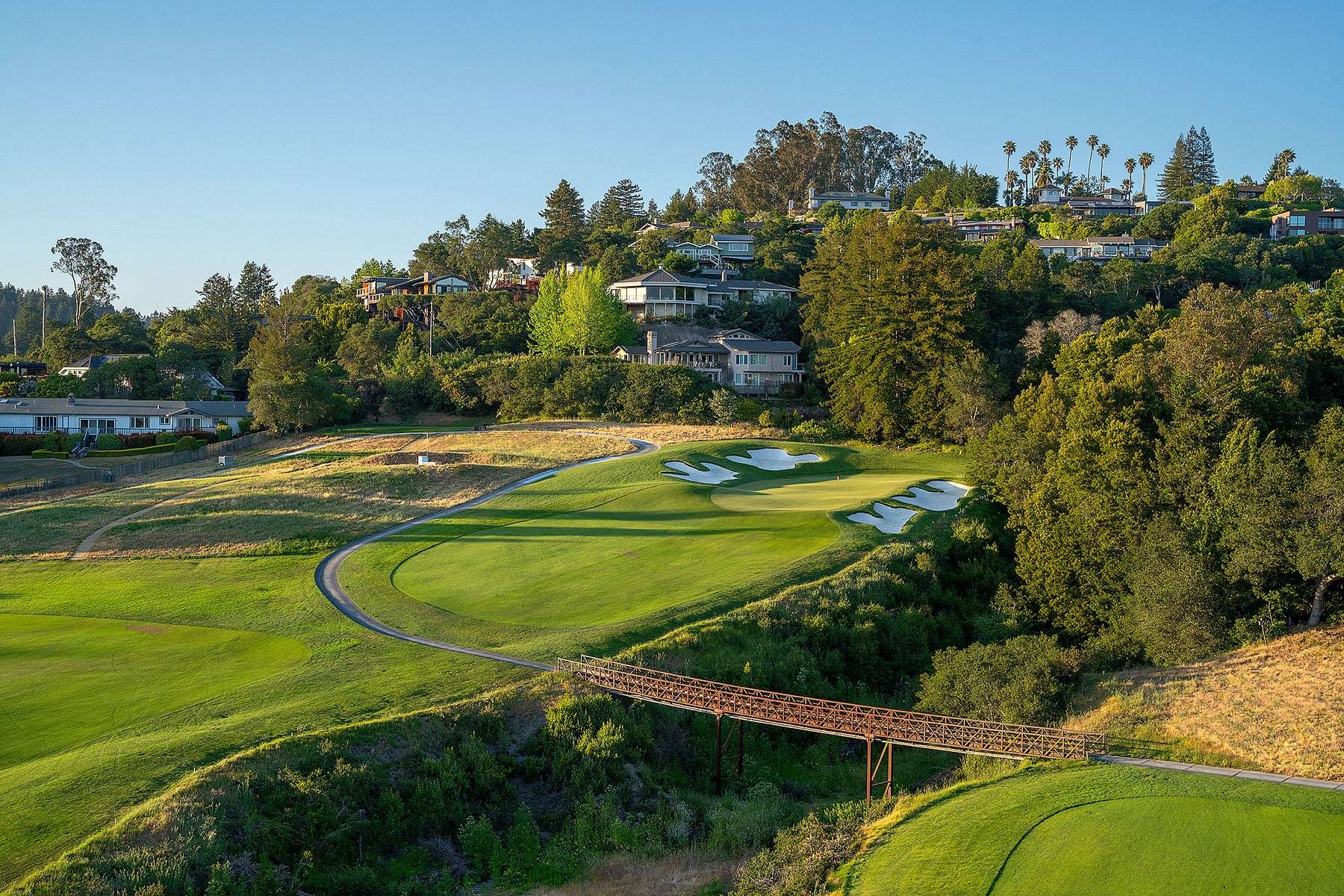
11th Hole, Pasatiempo—Santa Cruz, Calif.
391 yards, par four
Demanding an uphill drive and an uphill approach, with a wide barranca bisecting the fairway as a diagonal risk/reward hazard, the 11th at Pasatiempo (No. 94 in The LINKS 100) marries strategy with difficulty—thanks to the gifted design hands of Alister MacKenzie. After he played here in 1949, Byron Nelson labeled the hole as one of the most outstanding tests he had ever faced. The hole essentially plays as a dogleg left. The barranca runs up the left side, then darts to the right at a 45-degree angle, cutting off the direct line of fairway to the hole. Architect Todd Eckenrode of Origins Golf Design grew up at Pasatiempo and cites the 11th as a great risk/reward hole: “If you dare the barranca on the left with your tee shot,” says Eckenrode, “you are rewarded with a shorter approach and a better angle into the green. A drive to the far-right side of the fairway, away from the barranca, leaves a longer shot with a much more intimidating angle and carry over the hazard.”
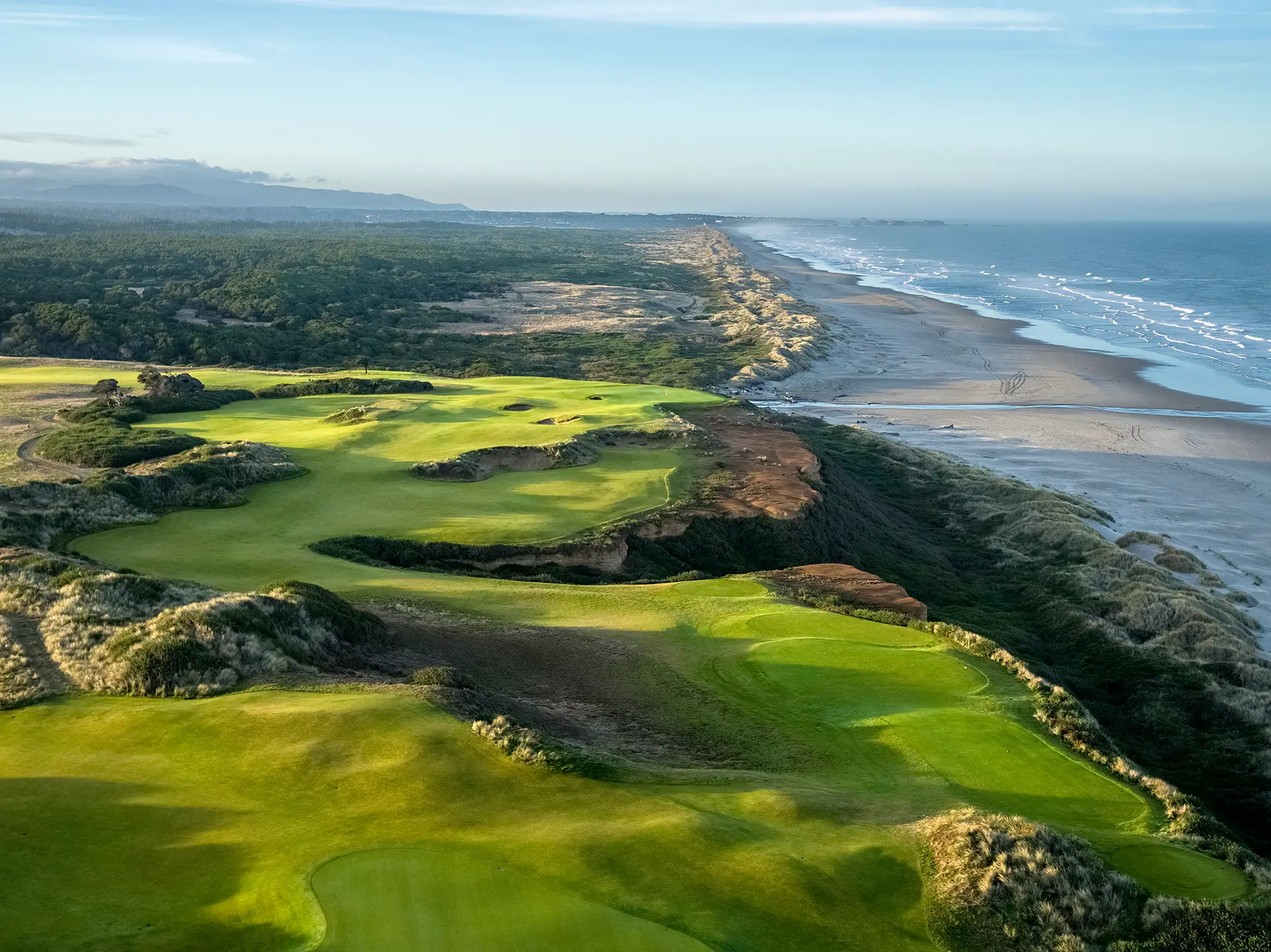
16th Hole, Bandon Dunes—Bandon, Ore.
363 yards, par four
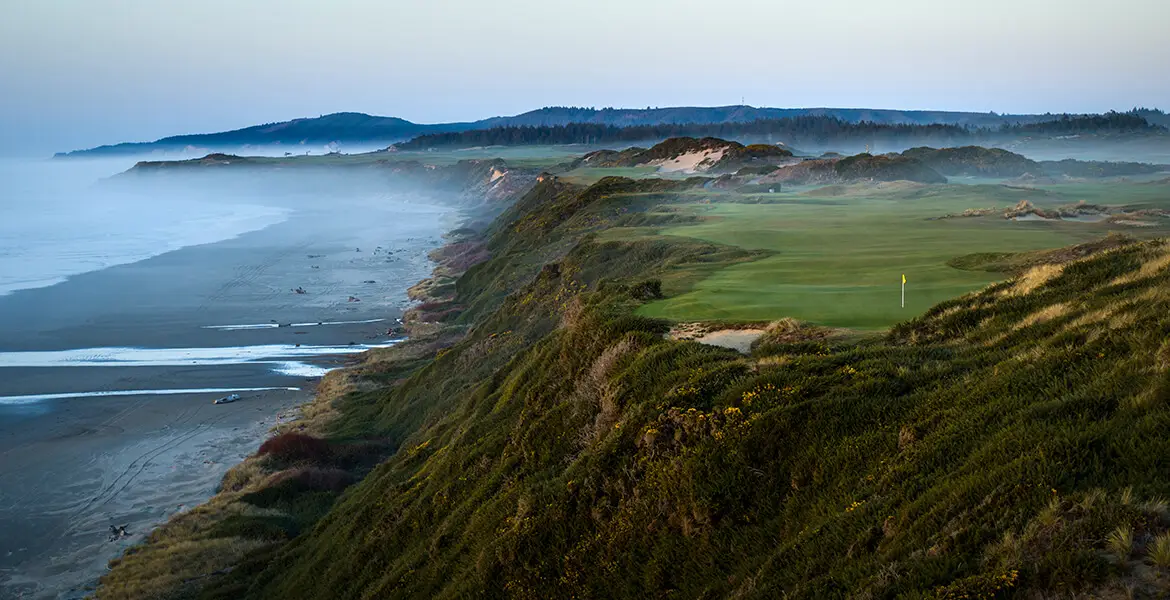
When he fashioned the fairway’s diagonal ridge during the design of the original course at Bandon Dunes Golf Resort (No. 99 in The LINKS 100), David McLay Kidd created a risk/reward masterpiece. Downwind, the hole is drivable, but depending on hole location, it might be wisest to lay well back, or else leave it hole high, left of the green. Into the wind, it’s a challenge just to reach the crest of fairway beyond the ridge. Overly faded shots could splash in the Pacific. As the 2020 U.S. Amateur proved, the 16th is the best hole at Bandon Dunes.

I’ve been fortunate enough to play 7 out of 10 of these amazing courses:)