

View The LINKS 100 U.S.
LINKS Magazine—and the world’s golf architects—rank America’s top 100 courses
Welcome to The LINKS 100 U.S., the newest and most distinctive ranking of America’s top 100 golf courses. One year after we debuted The LINKS 100, a list of the world’s best courses, we’re serving a second helping, this one focused solely on the United States. Last year’s tally of elite courses resonated with readers for one reason—because the only voters were architects, specifically members of the American Society of Golf Course Architects (ASGCA), the European Institute of Golf Course Architects (EIGCA), and the Society of Australian Golf Course Architects (SAGCA).
So why do another ranking of America’s top courses? Clearly, rankings are fun. Our World list, published in January 2025, spurred copious discussion and heated debate, online and in grill rooms. Nonetheless, the focal point was specific: Is Course A better or worse than Course B? One may question whether architects can be fair about evaluating the work of fellow designers, but our take is this: Who better to judge the comparative merits of golf courses than the men and women who design them for a living?
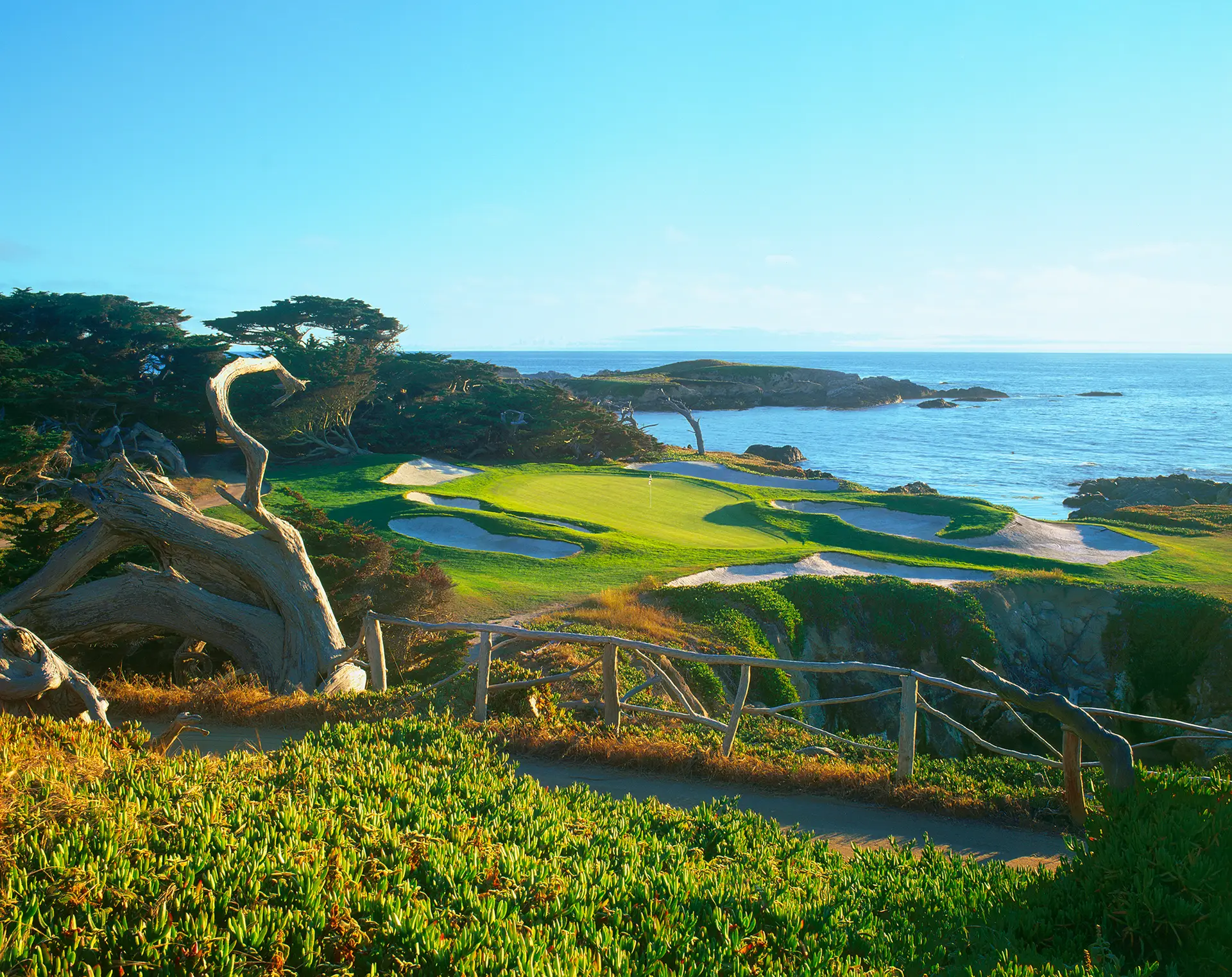
The results at the top half of The LINKS 100 U.S. conform to how the World list unfolded last year. Bucking a decades-old tradition, the architects placed fabled Pine Valley behind another course—in this case, Cypress Point, which paraded its attributes gloriously during last September’s Walker Cup match. Pine Valley will have its chance to bask in the Walker Cup spotlight—in 2044.
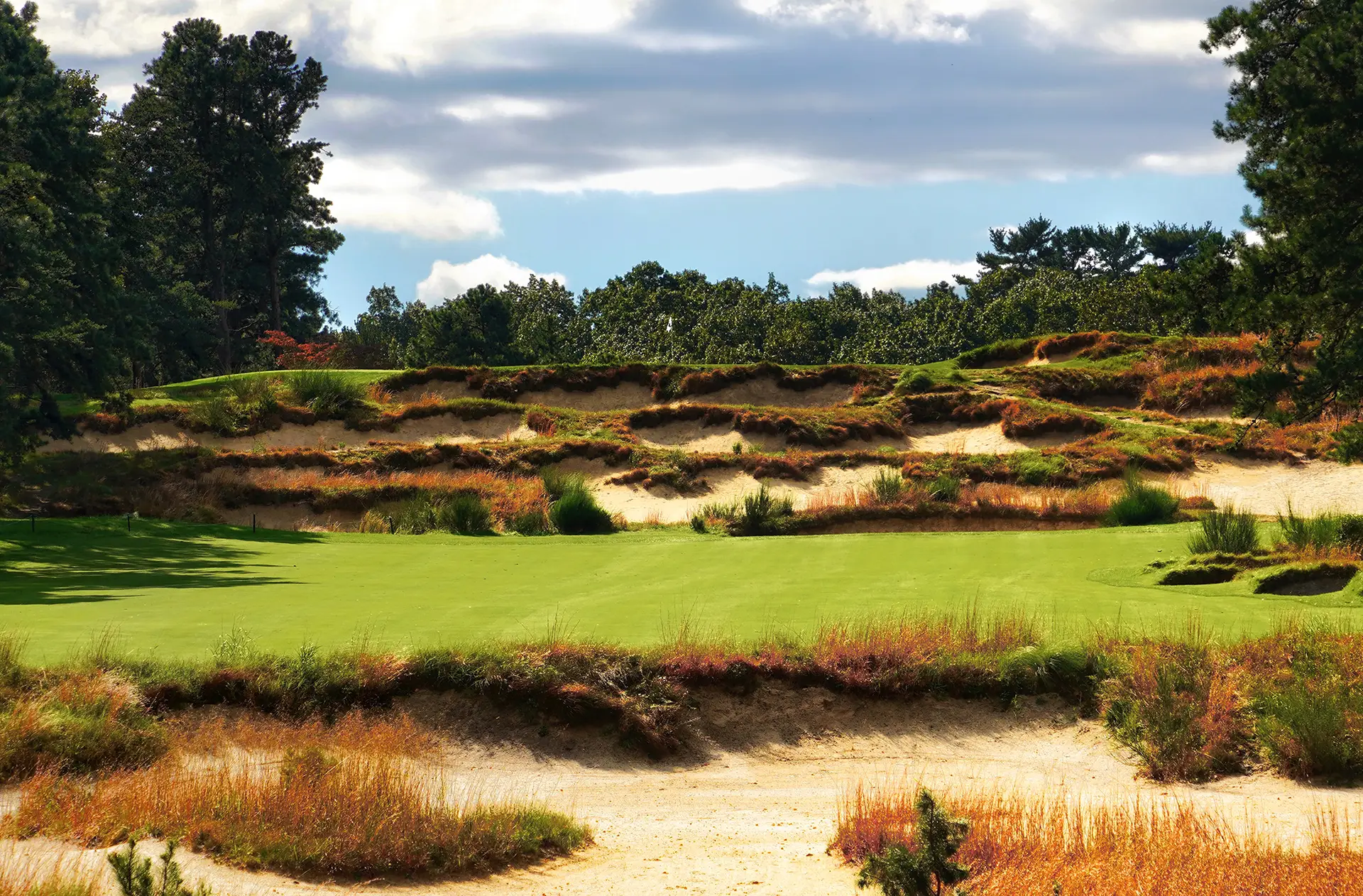
Among the surprises were West Virginia’s Pete Dye Golf Club, ranked 24th in The LINKS 100 U.S.; Florida’s Calusa Pines, which finished 26th; and Indiana’s Pete Dye course at French Lick Resort, which seized the 50th spot. As a trio, the courses required remarkable transformations of the land, which apparently earned tremendous admiration from the voting architects.
The second 50 presented diametric opposites. The architects preferred the very old and the somewhat new—with few in-betweens. Fully 32 of The LINKS 100 U.S. courses ranked 51 through 100 debuted prior to 1930, while 12 others opened in 2001 or later. That leaves a paltry six courses designed between 1930 and 2000 to fill out the remaining slots, hardly a ringing endorsement for mid-century and late-20th-century architecture.
Perhaps the most conspicuous entry in The LINKS 100 U.S. is The Lido at Wisconsin’s Sand Valley Resort, a course that defies conventional categorization. Is it a Golden Age great, or a modern marvel? Ranked 57th in The LINKS 100 U.S., The Lido welcomed its first walkers in 2023, stamping it as the youngest course to make our list. Yet, is The Lido better evaluated as a century-old layout, since this was Tom Doak’s note-for-note re-creation of a C.B. Macdonald masterpiece that existed from 1917–42? It’s easy to argue on both sides.
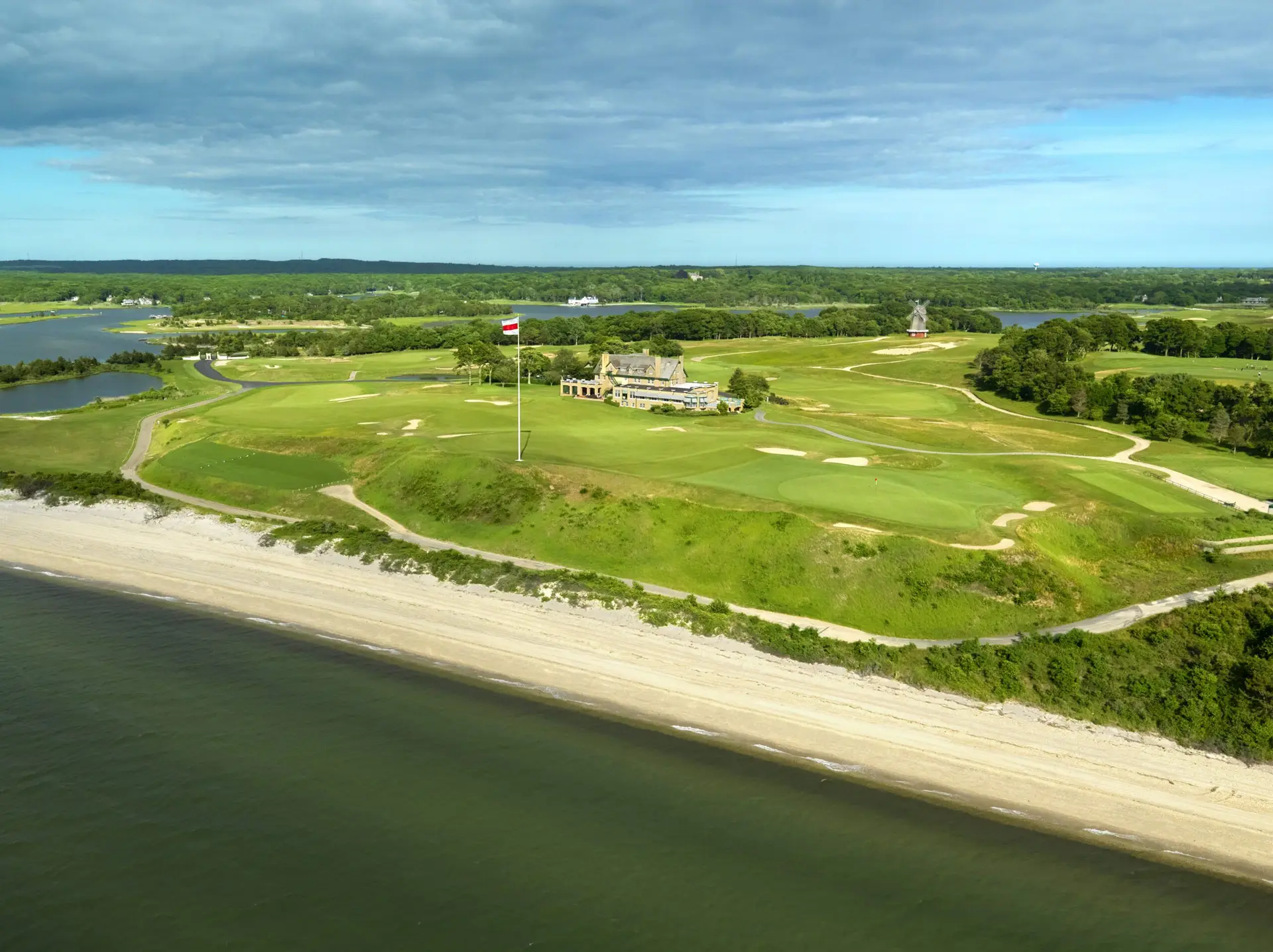
What decade is best for golf course architecture in the United States? The Roaring ’20s earns the nod from the society architects. Thirty-four courses in The LINKS 100 U.S. designed between 1921 and 1930 found spots in this ranking. Oddly, only five courses from this period cracked the top 20: Cypress Point, Fishers Island, Winged Foot (West), Yeamans Hall, and Riviera.
The architects favored old—and older still. Runner-up for best design decade is 1911–20, with 20 courses, among them Pine Valley, National Golf Links of America, Pebble Beach, and Merion. Taking the bronze medal is 2001–10 with 13 entrants: Friar’s Head and Pacific Dunes lead this laudable pack.
As for the architects’ choice of architects, two names stand out: Donald Ross and A.W. Tillinghast. Both early giants landed 12 courses in The LINKS 100 U.S., and each scored another success in the 101–110 category. Understandably, MacRaynor fans—those devoted to the works of C.B. Macdonald and Seth Raynor, individually and collectively—might object: 14 courses with one or both earning design credit dot the list, with Macdonald claiming four solo successes, Raynor six. They share design credit on an additional four courses.
Dominant in his own way is Pete Dye. Ten Dye courses occupy spots in The LINKS 100 U.S., plus another two just outside the top 100. The “Marquis de Sod” scored highest with the Ocean Course at Kiawah, at number 12. But perhaps most remarkable is his longevity. Crooked Stick, Dye’s first impactful creation, was unveiled in 1964 and ranks 48th. Two slots below, at 50, sits his eponymous course at French Lick Resort, which premiered in 2009. With a 45-year span between two courses ranked in the top 50, Dye’s career arc may well be the most astounding aspect connected to The LINKS 100 U.S.
For the architects of the ASGCA, EIGCA, and SAGCA who adopted, rejected, and celebrated the realm of Pete Dye designs—and judged the works of every other practitioner in the industry—we salute you for offering your opinions. Your votes directly determined the results of The LINKS 100 and The LINKS 100 U.S. Let the debates continue.
THE LINKS 100 U.S.: HOW WE RANKED THEM
The LINKS 100 U.S. was determined by member architects of the world’s three major societies: the American Society of Golf Course Architects (ASGCA), the European Institute of Golf Course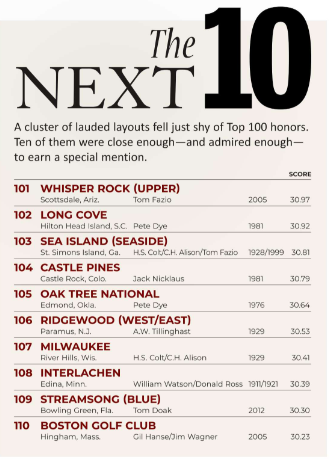 Architects (EIGCA), and the Society of Australian Golf Course Architects (SAGCA). The men and women from the three societies cast their votes from a survey ballot of 400 courses, assigning each course they had played or walked a number from 1 through 5, inclusive of half-points, with 5 being the highest rating. Rankings were arrived at by adding the total number of points accumulated for each course, then dividing that number by the total number of votes cast for that course. For easier reading and comparisons, we multiplied the final rating numbers by 10 and rounded to the nearest hundredth. Bonus points were awarded for courses that the architect had visited in the past five years. To be eligible for inclusion in The LINKS 100 U.S., a course had to be voted on by at least 10 percent of the voters.
In contrast to some other rankings, there were no set-in-stone criteria that the architects were required to follow when evaluating a golf course. As a guideline, the architects were encouraged to weigh six factors in arriving at their assessments:
- How well the course tests the full range of skills
- Design rhythm—the flow and balance of a course
- Variety—both of the terrain and individual holes
- Skill of routing, navigability
- Beauty, setting, and course conditioning
- Imaginative (or admirably restrained) use of the given land
To avoid the inherent bias, we asked the architects to abstain from voting for their own original designs. In the end, however, it was up to each individual voter how much to emphasize any of these aspects.


One emerging trend since I started tracking these is the works of Seth Raynor, whose work seems to be appreciated more and more every year. On the opposite end, Robert Trent Jones courses seem to shrink on every edition of top courses. Biggest Surprise was White Bear Yacht Club, a Donald Ross club I’ve never heard of.
A list of the greatest courses is useless when well over half of them are inaccessible to 99.9 percent of golfers in the United States, either by the private nature of the club or greens fees that are obscene. You would do better with a list of reasonably priced public courses or a separate list of resort courses. Why would anyone care about the rating of a course that they will never play?