

Before he designed a single golf course, Tom Doak was already one of the most famous architects in the business. After studying at Cornell and abroad, he wound up helming the GOLF Magazine ranking of the Top 100 courses in the world and also published the widely disseminated, no-holds-barred Confidential Guide of course critiques.
Along the way, he worked in Pete Dye’s employ for three years, further paying his dues. With Renaissance Golf Design, Doak began producing acclaimed courses, starting with Michigan’s High Pointe in 1989. Over the decades, he established a legacy as one of modern architecture’s greatest practitioners, through original designs, renovations, and restorations.
Some of Doak’s finest accomplishments are private; others are accessible, but you’d have to cross an ocean to find the first tee. Here are the top 10 Tom Doak courses you can play—without having to board an airplane.
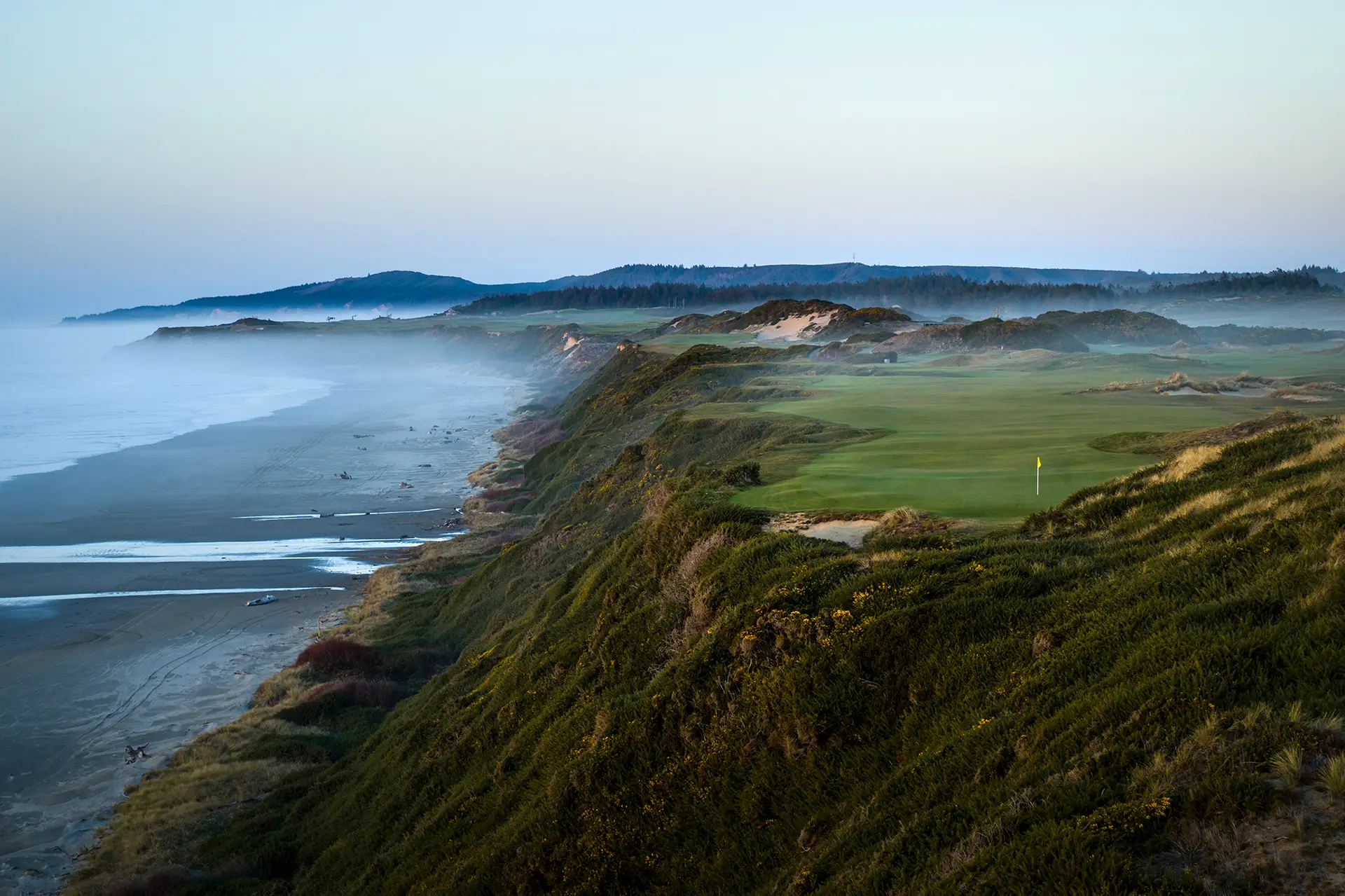
Pacific Dunes—Bandon, Ore.
Doak’s 2001 creation checks in as one of the greatest modern designs in the world. It fits so majestically into its billowing terrain, it looks like it’s been there 125 years. Scattered blow-out bunkers, gigantic natural dunes, smartly contoured greens, and Pacific panoramas are headliners. Pacific Dunes’s quirky routing and sequencing succeeds rather than detracts. The back nine features four par threes, including consecutively at 10 and 11, plus three par fives and only two par fours. The takeaway is that Doak routed his holes to take maximum advantage of the terrain and setting and paid little heed to the usual design conventions. Yet it’s the collection of truly memorable individual holes that sparkles, highlighted by two oceanside par fours that unfold in opposite directions, the 463-yard 4th and the 444-yard 13th.
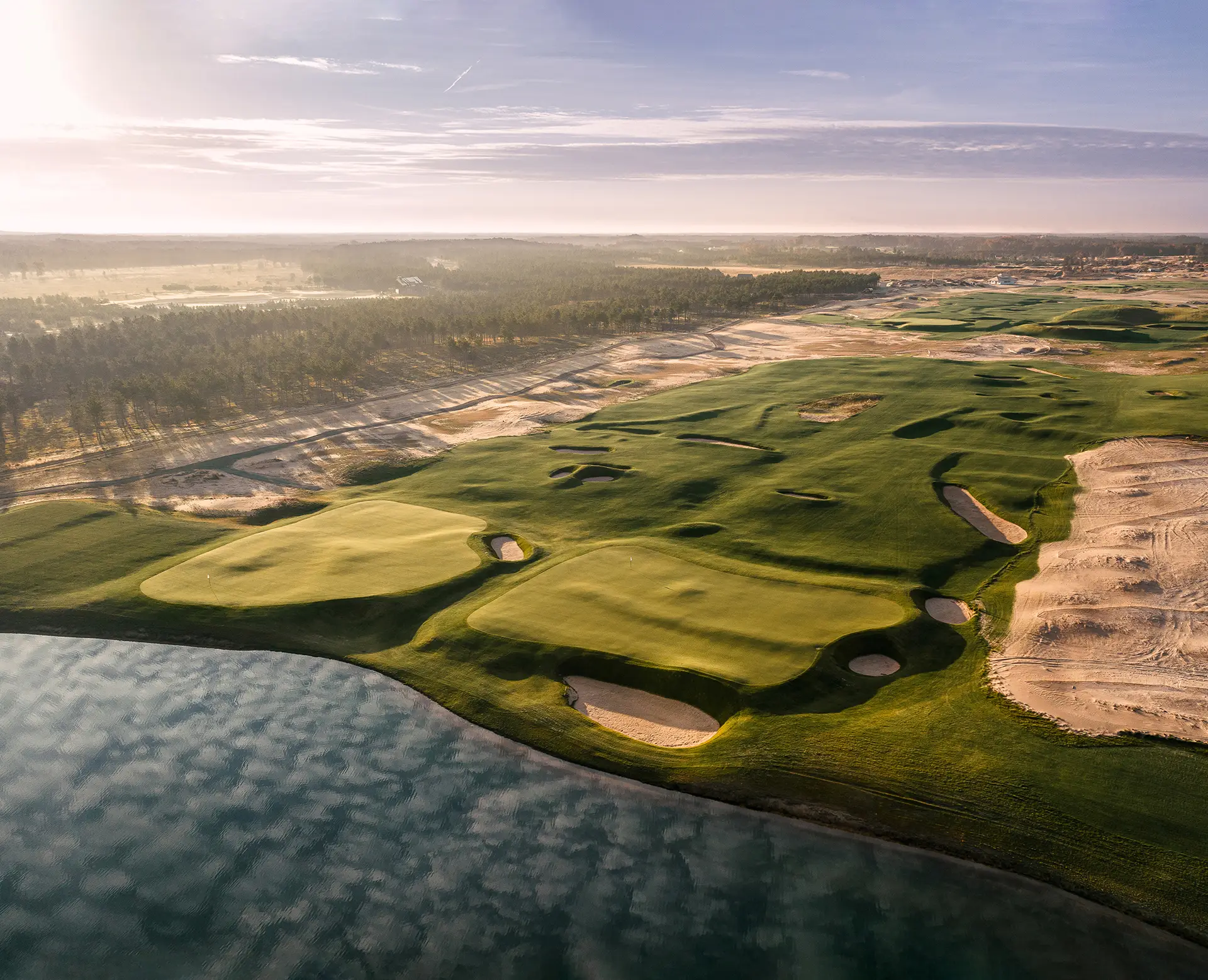
The Lido—Nekoosa, Wis.
A re-creation of a long-gone, legendary Long Island Golden Age classic, Wisconsin’s Lido opened in 2023, via the handiwork of Doak and longtime associate Brian Schneider, who teamed with historian Peter Flory, digital mapping specialist Brian Zager, and developers Michael and Chris Keiser. The group brought to life every nook and cranny of the fabled original C.B. Macdonald layout on Long Island, which ranked among the top three courses in American golf before its demise in the 1940s. Blame its disappearance on the U.S. Navy, which needed the land for military use during World War II. This faithful re-creation among the sand dunes of central Wisconsin stretches more than 7,000 yards, par 72 and features a multitude of blind shots, massive greens, and the familiar template holes such as “Redan,” “Biarritz,” and “Punchbowl.” The showstopper might be the par-five 4th, “Channel,” which embraces a risk/reward forced carry to an island fairway. Sand Valley resort guests can sample The Lido Mondays through Thursdays in season.
Old Macdonald—Bandon, Ore.
An homage to pioneer architect C.B. Macdonald, this 2010 Tom Doak/Jim Urbina collaboration features turnpike-wide landing areas and gigantic, heaving greens. To get the ball into the hole, however, you’ll need to master angles, strategy, trajectory, and the ground game. Doak was the design boy wonder and Urbina the master builder and shaper when they met in the 1980s as associates for Pete Dye on two Denver-area courses. Their teamwork was so invaluable on Pacific Dunes in 2001, that Bandon developer Mike Keiser insisted that Urbina earn co-credit when it came to Old Macdonald.

Streamsong Blue—Bowling Green, Fla.
Hewn from the remnants of old phosphate mines, Streamsong Blue features a distinctive sand-based canvas that puts an emphasis on ground-game prowess. Doak crafted fairways that cling to the terrain as if they’ve been here for thousands of years and greens melt into their surrounds. Imaginative green contouring forces players to think before approaching. After the dizzying panorama from the par-four first, the next stunner is the 203-yard, par-three 7th that demands a lake carry to a wildly undulating green cocooned in the sandhills. This is retro golf with modern trappings.

Pinehurst No. 10—Pinehurst, N.C.
Pinehurst Resort’s highly anticipated No. 10 course opened on April 3, 2024, with Angela Moser serving as Doak’s lead associate. Located three miles south of the main resort clubhouse in Aberdeen, it’s draped atop ground that had once housed a Dan Maples-designed course called The Pit, that existed from 1985 until 2010. With natural ridgelines, intriguing landforms, towering longleaf pines, streams, and ponds, Doak designed a course that complements the resort’s other courses through its contrasts. At 7,020 yards, par 70, the walking-only layout incorporates the native sand and wiregrass to perfection. Most memorable is how Doak utilized the massive dunes, notably at the 385-yard par-four 8th, which is graced by a huge mound known as “Matterhorn” just to the right of the tee. The green is partially hidden to the left, behind another large hillock. It’s merely one in a collection of inspired holes.
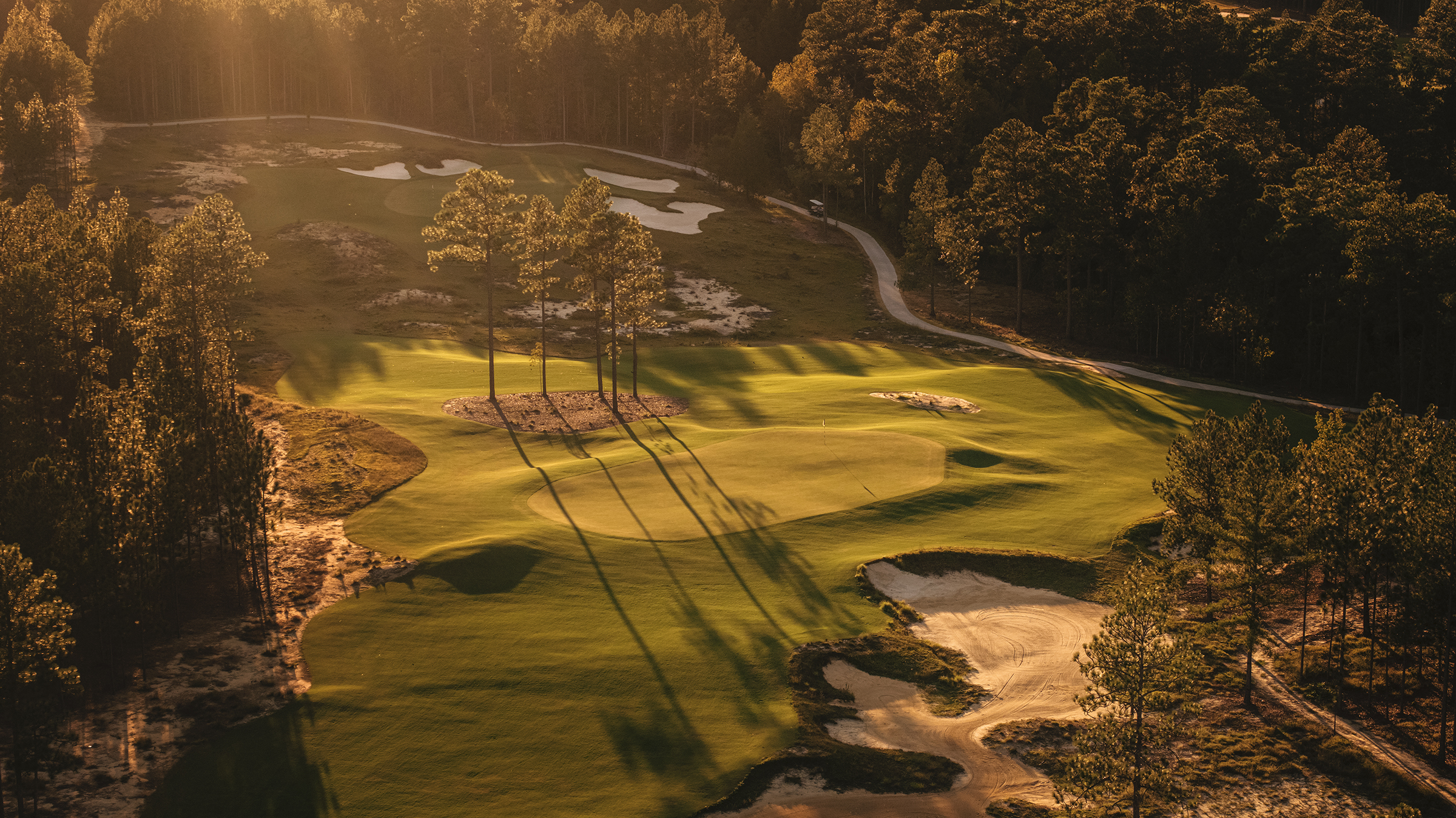
Sedge Valley—Nekoosa, Wis.
At just 5,829 yards, par 68, Sedge Valley is Doak’s expression of a throwback English layout, one with intimate connections on terrain replete with sandy soil and where plenty of challenge can be packed into a small package. Embracing the native groundcover and prominent rock outcroppings as strategic elements, Doak went Old School. He located the best green sites he could find and created golf holes from there. With only one par five, the 542-yard 11th, stronger players will have to look elsewhere for easy birdies. The generously wide fairways and quartet of par fours that check in under 350 yards portend a slew of red numbers, but cleverly tilted fairways and ingeniously placed bunkers demand a premium on perfectly placed tee shots. Greens vary in size and contouring, with no two the same. Touch and imagination are much in-demand during the less-than-four-hour, walking-only journey, which ends in representative fashion, on a short, 318-yard par four, with a punchbowl green.
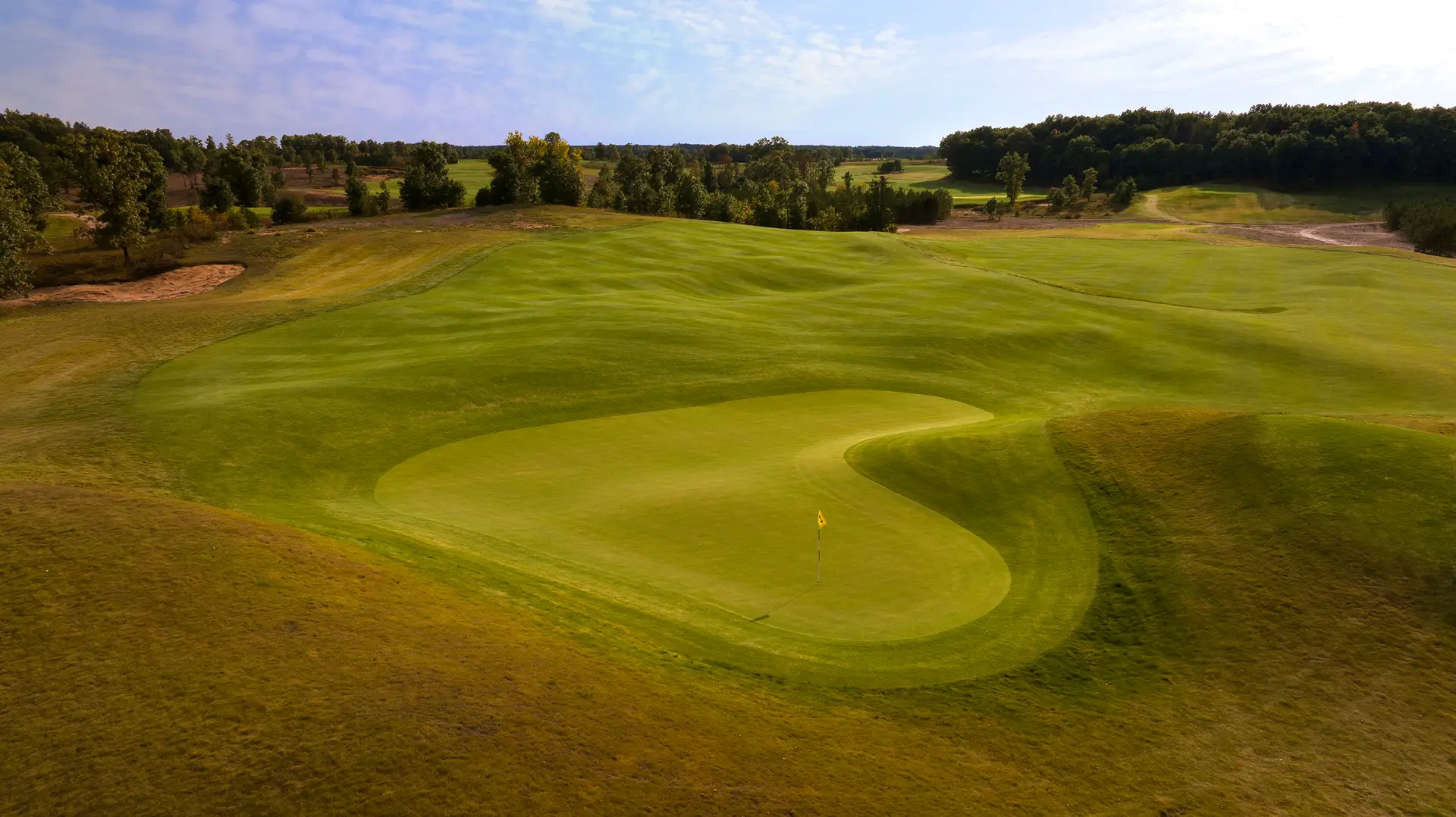
The Loop at Forest Dunes (Black)—Roscommon, Mich.
Opened in 2016, The Loop at Forest Dunes is a novel reversible routing from Doak and his Renaissance Golf Design team. Roomy fairways, a paucity of bunkers, short grass around the greens, and distinctive tilts on the greens allow for clockwise play (Black Course) one day and counterclockwise (Red Course) the next. Doak noted that while both courses play pretty similarly, the 6,704-yard, par-70 Black starts off more ominously, with a brutish 469-yard par four, but plays a tad easier than its sibling down the homestretch.
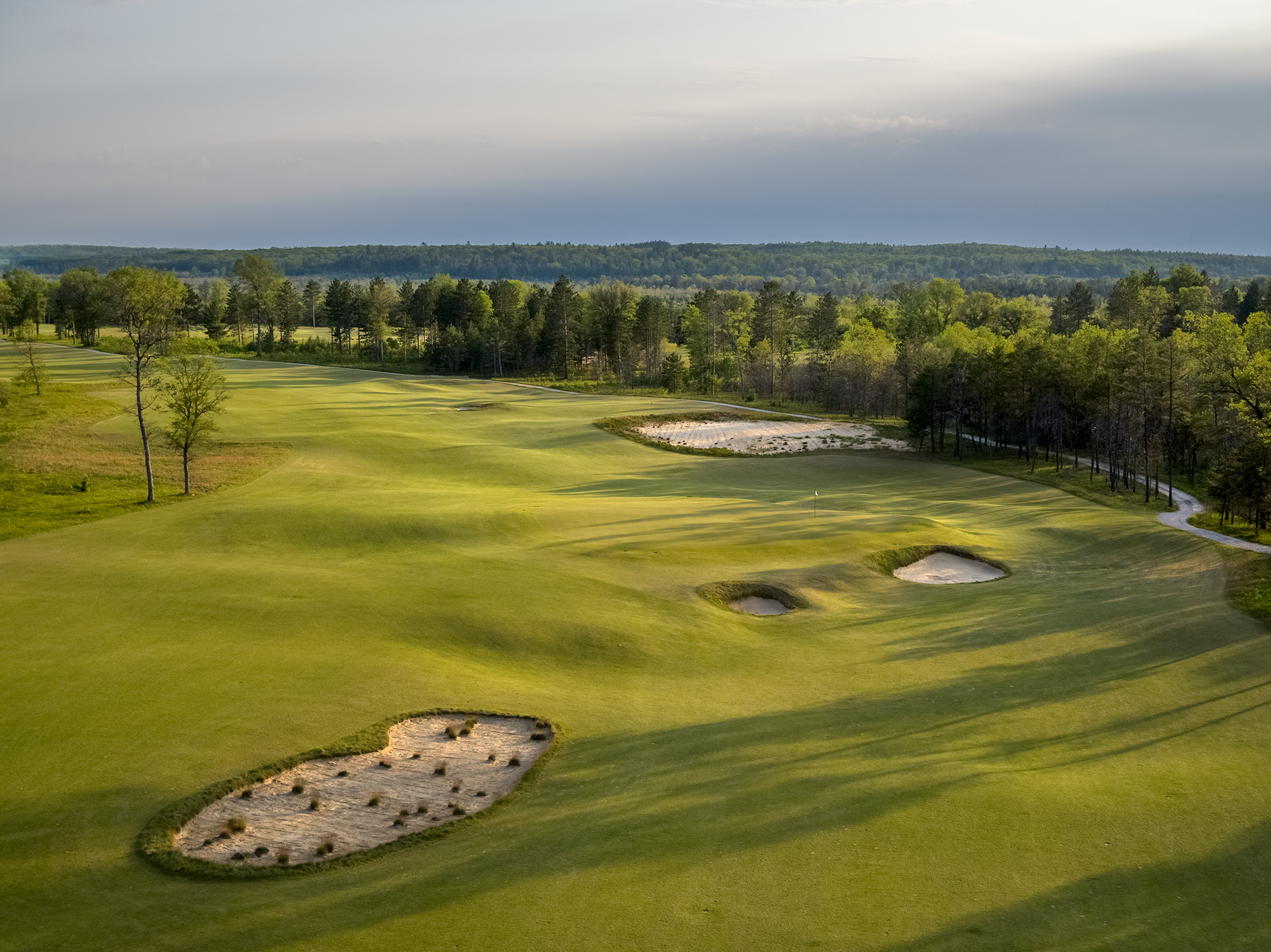
The Loop at Forest Dunes (Red)—Roscommon, Mich.
Opened in 2016, the Red Loop at Forest Dunes is the other side of the coin from its sibling, the Black. Doak observed that while both courses unfold in similar fashion, the 6,805-yard, par-70 Red starts off more conventionally, and somewhat easier than the slightly shorter Black, but offers a more demanding finish. A pair of strong par threes—the 187-yard Redan 4th and the 222-yard 11th, with its two-tiered green—would be standouts anywhere, but it’s the drivable 312-yard 12th that’s the most fun to tackle.
The Rawls Course at Texas Tech—Lubbock, Texas
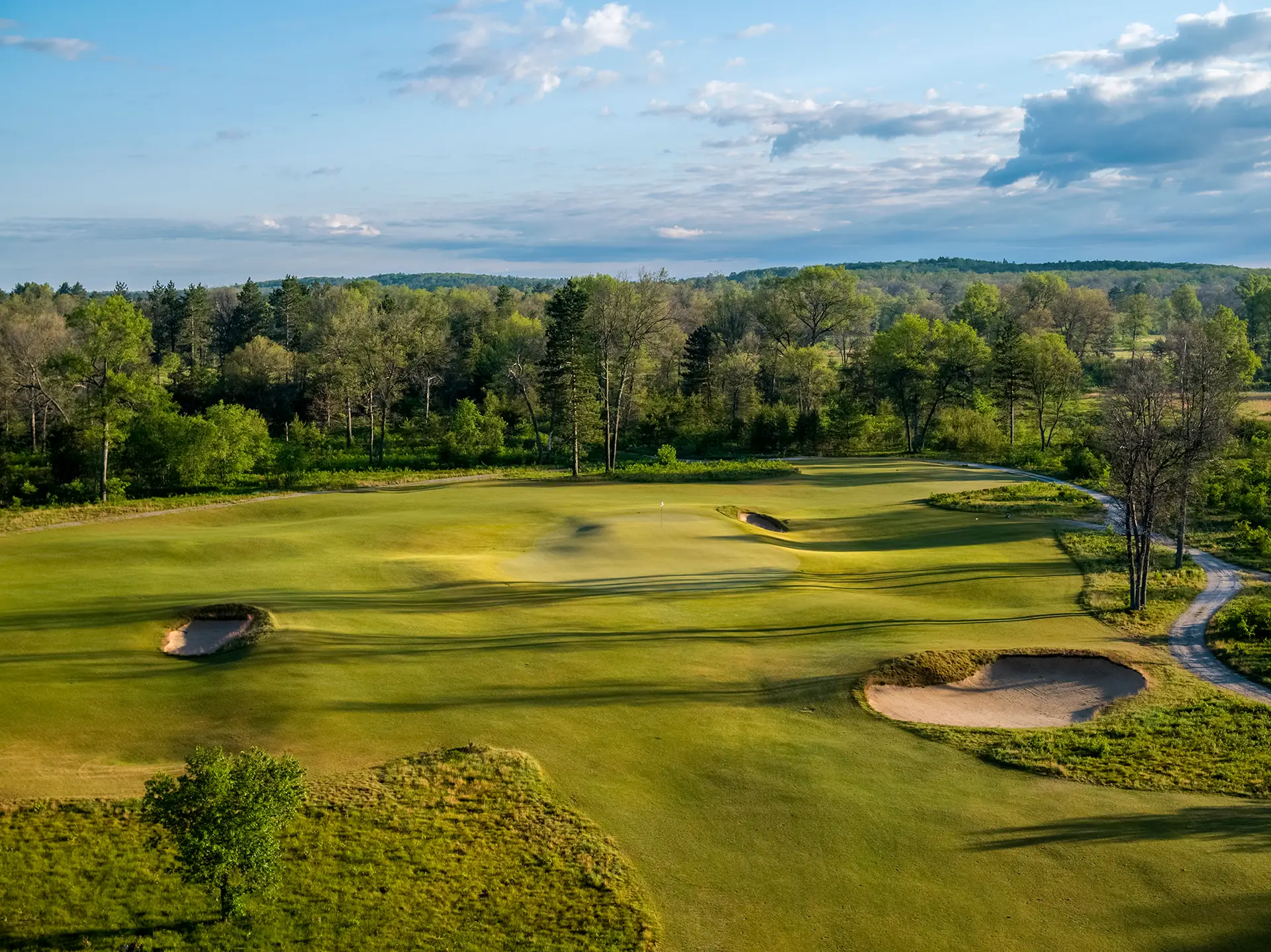
Out on the high plains of the West Texas panhandle, scholarly architect Doak transformed a 268-acre, tabletop-flat former cotton field into a heaving, tumbling, brilliantly bunkered final exam in golf. The wind howls here, so Doak wisely sculpted ultra-wide fairways and moved sufficient dirt to create peaks and valleys that mimic the canyons south and east of Lubbock, resulting in superior shotmaking variety.

CommonGround—Aurora, Colo.
Amid tame terrain and equally calm bunkering, CommonGround may just be Doak’s most playable design for every class of golfer. Completely rebuilt in 2009 from what had been Mira Vista, an old Air Force base course, Doak delivered an easily walkable, family-friendly test, yet one that has just enough bite from the 7,229-yard, par-71 tips to draw blood. With wide fairways, strategically placed bunkers, tall native grasses, massive topsy-turvy greens, and views of Mt. Evans and the Denver skyline, affordable CommonGround is uncommonly fun.



Memorial Park in Houston
I thought the same thing!
Wild Spring Dunes will be on this list when it officially opens.
I realize the focus is on Doak’s US courses. Anyone who travels to Australia for golf make the effort to go to Barnbougle in Tasmania. Both Doak & Coore – Crenshaw courses are exceptional. Like being in Ireland. Bonus tip : Make the extra effort to go to King Island it’s great, raw, no frills 5 star golf.
I’ve played 7 of these. All amazing golf experiences.